


Web-based intervention in mindfulness meditation for reducing residual depressive symptoms and relapse prophylaxis: a qualitative study
- PMID: 24662625
- PMCID: PMC3978551
- DOI: 10.2196/jmir.3129
Web-based intervention in mindfulness meditation for reducing residual depressive symptoms and relapse prophylaxis: a qualitative study
Abstract
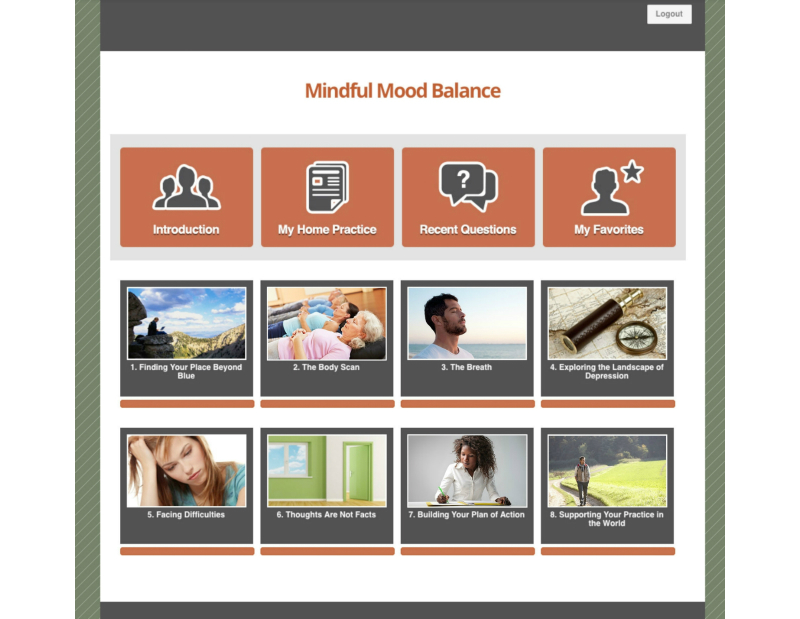
Background: Mindful Mood Balance (MMB) is a Web-based intervention designed to treat residual depressive symptoms and prevent relapse. MMB was designed to deliver the core concepts of mindfulness-based cognitive therapy (MBCT), a group treatment, which, despite its strong evidence base, faces a number of dissemination challenges.
Objective: The present study is a qualitative investigation of participants' experiences with MMB.
Methods: Qualitative content analysis was conducted via 38 exit interviews with MMB participants. Study inclusion required a current PHQ-9 (Patient Health Questionnaire) score ≤12 and lifetime history ≥1 major depressive episode. Feedback was obtained on specific website components, program content, and administration as well as skills learned.
Results: Codes were assigned to interview responses and organized into four main themes: MBCT Web content, MBCT Web-based group process, home practice, and evidence of concept comprehension. Within these four areas, participants highlighted the advantages and obstacles of translating and delivering MBCT in a Web-based format. Adding increased support was suggested for troubleshooting session content as well as managing time challenges for completing home mindfulness practice. Participants endorsed developing affect regulation skills and identified several advantages to Web-based delivery including flexibility, reduced cost, and time commitment.
Conclusions: These findings support the viability of providing MBCT online and are consistent with prior qualitative accounts derived from in-person MBCT groups. While there is certainly room for innovation in the domains of program support and engagement, the high levels of participant satisfaction indicated that MMB can significantly increase access to evidence-based psychological treatments for sub-threshold symptoms of unipolar affective disorder.
Keywords: Internet-based depression; Web-based depression; depression relapse prevention; mindfulness-based cognitive therapy; online depression; online psychological treatment; qualitative methods; residual depression symptoms.
Conflict of interest statement
Conflicts of Interest: Mindful Mood Balance is being developed for commercialization by MindfulNoggin as a therapist training tool. While at the time of publication no formal agreements are in place, ZS and SD may receive royalties or other compensation in the future.
Figures
References
-
- Teasdale JD, Segal ZV, Williams JM, Ridgeway VA, Soulsby JM, Lau MA. Prevention of relapse/recurrence in major depression by mindfulness-based cognitive therapy. J Consult Clin Psychol. 2000 Aug;68(4):615–23. - PubMed
-
- Kabat-Zinn J, Williams M, Teasdale J, Zindel S. The mindful way through depression: freeing yourself from chronic unhappiness. New York: Sounds True, Incorporated; 2007.
Publication types
MeSH terms
Grants and funding
LinkOut - more resources
Full Text Sources
Other Literature Sources
Medical
