Real-Space x-ray tomographic reconstruction of randomly oriented objects with sparse data frames
- PMID: 24663531
- PMCID: PMC3927634
- DOI: 10.1364/OE.22.002403
Real-Space x-ray tomographic reconstruction of randomly oriented objects with sparse data frames
Abstract
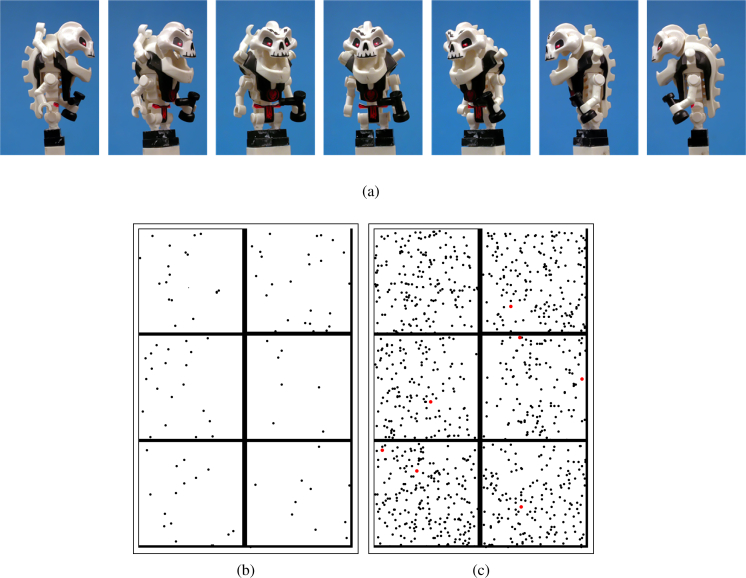
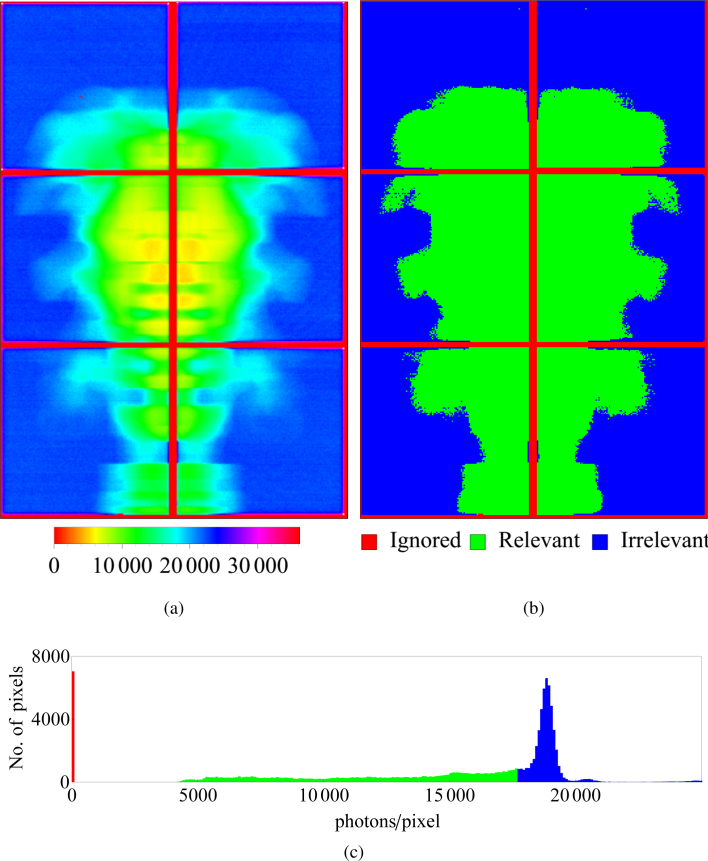
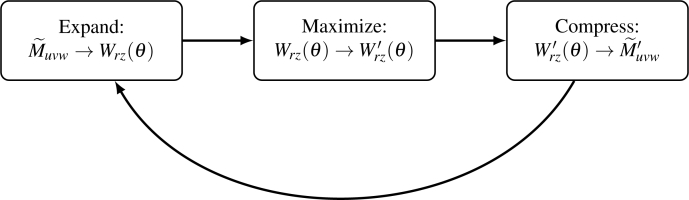
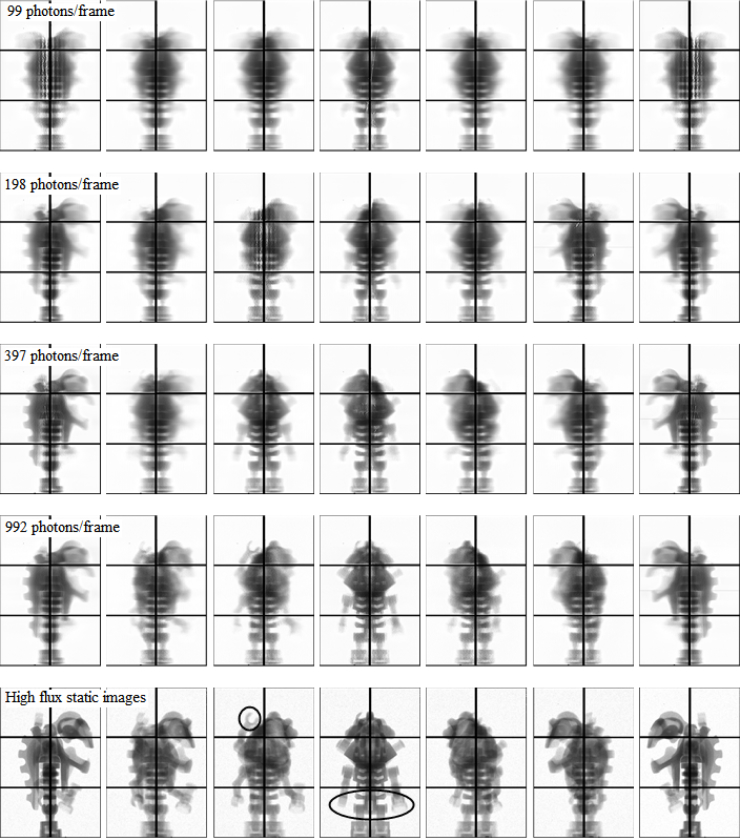
Schemes for X-ray imaging single protein molecules using new x-ray sources, like x-ray free electron lasers (XFELs), require processing many frames of data that are obtained by taking temporally short snapshots of identical molecules, each with a random and unknown orientation. Due to the small size of the molecules and short exposure times, average signal levels of much less than 1 photon/pixel/frame are expected, much too low to be processed using standard methods. One approach to process the data is to use statistical methods developed in the EMC algorithm (Loh & Elser, Phys. Rev. E, 2009) which processes the data set as a whole. In this paper we apply this method to a real-space tomographic reconstruction using sparse frames of data (below 10(-2) photons/pixel/frame) obtained by performing x-ray transmission measurements of a low-contrast, randomly-oriented object. This extends the work by Philipp et al. (Optics Express, 2012) to three dimensions and is one step closer to the single molecule reconstruction problem.
Figures

References
-
- Chapman H. N., Fromme P., Barty A., White T. A., Kirian R. A., Aquila A., Hunter M. S., Schulz J., De-Ponte D. P., Weierstall U., Bruce Doak R., Maia F. R. N. C., Martin A. V., Schlichting I., Lomb L., Coppola N., Shoeman R. L., Epp S. W., Hartmann R., Rolles D., Rudenko A., Foucar L., Kimmel N., Weidenspointner G., Holl P., Liang M., Barthelmess M., Caleman C., Boutet S., Bogan M. J., Krzywinski J., Bostedt C., Bajt S., Gumprecht L., Rudek B., Erk B., Schmidt C., Homke A., Reich C., Pietschner D., Struder L., Hauser G., Gorke H., Ullrich J., Herrmann S., Schaller G., Schopper F., Soltau H., Kuhnel K., Messerschmidt M., Bozek J. D., Hau-Riege S. P., Frank M., Hampton C. Y., Sierra R. G., Starodub D., Williams G. J., Hajdu J., Timneanu N., Marvin Seibert M., Andreasson J., Rocker A., Jonsson O., Svenda M., Stern S., Nass K., Andritschke R., Schroter C., Krasniqi F., Bott M., Schmidt K. E., Wang X., Grotjohann I., Holton J. M., Barends T. R. M., Neutze R., Marchesini S., Fromme R., Schorb S., Rupp D., Adolph M., Gorkhover T., Andersson I., Hirsemann H., Potdevin G., Graafsma H., Nilsson B., Spence J. C. H., “Femtosecond X-ray protein nanocrystallography,” Nature (London) 470(7332), 73–77 (2011) 10.1038/nature09750 - DOI - PMC - PubMed
-
- Boutet S., Lomb L., Williams G. J., et al. Boutet S., Lomb L., Williams G. J., Barends T. R. M., Aquila A., Doak R. B., Weierstall U., DePonte D. P., Steinbrener J., Shoeman R. L., Messerschmidt M., Barty A., White T. A., Kassemeyer S., Kirian R. A., Seibert M. M., Montanez P. A., Kenney C., Herbst R., Hart P., Pines J., Haller G., Gruner S. M., Philipp H. T., Tate M. W., Hromalik M., Koerner L. J., Bakel N. v., Morse J., Ghonsalves W., Arnlund D., Bogan M. J., Caleman C., Fromme R., Hampton C. Y., Hunter M. S., Johansson L. C., Katona G., Kupitz C., Liang M., Martin A. V., Nass K., Redecke L., Stellato F., Timneanu N., Wang D., Zatsepin N. A., Schafer D., Defever J., Neutze R., Fromme P., Spence J. C. H., Chapman H. N., Schlichting I., “High-resolution protein structure determination by serial femtosecond crystallography,” Science 337(6092), 362–364 (2012) 10.1126/science.1217737 - DOI - PMC - PubMed
-
- White T. A., Kirian R. A., Martin A. V, Aquila A., Nass K., Barty A., Chapman H. N., “CrystFEL: a software suite for snapshot serial crystallography,” J. Appl. Cryst. 45(2), 335–341 (2012) 10.1107/S0021889812002312 - DOI
-
- Elser V., “Noise limits on reconstructing diffraction signals from random tomographs,” IEEE T. Inform. Theory 55(10), 4715–4722 (2009). 10.1109/TIT.2009.2027547 - DOI
Publication types
MeSH terms
Substances
Grants and funding
LinkOut - more resources
Full Text Sources
Other Literature Sources
Medical