


Short-term insulin requirements following gastric bypass surgery in severely obese women with type 1 diabetes
- PMID: 24668543
- PMCID: PMC4122809
- DOI: 10.1007/s11695-014-1228-8
Short-term insulin requirements following gastric bypass surgery in severely obese women with type 1 diabetes
Abstract
Background: In severely obese type 2 diabetes patients, gastric bypass surgery (GB) reduces body mass index (BMI) and hemoglobin A1c (HbA1c) and allows reduced doses of insulin and other medications. Data regarding the effects of GB on severely obese patients with type 1 diabetes are limited.
Methods: Severely obese women with type 1 diabetes (n = 9) were studied immediately before and after GB (7.7 ± 5.8 weeks, mean ± SD).
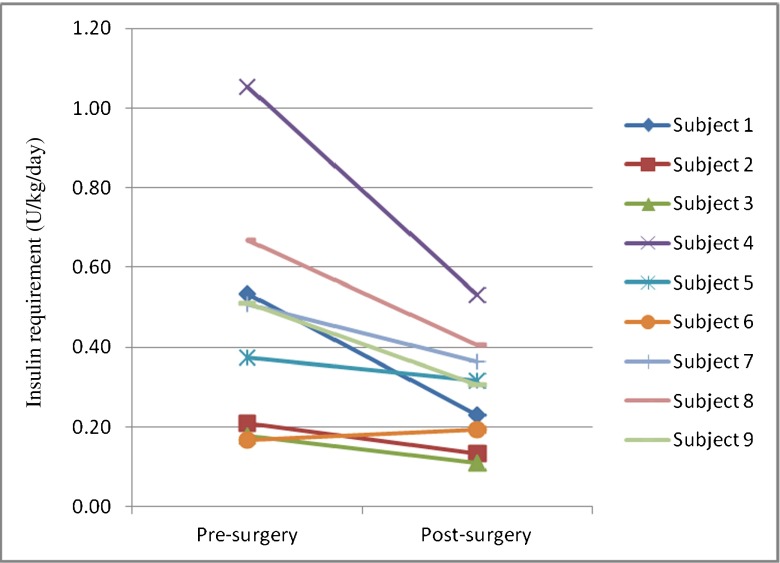
Results: On average, GB reduced mean BMI by 11% and mean HbA1c by 0.9% (from 8.0 to 7.1%), with a parallel 38% decrease in basal insulin requirements (expressed per kilogram of body weight).
Conclusion: GB rapidly decreased BMI, HbA1c, and insulin requirements in severely obese women with type 1 diabetes. However, physiologic insulin replacement remains necessary in patients with type 1 diabetes.
Conflict of interest statement
R.J.W.M., T.J-T, M.E.P., and F.M.B. have no conflict of interest to disclose.
Figures
References
MeSH terms
Substances
Grants and funding
LinkOut - more resources
Full Text Sources
Other Literature Sources
Medical
