. 2014;43(4):20130259.
doi: 10.1259/dmfr.20130259. Epub 2014 Feb 26.

Cone beam CT evaluation of the presence of anatomic accessory canals in the jaws

Affiliations

Cone beam CT evaluation of the presence of anatomic accessory canals in the jaws

M Eshak et al. Dentomaxillofac Radiol. 2014.

Abstract

Objectives: To assess the prevalence, location and anatomical course of accessory canals of the jaws using cone beam CT.

Methods: A retrospective analysis of 4200 successive cone beam CT scans, for patients of both genders and ages ranging from 7 to 88 years, was performed. They were exposed at the School of Dentistry, University of Michigan, Ann Arbor, MI. After applying the exclusion criteria (the presence of severe ridge resorption, pre-existing implants, a previously reported history of craniofacial malformations or syndromes, a previous history of trauma or surgery, inadequate image quality and subsequent scans from the same individuals), 4051 scans were ultimately included in this study.

Results: Of the 4051 scans (2306 females and 1745 males) that qualified for inclusion in this study, accessory canals were identified in 1737 cases (42.9%; 1004 females and 733 males). 532 scans were in the maxilla (13.1%; 296 females and 236 males) and 1205 in the mandible (29.8%; 708 females and 497 males).

Conclusions: A network of accessory canals bringing into communication the inner and outer cortical plates of the jaws was identified. In light of these findings, clinicians should carefully assess for the presence of accessory canals prior to any surgical intervention to decrease the risk for complications.

Keywords: CBCT; accessory canals; incisive canal; interforaminal; lingual vascular canals.


Figures
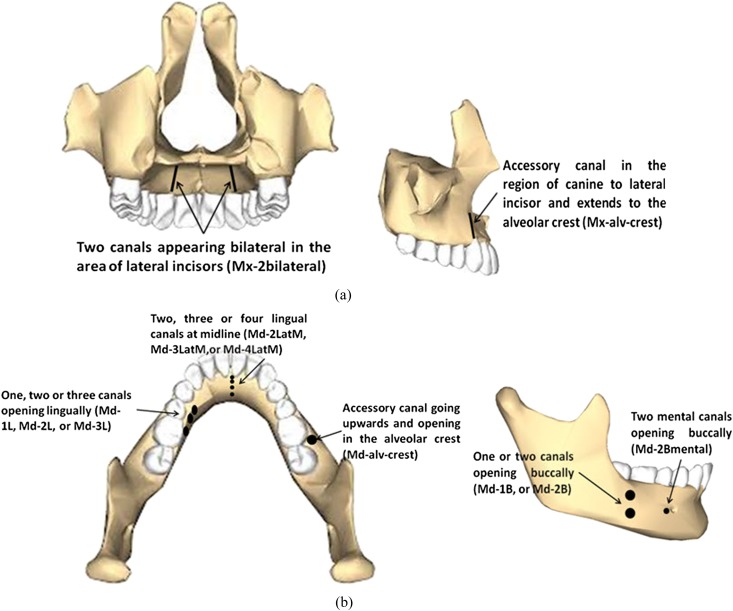
Figure 1
Figure 1
Schematic drawings of the maxilla (a) and mandible (b) illustrating the various positions of accessory canals identified in this study. Md-1B, one canal opening buccally (mandible); Md-1L, one canal opening lingually (mandible); Md-2B, two canals opening buccally (mandible); Md-2Bmental, two mental canals opening buccally (mandible); Md-2L, two canals opening lingually (mandible); Md-2LatM, two lingual canals at midline (mandible); Md-3L, three canals opening lingually (mandible); Md-3LatM, three lingual canals at midline (mandible); Md-4LatM, four lingual canals at midline (mandible); Md-alv-crest, accessory canal travelling upwards and opening onto the alveolar crest (mandible); Mx-2bilateral, two canals appearing bilaterally in the area of lateral incisors (maxilla); Mx-alv-crest, accessory canal in the region of canine to lateral incisor, extending to the alveolar crest (maxilla). (Template from Anatomography.)
Figure 2
Figure 2
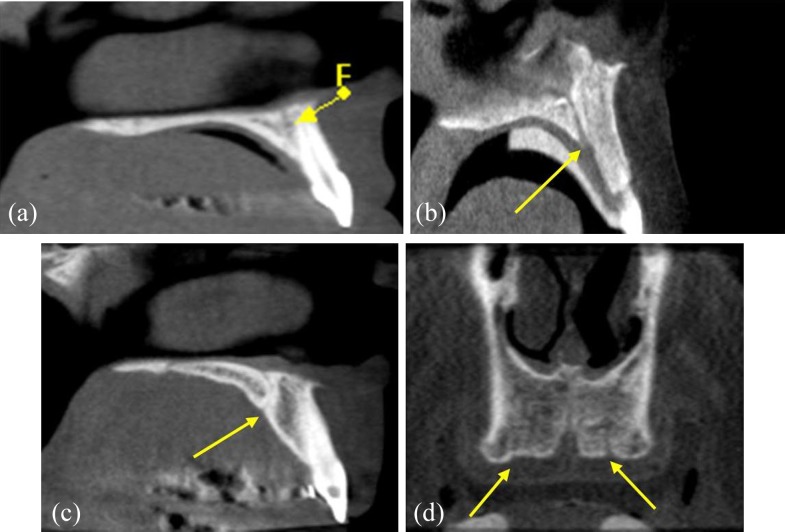
Cone beam CT images showing two canals appearing bilaterally in the area of the maxillary lateral incisors (denoted by arrows). (a–c) Sagittal cuts (visualizing the canal present at one side of the patient); (d) coronal cut (visualizing the two canals bilaterally; note that the right canal is at a different coronal level in relation to the left canal, therefore is less evident in this cut). F, foramina.
Figure 3
Figure 3
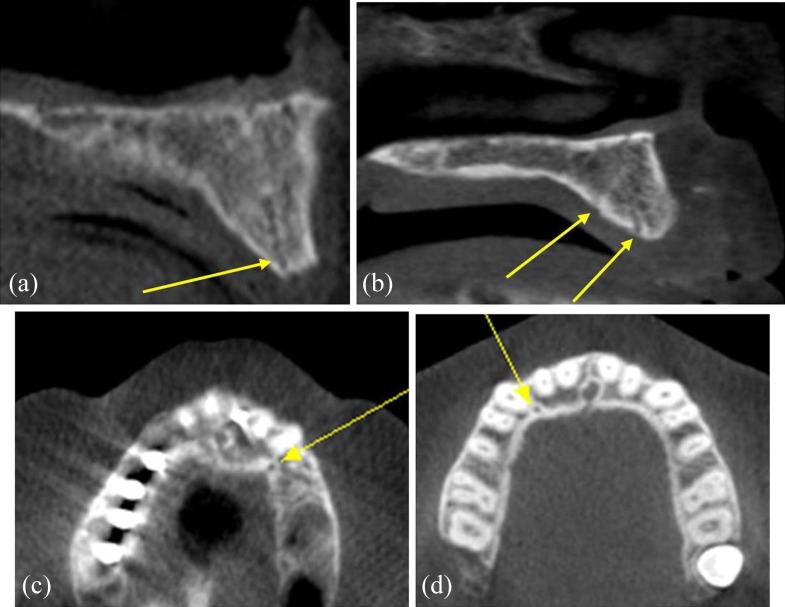
Cone beam CT images showing a maxillary accessory canal in the region of the canine to lateral incisor, extending to the alveolar crest (denoted by arrows). (a, b) Sagittal cuts; (c, d) axial cuts.
Figure 4
Figure 4
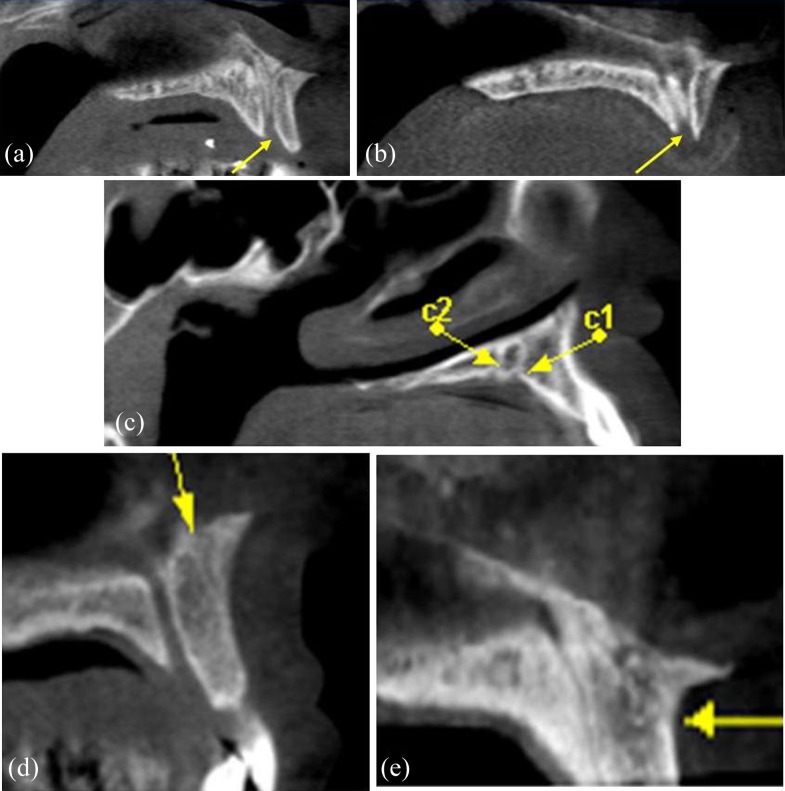
Cone beam CT images showing: (a, b) sagittal cuts of a bifid incisive canal (this was not considered an accessory canal). Note that this appears different from (c) sagittal cut of two accessory canals at the maxillary lateral incisor area; (d, e) sagittal cuts of accessory canals in the midline, opening buccally (denoted by arrows).
Figure 5
Figure 5
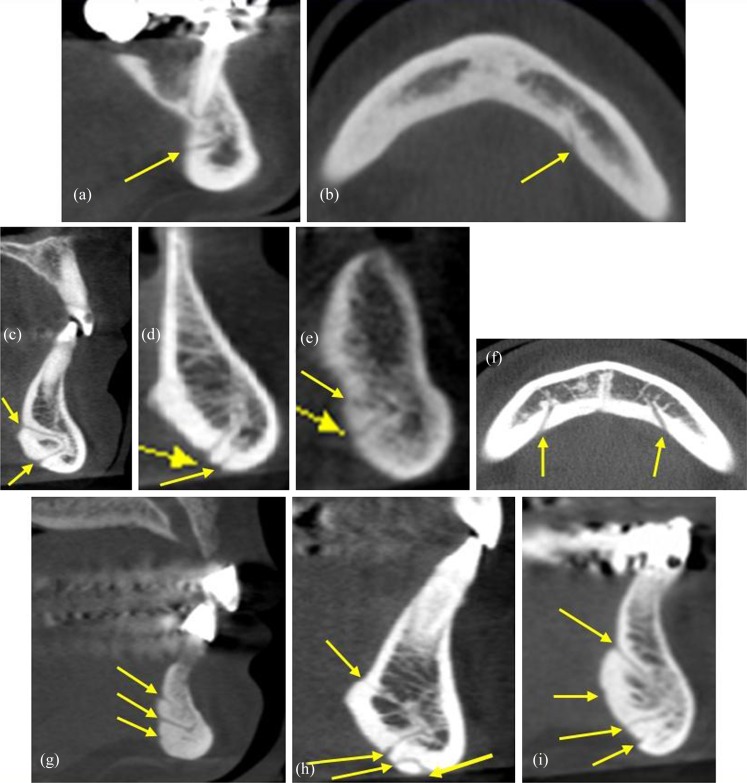
Cone beam CT images showing mandibular lingual accessory canals (denoted by arrows): (a) sagittal cut and (b) axial cut revealing the presence of one canal opening lingually; (c–e) sagittal cuts and (f) axial cut revealing the presence of two canals opening lingually; (g) sagittal cut revealing the presence of three accessory canals opening lingually; (h) sagittal cut revealing the presence of three accessory canals opening lingually and one opening at the base of the inferior border; (i) sagittal cut revealing the presence of four accessory canals opening lingually.
Figure 6
Figure 6
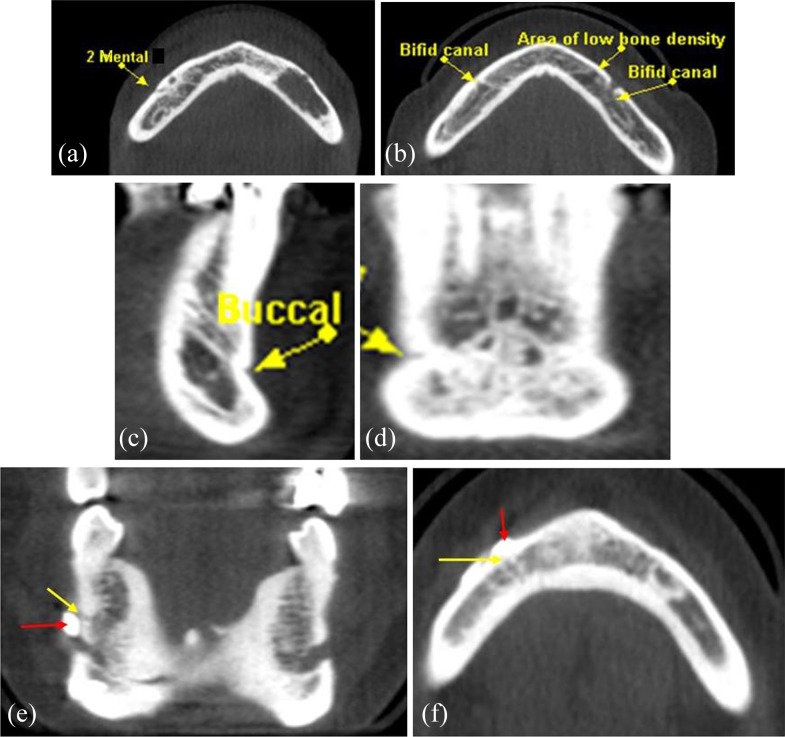
Cone beam CT images showing mandibular buccal accessory canals (denoted by arrows): (a) axial cut revealing the presence of two mental canals; (b) axial cut revealing the presence of bilateral bifid mental canal and an area of low bone density (this was not considered an accessory canal; note that the left canal is at a different axial level in relation to the right canal, therefore is less evident on this cut); (c) sagittal cut and (d) coronal cut revealing the presence of an accessory canal opening buccally at the canine area; (e) coronal cut and (f) axial cut revealing the presence of an accessory canal opening buccally at a level superior to the mental foramen [note the presence of a radiopaque marker denoted by the inferior arrow in (e) and the superior arrow in (f)].
Figure 7
Figure 7
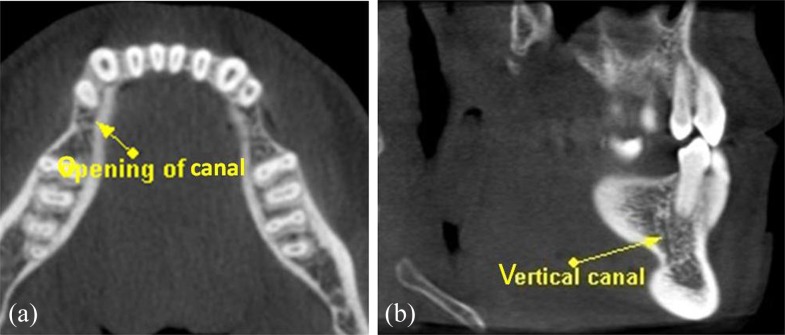
Cone beam CT images showing an accessory canal travelling upwards and opening on the alveolar crest (mandible): (a) axial cut revealing the canal opening at the alveolar crest; (b) sagittal cut revealing the vertical course of the canal in the alveolar process.

References

    1. Miller RJ, Edwards WC, Boudet C, Cohen JH. Maxillofacial anatomy: the mandibular symphysis. J Oral Implantol 2011; 37: 745–53. doi: 10.1563/AAID-JOI-D-10-00136 - DOI - PubMed
    1. Angelopoulos C. Cone beam tomographic imaging anatomy of the maxillofacial region. Dent Clin North Am 2008; 52: 731–52. doi: 10.1016/j.cden.2008.07.002 - DOI - PubMed
    1. Monsour PA, Dudhia R. Implant radiography and radiology. Aust Dent J 2008; 53(Suppl. 1): S11–25. doi: 10.1111/j.1834-7819.2008.00037.x - DOI - PubMed
    1. Scaravilli MS, Mariniello M, Sammartino G. Mandibular lingual vascular canals (MLVC): evaluation on dental CTs of a case series. Eur J Radiol 2010; 76: 173–6. doi: 10.1016/j.ejrad.2009.06.002 - DOI - PubMed
    1. Romanos GE, Greenstein G. The incisive canal. Considerations during implant placement: case report and literature review. Int J Oral Maxillofac Implants 2009; 24: 740–5. - PubMed

MeSH terms