


Exercise prevents weight gain and alters the gut microbiota in a mouse model of high fat diet-induced obesity
- PMID: 24670791
- PMCID: PMC3966766
- DOI: 10.1371/journal.pone.0092193
Exercise prevents weight gain and alters the gut microbiota in a mouse model of high fat diet-induced obesity
Abstract
Background: Diet-induced obesity (DIO) is a significant health concern which has been linked to structural and functional changes in the gut microbiota. Exercise (Ex) is effective in preventing obesity, but whether Ex alters the gut microbiota during development with high fat (HF) feeding is unknown.
Objective: Determine the effects of voluntary Ex on the gastrointestinal microbiota in LF-fed mice and in HF-DIO.
Methods: Male C57BL/6 littermates (5 weeks) were distributed equally into 4 groups: low fat (LF) sedentary (Sed) LF/Sed, LF/Ex, HF/Sed and HF/Ex. Mice were individually housed and LF/Ex and HF/Ex cages were equipped with a wheel and odometer to record Ex. Fecal samples were collected at baseline, 6 weeks and 12 weeks and used for bacterial DNA isolation. DNA was subjected both to quantitative PCR using primers specific to the 16S rRNA encoding genes for Bacteroidetes and Firmicutes and to sequencing for lower taxonomic identification using the Illumina MiSeq platform. Data were analyzed using a one or two-way ANOVA or Pearson correlation.
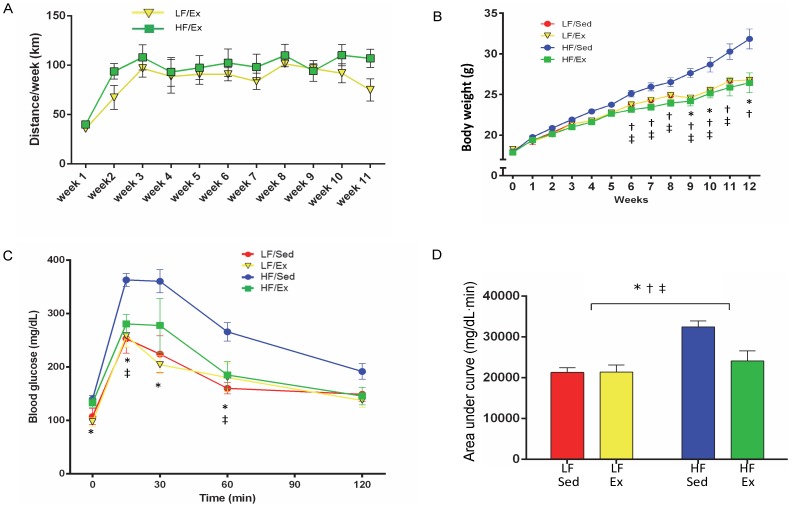
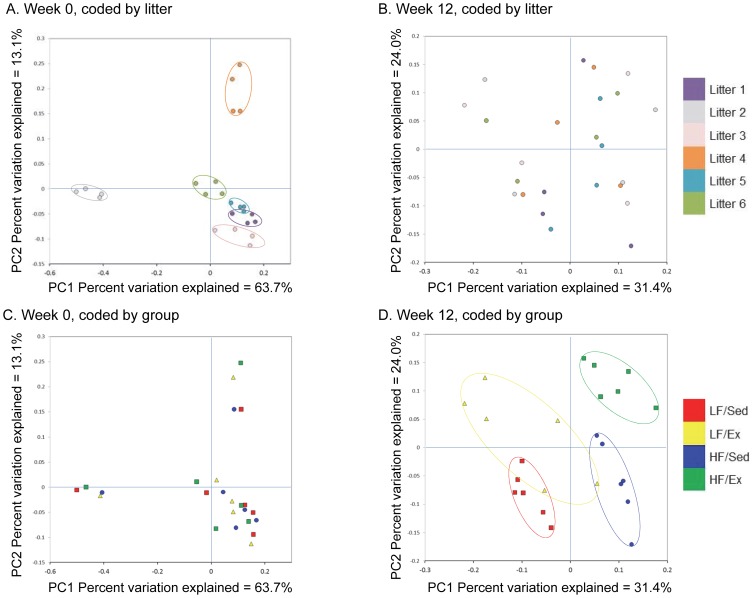
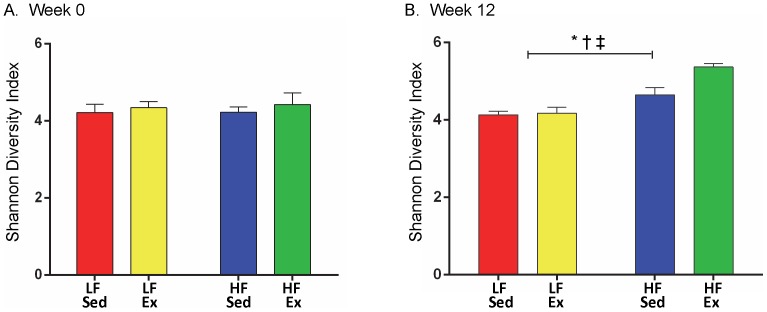
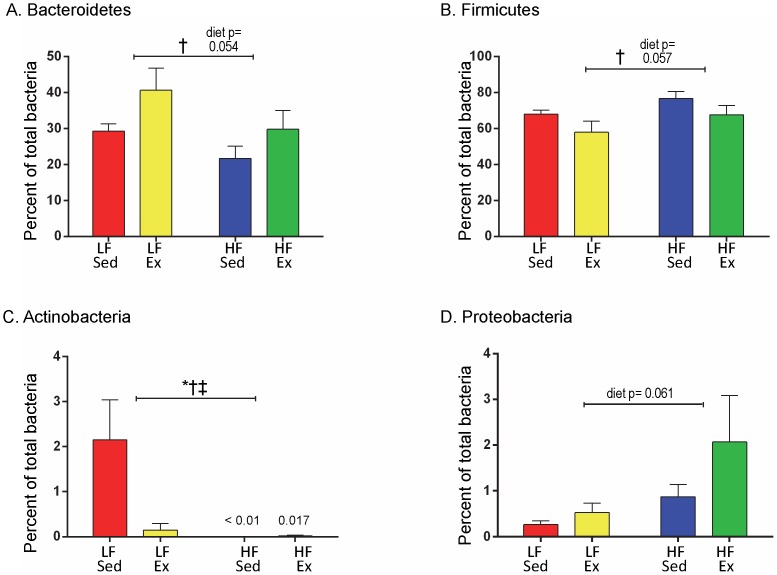
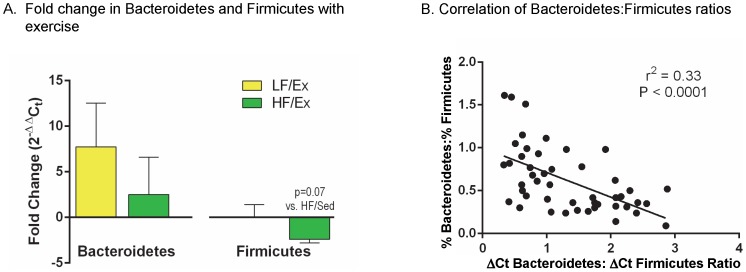
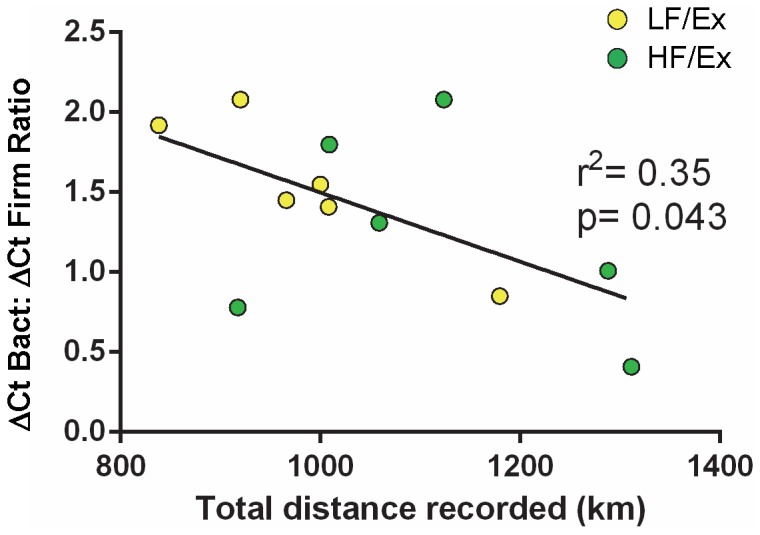
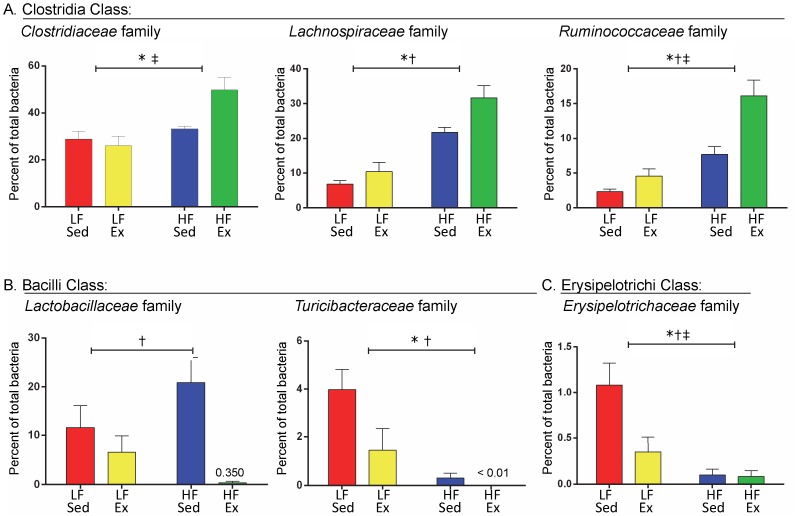
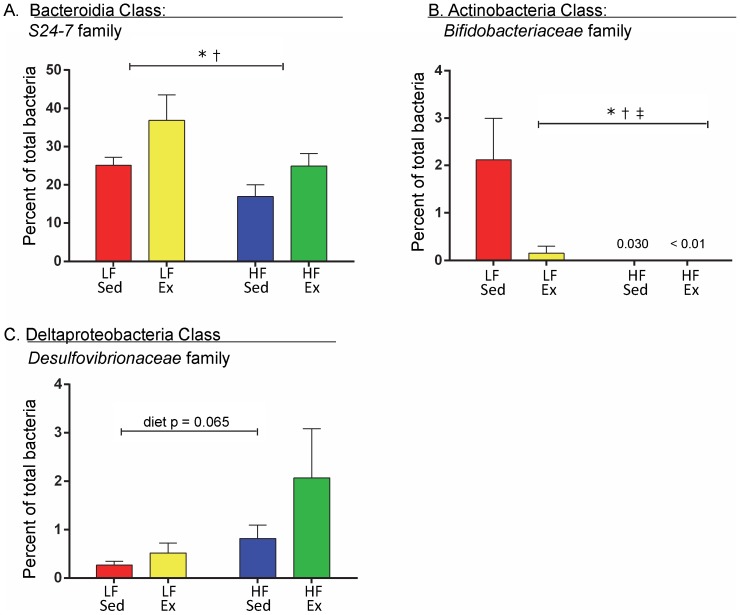
Results: HF diet resulted in significantly greater body weight and adiposity as well as decreased glucose tolerance that were prevented by voluntary Ex (p<0.05). Visualization of Unifrac distance data with principal coordinates analysis indicated clustering by both diet and Ex at week 12. Sequencing demonstrated Ex-induced changes in the percentage of major bacterial phyla at 12 weeks. A correlation between total Ex distance and the ΔCt Bacteroidetes: ΔCt Firmicutes ratio from qPCR demonstrated a significant inverse correlation (r2 = 0.35, p = 0.043).
Conclusion: Ex induces a unique shift in the gut microbiota that is different from dietary effects. Microbiota changes may play a role in Ex prevention of HF-DIO.
Conflict of interest statement
Figures
References
-
- Flegal KM, Carroll MD, Kit BK, Ogden CL (2012) Prevalence of obesity and trends in the distribution of body mass index among US adults, 1999–2010. JAMA 307: 491–497. - PubMed
-
- Eeg-Olofsson K, Cederholm J, Nilsson P, Zethelius B, Nunez L, et al. (2009) Risk of cardiovascular disease and mortality in overweight and obese patients with type 2 diabetes: an observational study in 13,087 patients. Diabetologia 52: 65–73. - PubMed
-
- Finkelstein EA, Trogdon JG, Cohen JW, Dietz W (2009) Annual medical spending attributable to obesity: payer-and service-specific estimates. Health Aff (Milwood) 28: w822–w831. - PubMed
-
- Wright JD, Borrud LG, McDowell MA, Wang C-Y, Radimer K, et al. (2007) Nutrition assessment in the national health and nutrition examination survey 1999–2002. J Am Diet Assoc 107: 822–829. - PubMed
Publication types
MeSH terms
Grants and funding
LinkOut - more resources
Full Text Sources
Other Literature Sources
Medical
Research Materials
Miscellaneous
