


An Intimate Relationship between ROS and Insulin Signalling: Implications for Antioxidant Treatment of Fatty Liver Disease
- PMID: 24672550
- PMCID: PMC3944655
- DOI: 10.1155/2014/519153
An Intimate Relationship between ROS and Insulin Signalling: Implications for Antioxidant Treatment of Fatty Liver Disease
Abstract
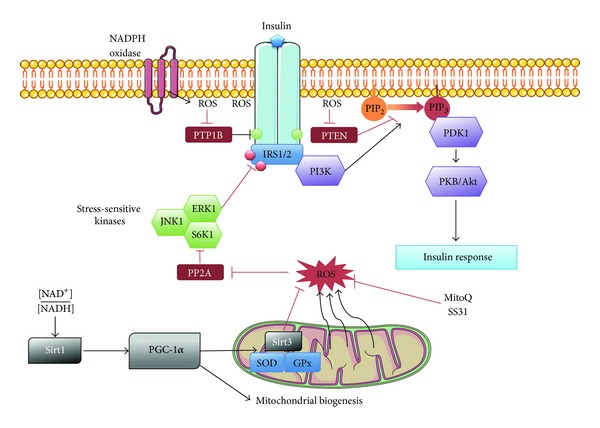
Oxidative stress damages multiple cellular components including DNA, lipids, and proteins and has been linked to pathological alterations in nonalcoholic fatty liver disease (NAFLD). Reactive oxygen species (ROS) emission, resulting from nutrient overload and mitochondrial dysfunction, is thought to be a principal mediator in NAFLD progression, particularly toward the development of hepatic insulin resistance. In the context of insulin signalling, ROS has a dual role, as both a facilitator and inhibitor of the insulin signalling cascade. ROS mediate these effects through redox modifications of cysteine residues affecting phosphatase enzyme activity, stress-sensitive kinases, and metabolic sensors. This review highlights the intricate relationship between redox-sensitive proteins and insulin signalling in the context of fatty liver disease, and to a larger extent, the importance of reactive oxygen species as primary signalling molecules in metabolically active cells.
Figures
References
-
- Hui AY, Wong VW-S, Chan HL-Y, et al. Histological progression of non-alcoholic fatty liver disease in Chinese patients. Alimentary Pharmacology & Therapeutics. 2005;21(4):407–413. - PubMed
-
- Wong VW, Wong GL-H, Choi PC-L, et al. Disease progression of non-alcoholic fatty liver disease: a prospective study with paired liver biopsies at 3 years. Gut. 2010;59(7):969–974. - PubMed
-
- Brunt EM. Pathology of nonalcoholic fatty liver disease. Nature Reviews Gastroenterology & Hepatology. 2010;7(4):195–203. - PubMed
-
- Smith BW, Adams LA. Nonalcoholic fatty liver disease and diabetes mellitus: pathogenesis and treatment. Nature Reviews Endocrinology. 2011;7:456–465. - PubMed
Publication types
LinkOut - more resources
Full Text Sources
Other Literature Sources
