


Physical activity and mental health in women with polycystic ovary syndrome
- PMID: 24674140
- PMCID: PMC3986680
- DOI: 10.1186/1472-6874-14-51
Physical activity and mental health in women with polycystic ovary syndrome
Abstract
Background: Physical activity is prescribed as a component of primary management for Polycystic Ovary Syndrome (PCOS). This study investigates the association between physical activity and mental health as well as the exercise barriers, motivators and support providers for younger women with and without PCOS to assist in physical activity uptake and prescription for these women.
Methods: Women aged 18-50 years with (n = 153) and without PCOS (n = 64) completed a questionnaire at one time point. The questionnaire included the Hospital Anxiety and Depression Scale and a survey regarding levels of physical activity, physical activity barriers, motivators and supports. A MANCOVA assessed associations between physical activity, PCOS and mental health (specifically depression and anxiety). Descriptive and Chi square goodness of fit statistics assessed the differences in perceived barriers, motivators and support providers amongst women with and without PCOS.
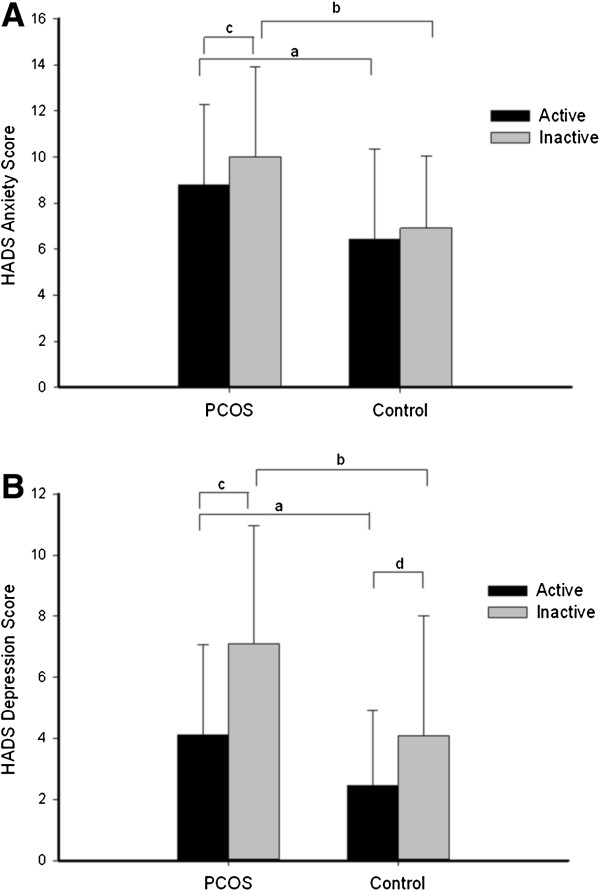
Results: Women with PCOS displayed higher severity of depression (F(1,210) = 8.32, p = 0.004) and anxiety (F(1,210) = 17.37, p < 0.001) symptoms compared to controls. Overall, for physically active women, depression was significantly less severe than in their inactive counterparts (F(2,210) = 13.62, p < 0.001). There were no differences in anxiety by physical activity status and no interaction effects between PCOS and activity status for depression or anxiety. Women with PCOS were more likely to report a lack of confidence about maintaining physical activity (Χ2 = 3.65; p = 0.046), fear of injury (Χ2 = 4.08; p = 0.043) and physical limitations (Χ2 = 11.92; p = 0.001) as barriers to physical activity and were more likely to be motivated to be active to control a medical condition (Χ2 = 7.48; p = 0.006). Women with PCOS identified more sources of support compared to women without PCOS.
Conclusions: Physical activity is associated with lower depression in women with PCOS and differences exist in the self-reported physical activity barriers, motivators and support providers, compared to controls. Being more active may offer mental health benefits in managing PCOS. Prescribing physical activity to women with PCOS should be individualized and consider both common and PCOS-specific barriers and motivators for successful engagement.
Figures
References
-
- Boyle J, Teede HJ. Polycystic ovary syndrome - an update. Aust Fam Physician. 2012;41(10):752–756. - PubMed
Publication types
MeSH terms
LinkOut - more resources
Full Text Sources
Other Literature Sources
Medical
Miscellaneous
