


Chlorhexidine-impregnated dressing for prevention of catheter-related bloodstream infection: a meta-analysis*
- PMID: 24674924
- PMCID: PMC4258905
- DOI: 10.1097/CCM.0000000000000319
Chlorhexidine-impregnated dressing for prevention of catheter-related bloodstream infection: a meta-analysis*
Abstract
Objective: To assess the efficacy of a chlorhexidine-impregnated dressing for prevention of central venous catheter-related colonization and catheter-related bloodstream infection using meta-analysis.
Data sources: Multiple computerized database searches supplemented by manual searches including relevant conference proceedings.
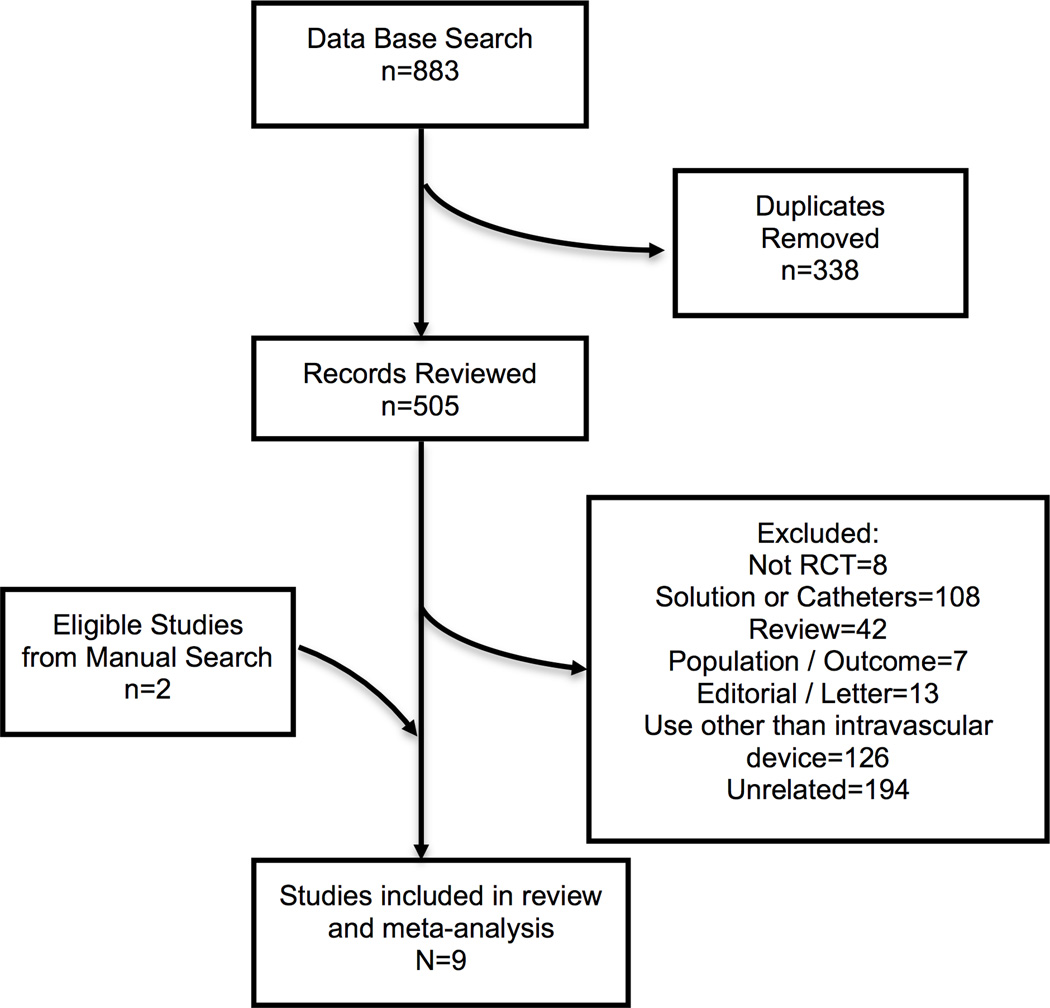
Study selection: Randomized controlled trials evaluating the efficacy of a chlorhexidine-impregnated dressing compared with conventional dressings for prevention of catheter colonization and catheter-related bloodstream infection.
Data extraction: Data were extracted on patient and catheter characteristics and outcomes.
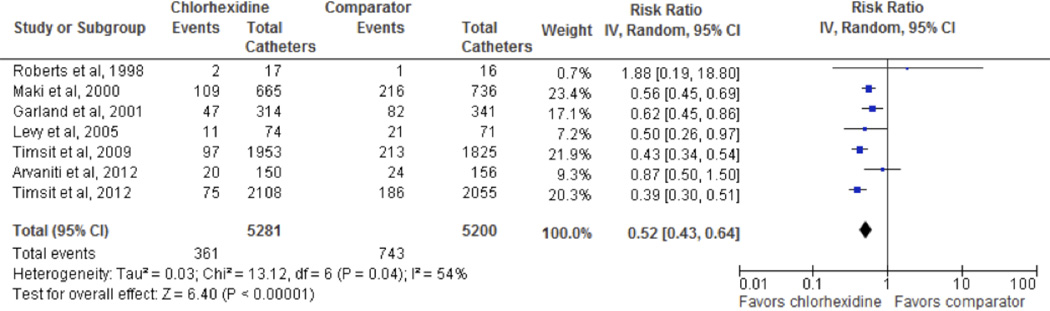
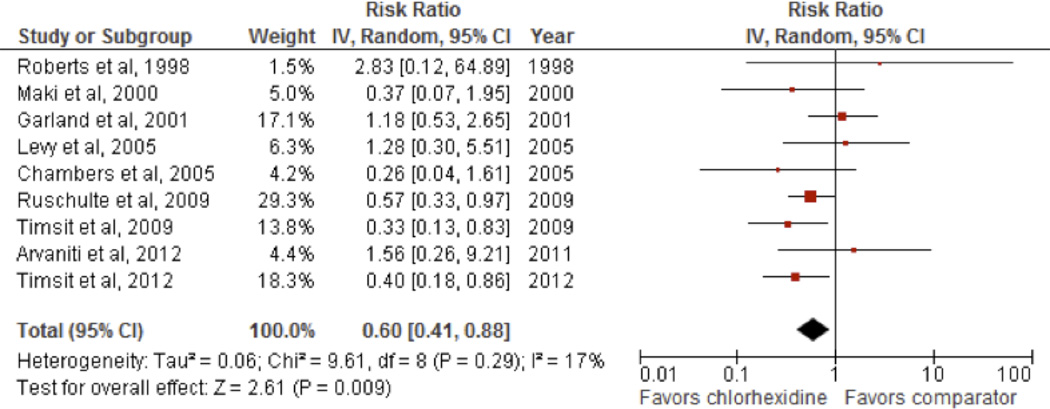
Data synthesis: Nine randomized controlled trials met the inclusion criteria. Use of a chlorhexidine-impregnated dressing resulted in a reduced prevalence of catheter-related bloodstream infection (random effects relative risk, 0.60; 95% CI, 0.41-0.88, p = 0.009). The prevalence of catheter colonization was also markedly reduced in the chlorhexidine-impregnated dressing group (random effects relative risk, 0.52; 95% CI, 0.43-0.64; p < 0.001). There was significant benefit for prevention of catheter colonization and catheter-related bloodstream infection, including arterial catheters used for hemodynamic monitoring. Other than in low birth weight infants, adverse effects were rare and minor.
Conclusions: Our analysis shows that a chlorhexidine-impregnated dressing is beneficial in preventing catheter colonization and, more importantly, catheter-related bloodstream infection and warrants routine use in patients at high risk of catheter-related bloodstream infection and central venous catheter or arterial catheter colonization.
Figures
Comment in
-
Chlorhexidine-impregnated dressing: an efficient weapon against catheter-related bloodstream infection?*.Crit Care Med. 2014 Jul;42(7):1742-3. doi: 10.1097/CCM.0000000000000368. Crit Care Med. 2014. PMID: 24933057 No abstract available.
-
Review: chlorhexidine-impregnated dressings reduce risk of colonisation of central venous catheters and risk of catheter-related bloodstream infection.Evid Based Nurs. 2015 Jul;18(3):91. doi: 10.1136/eb-2014-101959. Epub 2014 Oct 30. Evid Based Nurs. 2015. PMID: 25358484 No abstract available.
-
Does chlorhexidine-impregnated dressing reduce the risk of catheter-related bloodstream infection in all vascular access?Crit Care Med. 2015 Feb;43(2):e50-1. doi: 10.1097/CCM.0000000000000739. Crit Care Med. 2015. PMID: 25599496 No abstract available.
-
The authors reply.Crit Care Med. 2015 Feb;43(2):e51. doi: 10.1097/CCM.0000000000000831. Crit Care Med. 2015. PMID: 25599497 No abstract available.
References
-
- Climo M, Diekema D, Warren DK, et al. Prevalence of the use of central venous access devices within and outside of the intensive care unit: results of a survey among hospitals in the prevention epicenter program of the Centers for Disease Control and Prevention. Infect Control Hosp Epidemiol. 2003;24(12):942–945. - PubMed
-
- Shlaes DM, Gerding DN, John JF, Jr, et al. Society for Healthcare Epidemiology of America and Infectious Diseases Society of America Joint Committee on the Prevention of Antimicrobial Resistance: guidelines for the prevention of antimicrobial resistance in hospitals. Clin Infect Dis. 1997;25(3):584–599. - PubMed
-
- O’Grady NP, Alexander M, Dellinger EP, et al. Guidelines for the prevention of intravascular catheter-related infections. Am J Infect Control. 2002;30(8):476–489. - PubMed
-
- Mermel LA, Farr BM, Sherertz RJ, et al. Guidelines for the management of intravascular catheter-related infections. Clin Infect Dis. 2001;32(9):1249–1272. - PubMed
Publication types
MeSH terms
Substances
Grants and funding
LinkOut - more resources
Full Text Sources
Other Literature Sources
Miscellaneous
