. 2014 Jun 1;74(11):3146-56.
doi: 10.1158/0008-5472.CAN-13-3728. Epub 2014 Mar 27.

Failure to induce apoptosis via BCL-2 family proteins underlies lack of efficacy of combined MEK and PI3K inhibitors for KRAS-mutant lung cancers

Affiliations

Failure to induce apoptosis via BCL-2 family proteins underlies lack of efficacy of combined MEK and PI3K inhibitors for KRAS-mutant lung cancers

Aaron N Hata et al. Cancer Res. .

Abstract

Although several groups have demonstrated that concomitant use of MEK and phosphoinositide 3-kinase (PI3K) inhibitors (MEKi/PI3Ki) can induce dramatic tumor regressions in mouse models of KRAS-mutant non-small cell lung cancer (NSCLC), ongoing clinical trials investigating this strategy have been underwhelming to date. While efficacy may be hampered by a narrow therapeutic index, the contribution of biologic heterogeneity in the response of KRAS-mutant NSCLCs to MEKi/PI3Ki has been largely unexplored. In this study, we find that most human KRAS-mutant NSCLC cell lines fail to undergo marked apoptosis in response to MEKi/PI3Ki, which is key for tumor responsiveness in vivo. This heterogeneity of apoptotic response occurs despite relatively uniform induction of growth arrest. Using a targeted short hairpin RNA screen of BCL-2 family members, we identify BIM, PUMA, and BCL-XL as key regulators of the apoptotic response induced by MEKi/PI3Ki, with decreased expression of BIM and PUMA relative to BCL-XL in cell lines with intrinsic resistance. In addition, by modeling adaptive resistance to MEKi/PI3Ki both in vitro and in vivo, we find that, upon the development of resistance, tumors have a diminished apoptotic response due to downregulation of BIM and PUMA. These results suggest that the inability to induce apoptosis may limit the effectiveness of MEKi/PI3Ki for KRAS-mutant NSCLCs by contributing to intrinsic and adaptive resistance to this therapy.


Figures

Figure 1
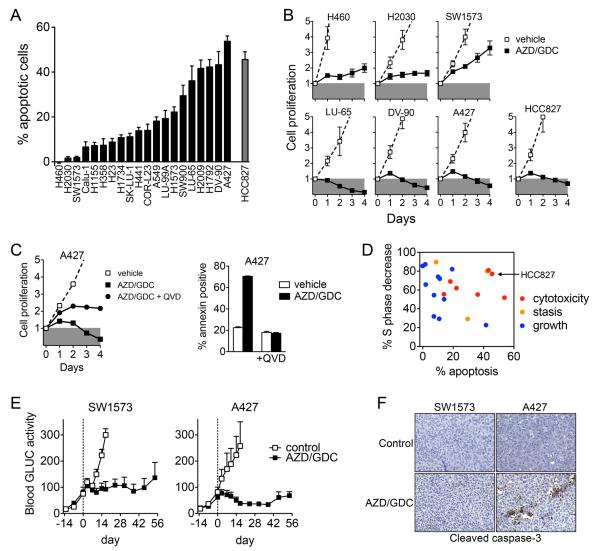
Figure 1. Apoptosis is necessary for tumor regression in response to MEKi/PI3Ki in vitro and in vivo
A. Cells were treated with 1 μM AZD6244/GDC-0941 or 1 μM gefitinib (HCC827) and the apoptotic response was determined by annexin staining and flow cytometry. % apoptotic cells were determined by subtracting annexin positive cells with vehicle treatment. Data are mean and standard error of 4-8 independent experiments. B. Cells were treated 1 μM AZD6244/GDC-0941 or 1 μM gefitinib (HCC827, closed squares) and cell proliferation determined by CellTiter-Glo viability assay. Data are normalized to baseline value at the time of initial drug treatment (day 0) and are mean and standard error of three independent experiments. C. Cells were treated with AZD6244/GDC-0941 with or without 20 μM QVD-Oph. Data shown are mean and standard error of triplicate samples. D. Apoptosis and cell cycle arrest are necessary for cytotoxic response of KRAS mutant NSCLC to MEKi/PI3Ki. Each data point represents a different cell line. The response of the EGFR mutant HCC827 cells to gefitinib is shown for comparison. Data combined from Figures 1A, 1B, S2A. E. Mice bearing SW1573-GLUC and A427-GLUC subcutaneous xenografts were treated with 100 mg/kg GDC-0941 plus 25 mg/kg AZD6244 once daily by oral gavage and secreted luciferase in whole blood was measured. Data shown are mean and standard error (SW1573: control n=4, AZD/GDC n=4; A427: control n=4, AZD/GDC n=5). F. A427 but not SW1573 xenograft tumors have increased caspase-3 activation following short term MEKi/PI3Ki treatment.
Figure 2
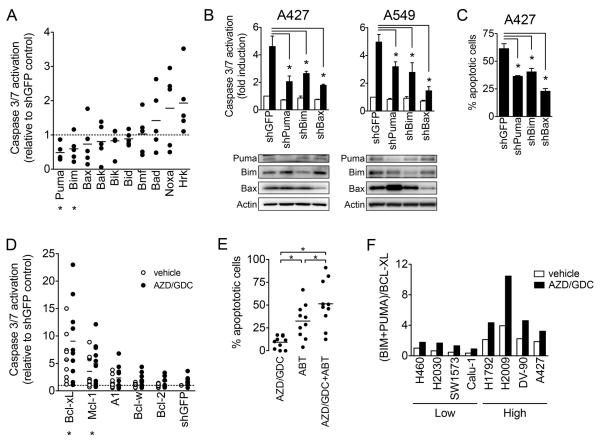
Figure 2. PUMA, BIM and BCL-XL mediate the apoptotic response to MEKi/PI3Ki
A. Five sensitive cells lines (A427, DV-90, H2009, H1792, A549) were infected with lentivirus harboring shRNA targeting pro-apoptotic BCL-2 family. Caspase-3/7 activity was determined 48 hours after treatment with 1 μM AZD6244/GDC-0941. Each data point represents the mean caspase activation of an individual cell line (2-5 independent replicates) relative to shGFP control. Asterisks indicate significant difference (p<0.05) compared to shGFP control. B. Caspase 3/7 activation following treatment with 1 μM AZD6244/GDC-0941 was determined for cell lines with stable knockdown of the indicated BCL-2 family. Data shown are mean and standard error of 3-4 independent experiments. C. Apoptotic cells (annexin positive) were determined after treatment with 1 μM AZD6244/GDC-0941. D. Ten insensitive cell lines (H460, H2030, SW1573, H1155, H358, H23, Calu-1, CORL-23, SK-LU-1, H1734, H1155) were infected with lentivirus harboring shRNAs targeting pro-survival BCL-2 family members followed by treatment with 1 μM AZD6244/GDC-0941. Each data point represents the mean relative caspase activation of an individual cell line (2-5 independent replicates) compared to shGFP vehicle control. E. Cell lines were treated with 1 μM AZD6244, GDC-0941, ABT263 or combination. Each symbol represents the mean (3-4 independent experiments) for a single cell line. F. Cell lines were treated with 1 μM AZD6244/GDC-0941 or vehicle for 24 hours and protein expression levels were quantified from western blots and normalized to vehicle treated H460 cells. For representative western blot see Figure S14A. Data are the mean of three independent experiments.
Figure 3
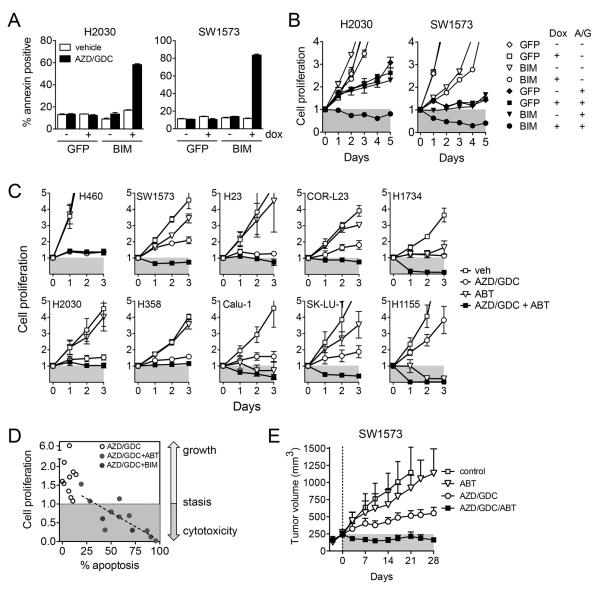
Figure 3. Induction of apoptosis restores responsiveness of insensitive KRAS mutant NSCLC cell lines and leads to tumor regression in vivo
A. Cells expressing BIM or GFP under control of a tetracycline inducible promoter (pTREX) were treated with doxycycline and 1 μM AZD6244/GDC-0941 as indicated and apoptosis determined. B. Cells were treated with doxycycline and AZD6244/GDC-0941 and cell proliferation determined. Data shown are mean and standard error of triplicate samples and are representative of three independent experiments. C. Cell lines were treated with 1 μM AZD6244, GDC-0941, ABT-263 or combination. Data are mean and standard error of three independent experiments. D. Restoration of apoptotic response by BIM expression (Figure 3A,B) or BCL-XL inhibition by ABT263 (Figure 2E, 3C) correlates with conversion of cytostatic to cytotoxic response to MEKi/PI3Ki in insensitive KRAS mutant NSCLC cells. E. Mice bearing SW1573 xenografts were treated with vehicle control, 25 mg/kg AZD6244, 100 mg/kg GDC-0941, 100 mg/kg ABT-263 or combination once daily by oral gavage (n=4 per group). Data shown are mean and standard error.
Figure 4
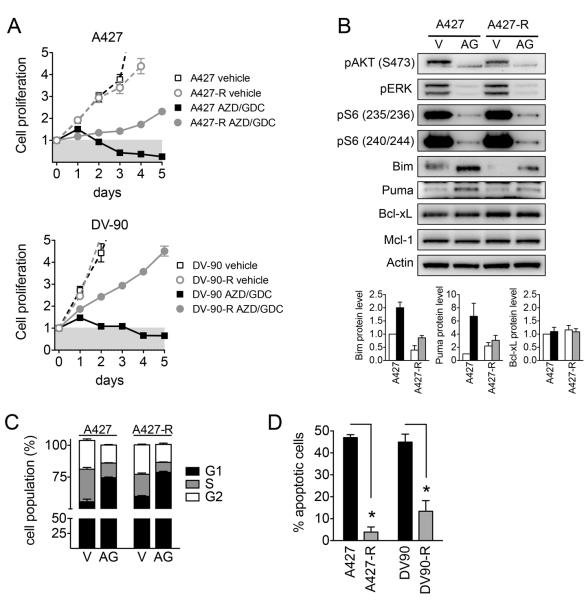
Figure 4. Loss of apoptotic response underlies adaptive resistance to MEKi/PI3Ki in vitro
A. Resistant (A427-R and DV-90-R) and parental cells were treated with 1 μM AZD6244/GDC-0941 and cell proliferation measured. B. A427 and A427-R cells were treated with 1 μM AZD6244/GDC-0941 (AG) or vehicle (V) for 24 hours. Lower: Quantitation of protein expression from western blots. Data are mean and error of three independent experiments. C. Cells were treated with 1 μM AZD6244/GDC-0941 for 24 hours, stained with propidium iodide and cell cycle populations analyzed by flow cytometry. D. Cells were treated with 1 μM AZD6244/GDC-0941 and apoptosis determined by annexin staining. Data shown are mean and standard error of 5-7 independent experiments.
Figure 5
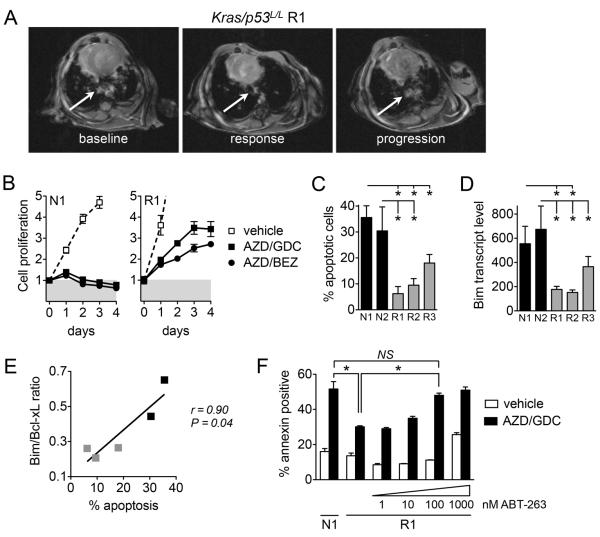
Figure 5. Loss of apoptotic response underlies acquired resistance to MEKi/PI3Ki in vivo
A. Cell lines established from resistant Kras p53L/L tumors after progression during MEKi/PI3Ki treatment. MRI images of R1 tumor nodule (arrow) at baseline, after treatment with AZD6244/BEZ235 (response, -72% change from baseline), and on-treatment progression (resistant, +200% change from nadir). B. Cell lines derived from treatment naïve (N1) and resistant (R1) tumor nodules were treated with 1 μM AZD6244/GDC-0941 or 1 μM AZD6244/BEZ235. C. Cell lines from resistant Kras p53L/L tumors (R1, R2, R3) and treatment naïve tumors (N1, N2) were treated with 1 μM AZD6244/GDC-0941 and apoptosis determined by annexin staining. Data shown are the mean and standard error of 3-4 independent experiments. D. BIM mRNA expression levels were determined by quantitative RT-PCR. Data shown are mean and error of 3 independent experiments. E. Correlation of BIM/BCL-XL ratios with apoptotic response for resistant (gray) and naïve (black) tumor derived cell lines. F. Cell lines were treated with AZD6244/GDC-0941 with or without ABT-263 and apoptosis determined. Data shown are mean and error of triplicate samples.

References

    1. Maemondo M, Inoue A, Kobayashi K, Sugawara S, Oizumi S, Isobe H, et al. Gefitinib or chemotherapy for non-small-cell lung cancer with mutated EGFR. N Engl J Med. 2010;362(25):2380–8. - PubMed
    1. Mitsudomi T, Morita S, Yatabe Y, Negoro S, Okamoto I, Tsurutani J, et al. Gefitinib versus cisplatin plus docetaxel in patients with non-small-cell lung cancer harbouring mutations of the epidermal growth factor receptor (WJTOG3405): an open label, randomised phase 3 trial. Lancet Oncol. 2010;11(2):121–8. - PubMed
    1. Kwak EL, Bang Y-J, Camidge DR, Shaw AT, Solomon B, Maki RG, et al. Anaplastic Lymphoma Kinase Inhibition in Non,ÄìSmall-Cell Lung Cancer. New England Journal of Medicine. 2010;363(18):1693–703. - PMC - PubMed
    1. Young A, Lyons J, Miller AL, Phan VT, Alarcon IR, McCormick F. Ras signaling and therapies. Advances in cancer research. 2009;102:1–17. - PubMed
    1. Engelman JA, Chen L, Tan X, Crosby K, Guimaraes AR, Upadhyay R, et al. Effective use of PI3K and MEK inhibitors to treat mutant Kras G12D and PIK3CA H1047R murine lung cancers. Nat Med. 2008;14(12):1351–6. - PMC - PubMed

Publication types

MeSH terms