. 2014 Mar 27;10(3):e1004258.
doi: 10.1371/journal.pgen.1004258. eCollection 2014 Mar.

Heterozygous de novo and inherited mutations in the smooth muscle actin (ACTG2) gene underlie megacystis-microcolon-intestinal hypoperistalsis syndrome

Affiliations

Heterozygous de novo and inherited mutations in the smooth muscle actin (ACTG2) gene underlie megacystis-microcolon-intestinal hypoperistalsis syndrome

Michael F Wangler et al. PLoS Genet. .

Abstract

Megacystis-microcolon-intestinal hypoperistalsis syndrome (MMIHS) is a rare disorder of enteric smooth muscle function affecting the intestine and bladder. Patients with this severe phenotype are dependent on total parenteral nutrition and urinary catheterization. The cause of this syndrome has remained a mystery since Berdon's initial description in 1976. No genes have been clearly linked to MMIHS. We used whole-exome sequencing for gene discovery followed by targeted Sanger sequencing in a cohort of patients with MMIHS and intestinal pseudo-obstruction. We identified heterozygous ACTG2 missense variants in 15 unrelated subjects, ten being apparent de novo mutations. Ten unique variants were detected, of which six affected CpG dinucleotides and resulted in missense mutations at arginine residues, perhaps related to biased usage of CpG containing codons within actin genes. We also found some of the same heterozygous mutations that we observed as apparent de novo mutations in MMIHS segregating in families with intestinal pseudo-obstruction, suggesting that ACTG2 is responsible for a spectrum of smooth muscle disease. ACTG2 encodes γ2 enteric actin and is the first gene to be clearly associated with MMIHS, suggesting an important role for contractile proteins in enteric smooth muscle disease.


Conflict of interest statement

The authors have read the journal's policy and have the following conflicts: The Department of Molecular and Human Genetics at Baylor College of Medicine (BCM) offers extensive genetic laboratory testing, and BCM derives revenue from this activity. The Department offers chromosomal microarray analysis, whole-exome sequencing, and many other tests.

Figures

Figure 1
Figure 1. Radiologic features of MMIHS due to de novo ACTG2 mutations.
A.) An infant subject from our cohort (Fam28-1) underwent an upper GI study with small bowel follow-through. Contrast was administered beyond the pylorus (left panel, arrow) in this patient who had undergone a previous Ladd procedure. At two hours, the contrast has mostly passed retrograde back into the stomach (arrow) contrary to expectations. At six hours, the contrast is in the small intestine (arrow) and has not reached the colon. At two days, contrast material is still present in the colon (arrow) suggesting a severely delayed transit of material in the GI tract consistent with hypoperistalsis. No physical obstructive lesions are visualized. B.) An abdominal CT scan on an adolescent patient with MMIHS (Fam26-1). The patient has a diverting ileostomy, but multiple distended bowel loops with air-fluid levels (arrows) are seen at the level of the sacrum (left) and lumbar spine (right). C.) A voiding cystourethrogram on an infant male subject (Fam29-1) showing a grossly distended bladder.
Figure 2
Figure 2. Clinical features and inheritance of ACTG2 mutations in de novo and familial cases.
Family pedigrees with clinical features correlated with the severity of smooth muscle dysfunction are shown. The most severe features of TPN dependence and megacystic bladder noted as dark squares within the upper quarters. The diagnosis of MMIHS (orange) was made in all but one subject with de novo ACTG2 mutations. One subject (Fam 12-1) was diagnosed with gastrointestinal hollow visceral myopathy but had megacystis prenatally. Three families exhibiting dominant inheritance patterns are depicted below. One subject (Fam 13-1) suffered from a megacystic bladder but had later onset functional GI pseudo-obstruction. Another family (Fam19) is shown with two affected siblings with functional GI obstruction. Both carry a nonsynonymous mutation in alternate exon 4 of a predicted short ACTG2 isoform (Uc010fex.1 indicated by *). Another family exhibited more extensive dominant inheritance (Fam34) consistent with familial visceral myopathy. Multiple paternal relatives suffer from episodes of gastrointestinal obstruction, constipation, gastrointestinal dysmotility, and bladder dysmotility segregating with the same mutation.
Figure 3
Figure 3. ACTG2 mutations affect conserved residues that are also targets for Mendelian disease.
A.) Depiction of the mutations on the exons of the gene. Introns are not shown to scale. The mutations associated with MMIHS and intestinal pseudo-obstruction (orange) and those associated with intestinal pseudo-obstruction (green), including the previously reported mutation in one Finnish family are shown. A nonsense allele at position R63 was identified in our exome database associated with no clinical phenotype. The black, red, and blue lines under specific mutations highlight areas of multi-sequence alignment in boxes of corresponding colors in B. B.) Comparison of the mutations in MMIHS/intestinal pseudo-obstruction with disease causing mutations in other actin genes.
Figure 4
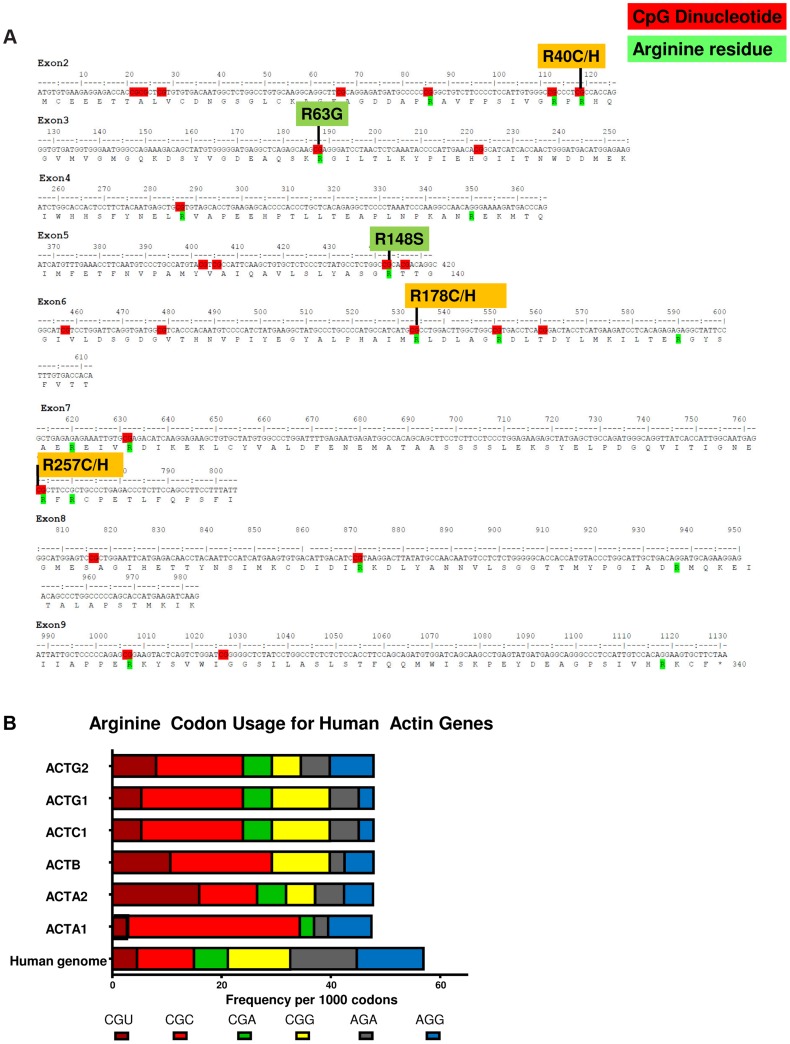
Figure 4. CpG dinucleotides within arginine codons are targets of de novo events in MMIHS.
A.) The coding exons are shown with translation for the ACTG2 gene. CpG dinucleotides are highlighted in red. Arginine residues in the protein are highlighted in green, and the mutations associated with ACTG2 smooth muscle disease are aligned above the sequence. B.) The frequency of codon usage per 1000 codons for 6 arginine codons is shown. The human genome as a whole (bottom bar) is compared to all human actin genes including ACTG2.

References

    1. Berdon WE, Baker DH, Blanc WA, Gay B, Santulli TV, et al. (1976) Megacystis-microcolon-intestinal hypoperistalsis syndrome: a new cause of intestinal obstruction in the newborn. Report of radiologic findings in five newborn girls. AJR Am J Roentgenol 126: 957–964. - PubMed
    1. Gosemann JH, Puri P (2011) Megacystis microcolon intestinal hypoperistalsis syndrome: systematic review of outcome. Pediatr Surg Int 27: 1041–1046. - PubMed
    1. Kohler M, Pease PW, Upadhyay V (2004) Megacystis-microcolon-intestinal hypoperistalsis syndrome (MMIHS) in siblings: case report and review of the literature. Eur J Pediatr Surg 14: 362–367. - PubMed
    1. Puri P, Shinkai M (2005) Megacystis microcolon intestinal hypoperistalsis syndrome. Semin Pediatr Surg 14: 58–63. - PubMed
    1. Schuler H, Nyakern M, Schutt CE, Lindberg U, Karlsson R (2000) Mutational analysis of arginine 177 in the nucleotide binding site of beta-actin. Eur J Biochem 267: 4054–4062. - PubMed

Publication types

Supplementary concepts