


Effect of combining mosquito repellent and insecticide treated net on malaria prevalence in Southern Ethiopia: a cluster-randomised trial
- PMID: 24678612
- PMCID: PMC3986599
- DOI: 10.1186/1756-3305-7-132
Effect of combining mosquito repellent and insecticide treated net on malaria prevalence in Southern Ethiopia: a cluster-randomised trial
Abstract
Background: A mosquito repellent has the potential to prevent malaria infection, but there has been few studies demonstrating the effectiveness of combining this strategy with the highly effective long-lasting insecticidal nets (LLINs). This study aimed to determine the effect of combining community-based mosquito repellent with LLINs in the reduction of malaria.
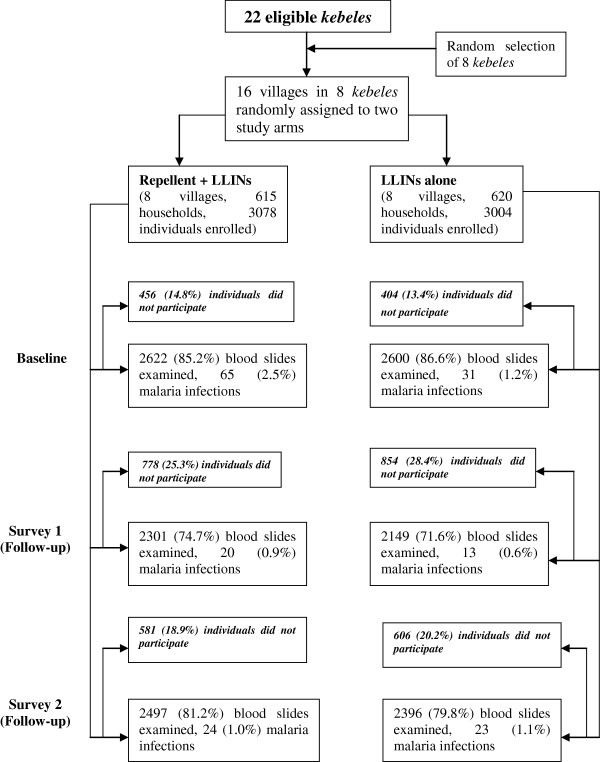
Methods: A community-based clustered-randomised trial was conducted in 16 rural villages with 1,235 households in southern Ethiopia between September and December of 2008. The villages were randomly assigned to intervention (mosquito repellent and LLINs, eight villages) and control (LLINs alone, eight villages) groups. Households in the intervention villages received mosquito repellent (i.e., Buzz-Off petroleum jelly, essential oil blend) applied every evening. The baseline survey was followed by two follow-up surveys, at one month interval. The primary outcome was detection of Plasmodium falciparum, Plasmodium vivax, or both parasites, through microscopic examination of blood slides. Analysis was by intention to treat. Baseline imbalances and clustering at individual, household and village levels were adjusted using a generalized linear mixed model.
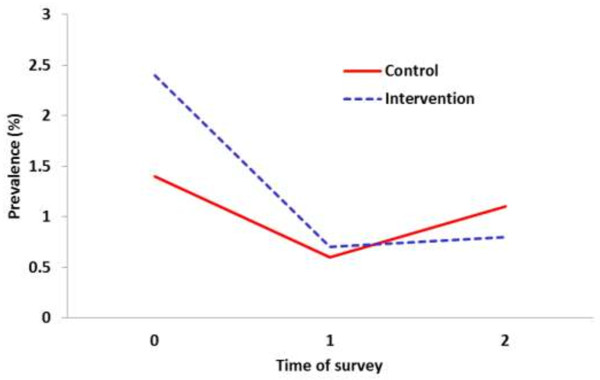
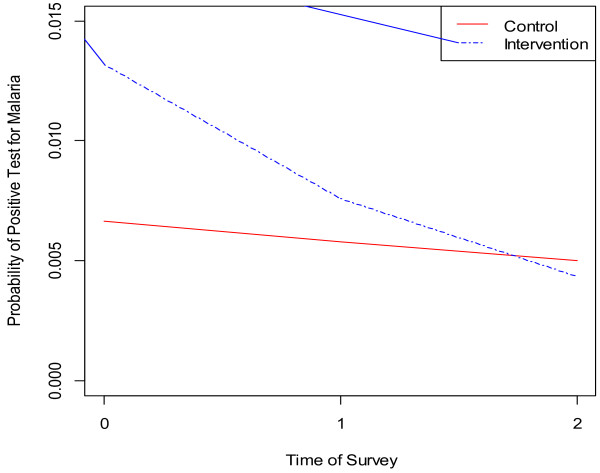
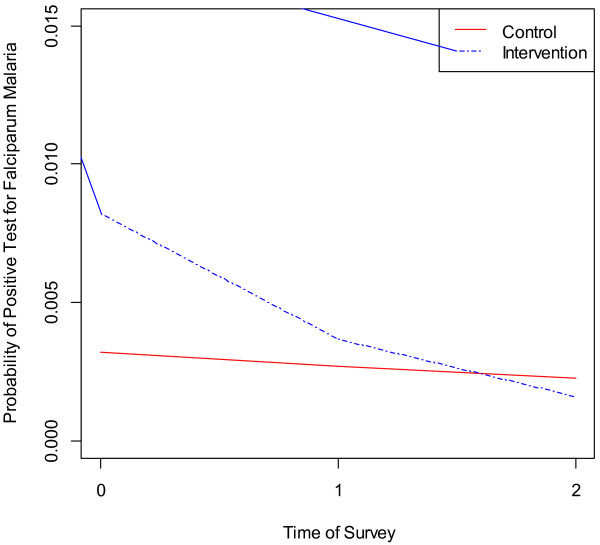
Results: 3,078 individuals in intervention and 3,004 in control group were enrolled into the study. Compared with the control arm, the combined use of mosquito repellent and LLINs significantly reduced malaria infection of all types over time [adjusted Odds Ratio (aOR) = 0.66; 95% CI = 0.45-0.97]. Similarly, a substantial reduction in P. falciparum malaria infection during the follow-up surveys was observed in the intervention group (aOR = 0.53, 95% CI = 0.31-0.89). The protective efficacy of using mosquito repellent and LLINs against malaria infection of both P. falciparum/P. vivax and P. falciparum was 34% and 47%, respectively.
Conclusions: Daily application of mosquito repellent during the evening followed by the use of LLINs during bedtime at community level has significantly reduced malaria infection. The finding has strong implication particularly in areas where malaria vectors feed mainly in the evening before bedtime.
Trial registration: ClinicalTrials.gov identifier: NCT01160809.
Figures
References
-
- WHO. The World Malaria Report 2008. Geneva, Switzerland: WHO/HTM/GMP/2008.1; 2008.
-
- Kiszewski AE, Teklehaimanot A. A review of the clinical and epidemiologic burdens of epidemic malaria. Am J Trop Med Hyg. 2004;71(Suppl. 2):128–135. - PubMed
-
- Negash K, Kebede A, Medhin A, Argaw D, Babaniyi O, Guintran JO, Delacollette C. Malaria epidemics in the highlands of Ethiopia. East Afr Med J. 2005;82:186–192. - PubMed
-
- Ghebreyesus TA, Deressa W, Witten KH, Getachew A, Seboxa T. In: Epidemiology and Ecology of Health and Disease in Ethiopia. Berhane Y, Haile-Mariam D, Kloos H, editor. Addis Ababa: Shama Books; 2006. Malaria; pp. 556–576.
Publication types
MeSH terms
Substances
Associated data
LinkOut - more resources
Full Text Sources
Other Literature Sources
Medical
