


Calcitriol restores antiestrogen responsiveness in estrogen receptor negative breast cancer cells: a potential new therapeutic approach
- PMID: 24678876
- PMCID: PMC3972996
- DOI: 10.1186/1471-2407-14-230
Calcitriol restores antiestrogen responsiveness in estrogen receptor negative breast cancer cells: a potential new therapeutic approach
Abstract
Background: Approximately 30% of breast tumors do not express the estrogen receptor (ER) α, which is necessary for endocrine therapy approaches. Studies are ongoing in order to restore ERα expression in ERα-negative breast cancer. The aim of the present study was to determine if calcitriol induces ERα expression in ER-negative breast cancer cells, thus restoring antiestrogen responses.
Methods: Cultured cells derived from ERα-negative breast tumors and an ERα-negative breast cancer cell line (SUM-229PE) were treated with calcitriol and ERα expression was assessed by real time PCR and western blots. The ERα functionality was evaluated by prolactin gene expression analysis. In addition, the effects of antiestrogens were assessed by growth assay using the XTT method. Gene expression of cyclin D1 (CCND1), and Ether-à-go-go 1 (EAG1) was also evaluated in cells treated with calcitriol alone or in combination with estradiol or ICI-182,780. Statistical analyses were determined by one-way ANOVA.
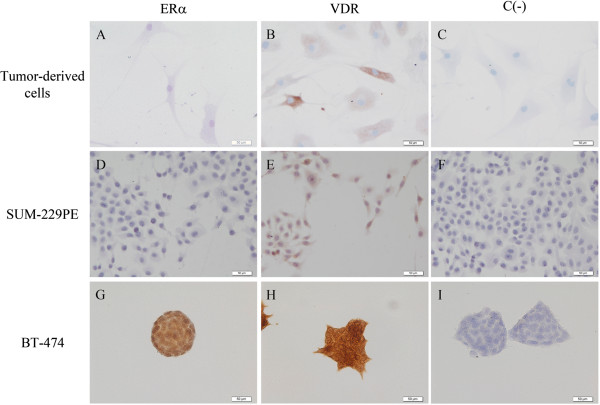
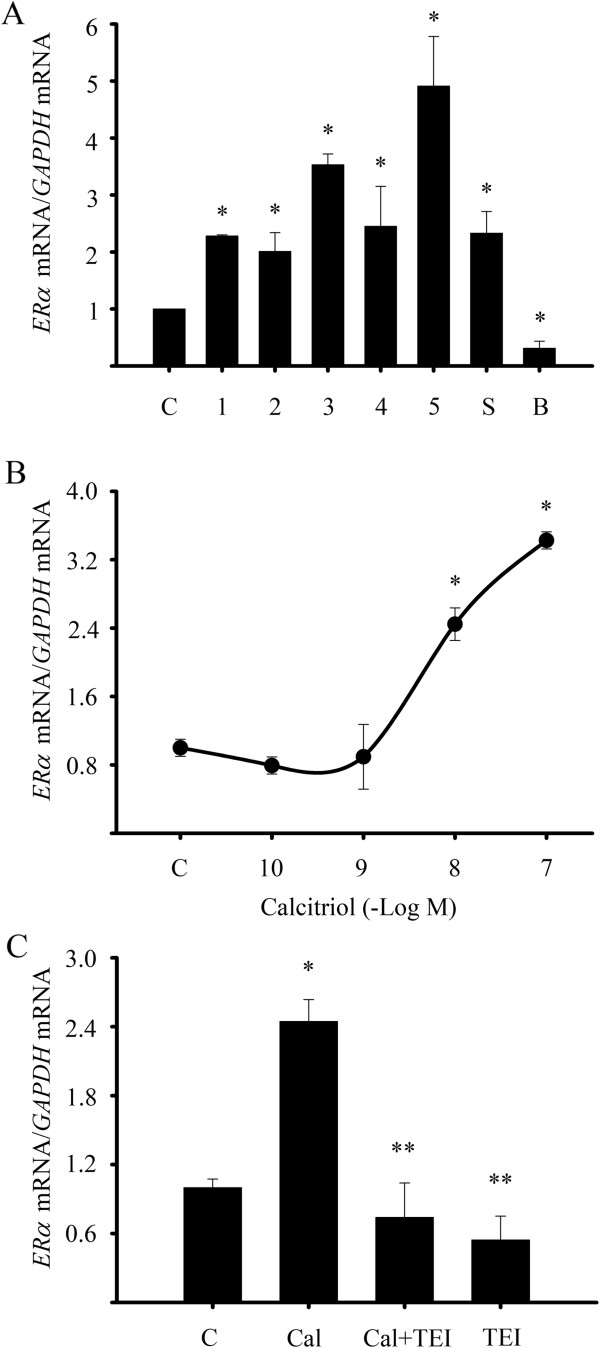
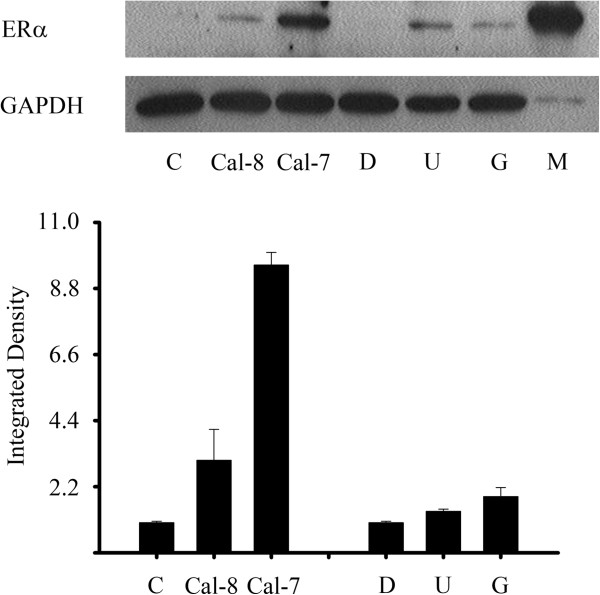
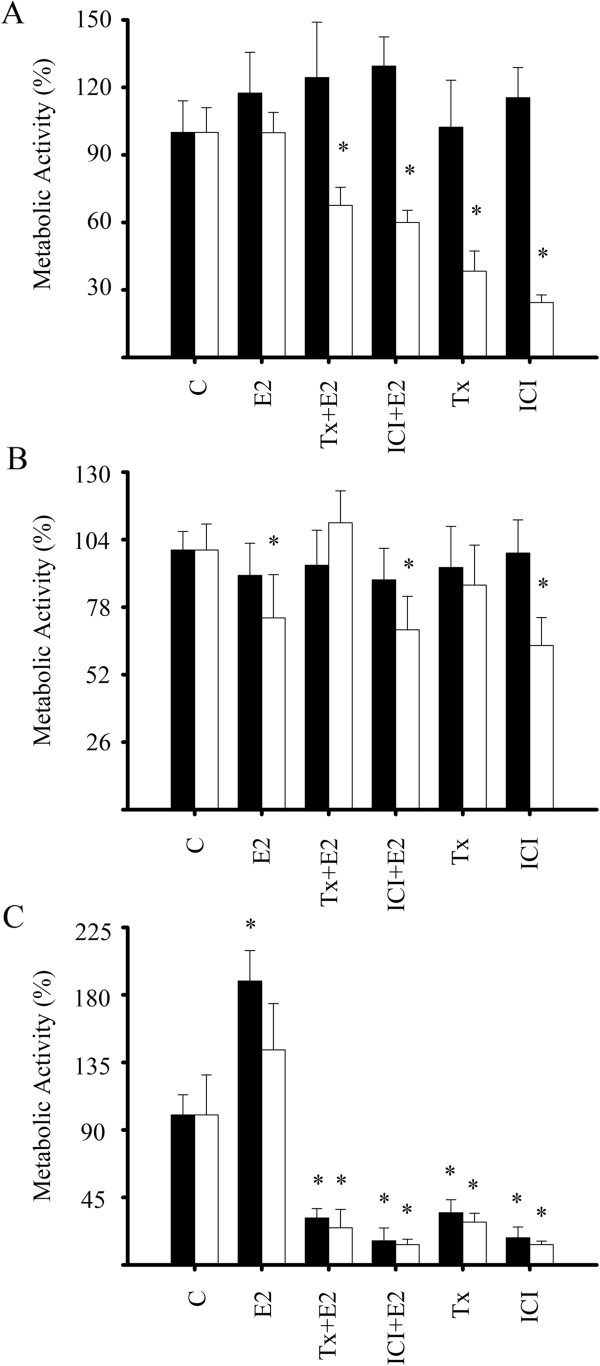
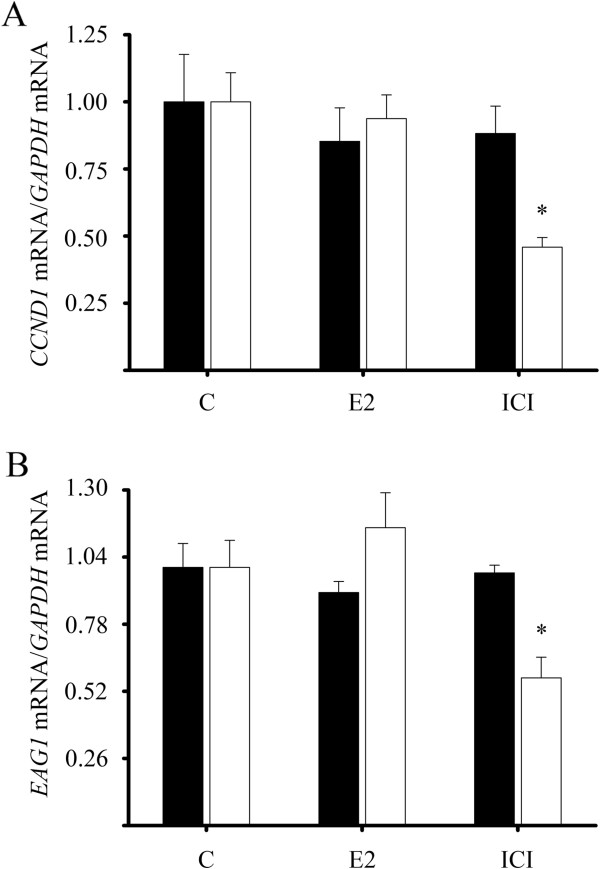
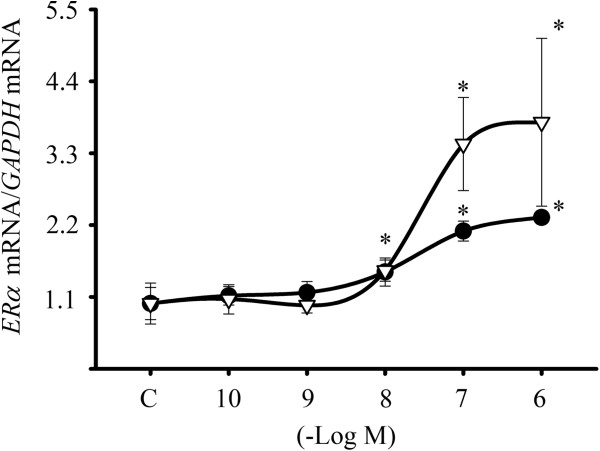
Results: Calcitriol was able to induce the expression of a functional ERα in ER-negative breast cancer cells. This effect was mediated through the vitamin D receptor (VDR), since it was abrogated by a VDR antagonist. Interestingly, the calcitriol-induced ERα restored the response to antiestrogens by inhibiting cell proliferation. In addition, calcitriol-treated cells in the presence of ICI-182,780 resulted in a significant reduction of two important cell proliferation regulators CCND1 and EAG1.
Conclusions: Calcitriol induced the expression of ERα and restored the response to antiestrogens in ERα-negative breast cancer cells. The combined treatment with calcitriol and antiestrogens could represent a new therapeutic strategy in ERα-negative breast cancer patients.
Figures

References
-
- Sorlie T, Perou CM, Tibshirani R, Aas T, Geisler S, Johnsen H, Hastie T, Eisen MB, van de Rijn M, Jeffrey SS, Thorsen T, Quist H, Matese JC, Brown PO, Botstein D, Eystein Lonning P, Borresen-Dale AL. Gene expression patterns of breast carcinomas distinguish tumor subclasses with clinical implications. Proc Natl Acad Sci U S A. 2001;98(19):10869–10874. doi: 10.1073/pnas.191367098. - DOI - PMC - PubMed
-
- Clark GM, McGuire WL. Steroid receptors and other prognostic factors in primary breast cancer. Semin Oncol. 1988;15(2 Suppl 1):20–25. - PubMed
-
- McGuire WL, Osborne CK, Clark GM, Knight WA 3rd. Steroid hormone receptors and carcinoma of the breast. Am J Physiol. 1982;243(2):E99–E102. - PubMed
Publication types
MeSH terms
Substances
LinkOut - more resources
Full Text Sources
Other Literature Sources
Medical
Research Materials
Miscellaneous
