


Recent advances in tuberculosis: New drugs and treatment regimens
- PMID: 24683386
- PMCID: PMC3968807
- DOI: 10.2174/1573398x113099990017
Recent advances in tuberculosis: New drugs and treatment regimens
Abstract
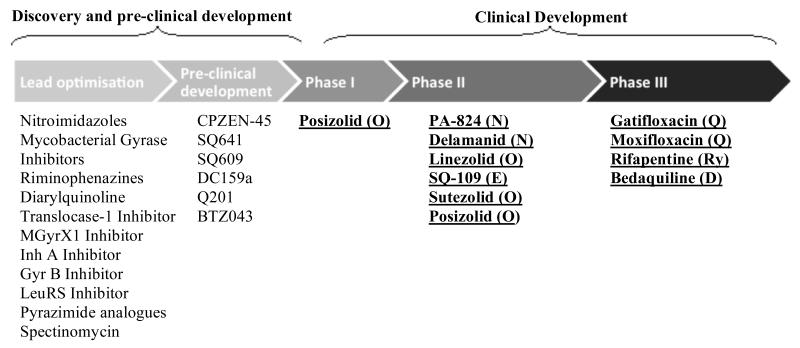
The current treatment regimen against drug susceptible tuberculosis (DS-TB) was defined by the 1980s. Since then the emergence of the global HIV pandemic and the escalation of drug resistant (DR-) forms of TB have presented new challenges for therapeutic research. Priority goals include shortening DS-TB treatment, improving DR-TB treatment and making combined TB-HIV therapy easier. To help achieve these goals, a range of new drugs and treatment strategies are currently being evaluated. Phase IIb and III clinical trials are ongoing to assess combinations involving the high-dose rifamycins, the 8-methoxyquinolones, a diarylquinoline (bedaquiline) and the nitroimidazoles. Other compounds (e.g. novel oxazolidinones and ethylenediamines) are at earlier stages of clinical development. Overall, there are grounds for optimism that recent advances will contribute towards achievement of new treatment regimens in the foreseeable future. However, long-term investment, political commitment and scientific endeavour are crucial to ensure that progress is sustained and the benefits of recent advances reach those in the greatest need.
Keywords: Bedaquiline (TMC-207); Delamanid (OPC-67683); Gatifloxacin; Moxifluxacin; PA-824; Rifampicin; Rifapentine; Sterilising activity.
Figures

References
-
- Koch R. Weitere mitteilungen uber ein heilmittel gegen tuberculose. Deutsche Medizinsche Wochenschrift. 1891;171:101–2.
-
- Bodington G. An essay on the treatment and cure of pulmonary consumption. Sinopkin, Marshall, Hamilton and Kent; London: 1840.
-
- Temple L. In: Surgery of pulmonary tuberculosis: a historical approach, in Clinical Tuberculosis. Davies P, editor. Chapman and Hall; London: 1998. pp. 21–33.
-
- Schatz A, Bugie E, Waksman S. Streptomycin, a substance exhibiting antibiotic activity against gram-positive and gram-negative bacteria. Proceedings of the Society for Experimental and Biological Medicine. 1944;55:66–9. - PubMed
-
- Lehmann J. Para-Aminosalicylic acid in the treatment of tuberculosis. Lancet. 1946;I:15–6. - PubMed
Grants and funding
LinkOut - more resources
Full Text Sources
Other Literature Sources