


Time to relapse following treatment for methamphetamine use: a long-term perspective on patterns and predictors
- PMID: 24685563
- PMCID: PMC4550209
- DOI: 10.1016/j.drugalcdep.2014.02.702
Time to relapse following treatment for methamphetamine use: a long-term perspective on patterns and predictors
Abstract
Introduction: This paper describes methamphetamine (MA) use patterns, specifically the duration of continuing abstinence ("time to relapse") for periods averaging 5 years post-discharge from treatment for MA use, and the relationship with selected user and treatment characteristics.
Methods: A sample of 350 treatment admissions from a large county substance use disorder (SUD) treatment system was randomly selected (within gender, race/ethnicity, treatment modality strata). Retrospective self-report data are from natural history interviews (NHI) conducted approximately 3 years after treatment and a follow-up of 2-3 years later. Relapse is defined as any use of MA with time as the number of months of continuous MA abstinence after treatment discharge until relapse. This outcome was constructed from a monthly MA use timeline using NHI data. A Cox model was used to examine time to relapse and predictors.
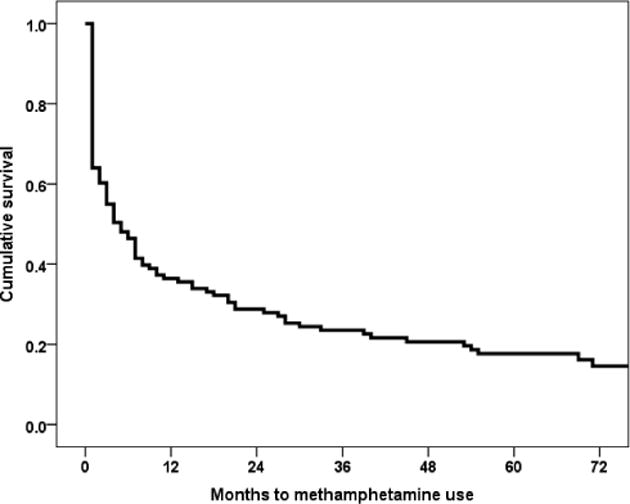
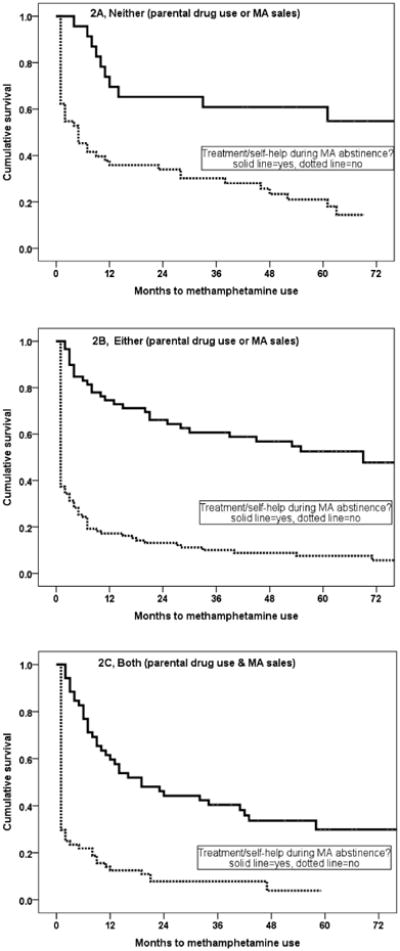
Results: Sixty-one percent of the sample relapsed to MA use within 1 year after treatment discharge and 14% during years 2-5. Significant protective factors predicting longer time to relapse included having experienced serious MA-related psychiatric/behavioral problems (hazard ratio [HR]=0.75, p=0.027), longer duration of the index treatment episode (HR=0.93, p=0.001), and participating in self-help or other treatment during the post-treatment abstinence period (HR=0.29, p<0.001); risk factors for shorter time to relapse included having a parent with alcohol and/or drug use problems (HR=1.35, p=0.020) and involvement in MA sales (HR=1.48, p=0.002).
Conclusions: Results contribute a long-term perspective on patterns of MA use following treatment and support a need for early post-treatment and long-term continuing care and relapse-prevention services.
Keywords: Continuing abstinence; Cox regression; Long-term follow-up; Methamphetamine; Natural history interview; Relapse.
Copyright © 2014 Elsevier Ireland Ltd. All rights reserved.
Conflict of interest statement
Figures
References
-
- Adamson S, Sellman J, Frampton C. Patient predictors of alcohol treatment outcome: a systematic review. J Subst Abuse Treat. 2009;36:75–86. - PubMed
-
- Anglin MD, Hser YI, Chou CP. Reliability and validity of retrospective behavioral self-report by narcotics addicts. Eval Rev. 1993;17:90–107.
-
- Anglin MD, Urada D, Brecht ML, Hawken A, Rawson R, Longshore D. Criminal justice treatment admissions for methamphetamine use in California: a focus on proposition 36. J Psychoactive Drugs Suppl. 2007;4:367–381. - PubMed
-
- Boles SM, Joshi V, Grella C, Wellisch J. Childhood sexual abuse patterns, psychosocial correlates, and treatment outcomes among adults in drug abuse treatment. J Child Sex Abuse. 2005;14:39–55. - PubMed
Publication types
MeSH terms
Substances
Grants and funding
LinkOut - more resources
Full Text Sources
Other Literature Sources
Medical
