Review
. 2014 Jul:52:136-45.
doi: 10.1016/j.biocel.2014.03.011. Epub 2014 Mar 28.

Cystic fibrosis: an inherited disease affecting mucin-producing organs

Affiliations
Review

Cystic fibrosis: an inherited disease affecting mucin-producing organs

Camille Ehre et al. Int J Biochem Cell Biol. 2014 Jul.

Abstract

Our current understanding of cystic fibrosis (CF) has revealed that the biophysical properties of mucus play a considerable role in the pathogenesis of the disease in view of the fact that most mucus-producing organs are affected in CF patients. In this review, we discuss the potential causal relationship between altered cystic fibrosis transmembrane conductance regulator (CFTR) function and the production of mucus with abnormal biophysical properties in the intestine and lungs, highlighting what has been learned from cell cultures and animal models that mimic CF pathogenesis. A similar cascade of events, including mucus obstruction, infection and inflammation, is common to all epithelia affected by impaired surface hydration. Hence, the main structural components of mucus, namely the polymeric, gel-forming mucins, are critical to the onset of the disease. Defective CFTR leads to epithelial surface dehydration, altered pH/electrolyte composition and mucin concentration. Further, it can influence mucin transition from the intracellular to extracellular environment, potentially resulting in aberrant mucus gel formation. While defective HCO3(-) production has long been identified as a feature of CF, it has only recently been considered as a key player in the transition phase of mucins. We conclude by examining the influence of mucins on the biophysical properties of CF sputum and discuss existing and novel therapies aimed at removing mucus from the lungs. This article is part of a Directed Issue entitled: Cystic Fibrosis: From o-mics to cell biology, physiology, and therapeutic advances.

Keywords: CF; CFTR; Mucin; Mucus; Pathogenesis.


Figures

Fig. 1
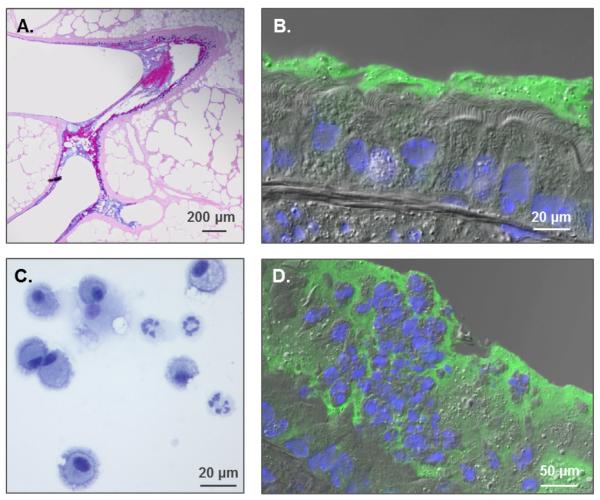
Fig. 1. Formation of mucus plaques and neutrophilic inflammation in the • ENaC mouse model
(A.) AB-PAS stain of βENaC lungs revealing mucus plugs at airway branching. (B.) Immunohistochemistry (IHC) displaying PCL collapse and mucin accumulation on airway surfaces (green=Muc5b, Blue=DAPI). (C.) Inflammatory cells from a βENaC mouse bronchoalveolar lavage showing a mixture of macrophages and neutrophils. (D.) IHC exhibiting inflammatory cells trapped in mucus.
Fig. 2
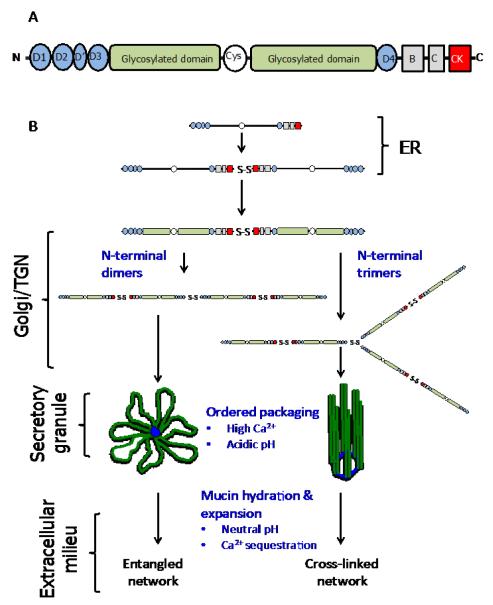
Fig. 2. Cartoon of mucin structure and assembly
(A) Polymeric, gel-forming mucins all share a common structural architecture. The N- and C-terminal domains have a high cysteine content and these form intra- and intermolecular disulphide bonds. The central highly-glycosylated domains (mucin domains) are enriched in serine, threonine and proline residues and the O-glycans are covalently attached, via the linkage sugar N-acetylgalactosamine, to serine and threonine residues. The O-glycan chains are comprised of N-acetylglucosamine, galactose, N-acetylgalactosamine, fucose and sialic acid; galactose can be modified by sulphation. The number, length and amino acid sequence of these glycosylated domains differ between mucins. The glycosylated domains are interrupted with cys-domains, and the number of these cysteine-rich regions differs between mucins. For more detailed reviews on the primary structure of MUC2, MUC5AC and MUC5B the reader is referred to the following articles - Dekker et al., 2002 and Rose and Voynow, 2006. (B) The early steps in polymeric mucin assembly are well accepted. In the endoplasmic reticulum (ER), the non-O-glycosylated polypeptide forms dimers via disulphide bonds formed between the CK-domains. In the golgi/trans-golgi network (TGN), mucin dimers are O-glycosylated and then multimerise by disulphide bonds formed between N-terminal D3 domains. There are two mechanisms proposed for this step, multimers form from dimers of dimers (MUC5B, Ridley et al. , 2011, Round et al. , 2004, Sheehan et al. , 2004, Thornton et al. , 1990) or trimers of dimers (MUC2, Ambort et al., 2012). The mucin multimers are then packged in an ordered state within secretory granules. The acidic pH inside the granules and their high Ca2+ content facilitates mucin organisation via non-covalent interactions between mucin N-termini (Ambort et al., 2012). After secretion mucins hydrate and expand to form mucus.

References

    1. Accurso FJ, Rowe SM, Clancy JP, Boyle MP, Dunitz JM, Durie PR, et al. Effect of VX-770 in persons with cystic fibrosis and the G551D-CFTR mutation. N Engl J Med. 2010;363:1991–2003. - PMC - PubMed
    1. Altes T, Johnson MA, Miller GW, Mugler JP, Flors L, Mata J, et al. Hyperpolarized gas MRI of Ivacaftor therapy in persons with cystic fibrosis and the G551D-CFTR mutation. Pediatric Pulmonology. 2012;(Supplement 35):291.
    1. Ambort D, Johansson ME, Gustafsson JK, Nilsson HE, Ermund A, Johansson BR, et al. Calcium and pH-dependent packing and release of the gel-forming MUC2 mucin. Proc Natl Acad Sci U S A. 2012;109:5645–50. - PMC - PubMed
    1. Ambort D, van der Post S, Johansson ME, Mackenzie J, Thomsson E, Krengel U, et al. Function of the CysD domain of the gel-forming MUC2 mucin. Biochem J. 2011;436:61–70. - PMC - PubMed
    1. Asker N, Axelsson MA, Olofsson SO, Hansson GC. Dimerization of the human MUC2 mucin in the endoplasmic reticulum is followed by a N-glycosylation-dependent transfer of the mono- and dimers to the Golgi apparatus. J Biol Chem. 1998a;273:18857–63. - PubMed

Publication types

Substances