Identification of risk factors for plague in the West Nile Region of Uganda
- PMID: 24686743
- PMCID: PMC4047728
- DOI: 10.4269/ajtmh.14-0035
Identification of risk factors for plague in the West Nile Region of Uganda
Abstract
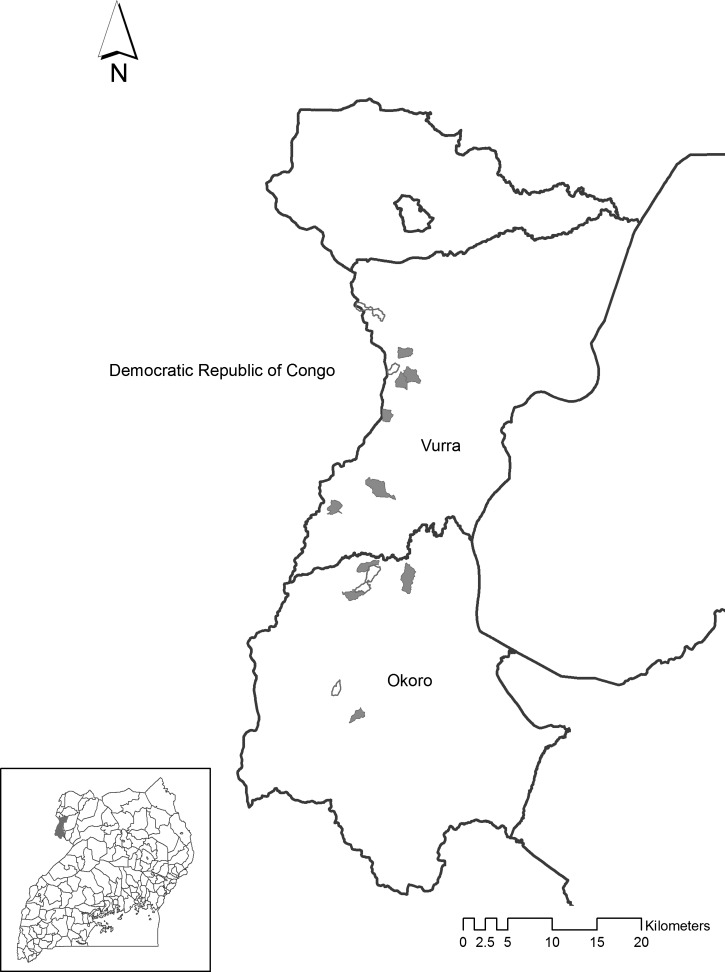
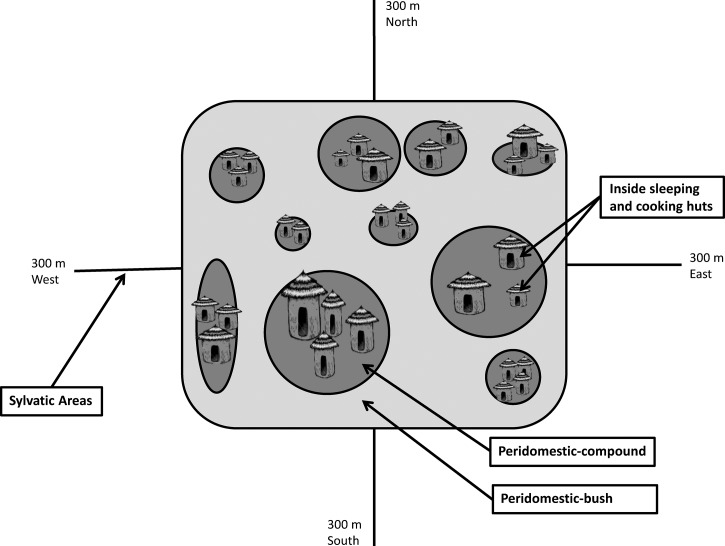
Plague is an often fatal, primarily flea-borne rodent-associated zoonosis caused by Yersinia pestis. We sought to identify risk factors for plague by comparing villages with and without a history of human plague cases within a model-defined plague focus in the West Nile Region of Uganda. Although rat (Rattus rattus) abundance was similar inside huts within case and control villages, contact rates between rats and humans (as measured by reported rat bites) and host-seeking flea loads were higher in case villages. In addition, compared with persons in control villages, persons in case villages more often reported sleeping on reed or straw mats, storing food in huts where persons sleep, owning dogs and allowing them into huts where persons sleep, storing garbage inside or near huts, and cooking in huts where persons sleep. Compared with persons in case villages, persons in control villages more commonly reported replacing thatch roofing, and growing coffee, tomatoes, onions, and melons in agricultural plots adjacent to their homesteads. Rodent and flea control practices, knowledge of plague, distance to clinics, and most care-seeking practices were similar between persons in case villages and persons in control villages. Our findings reinforce existing plague prevention recommendations and point to potentially advantageous local interventions.
© The American Society of Tropical Medicine and Hygiene.
Figures
References
-
- Gage KL, Kosoy MY. Natural history of plague: perspectives from more than a century of research. Annu Rev Entomol. 2005;50:505–528. - PubMed
-
- Tikhomirov E. Epidemiology and distribution of plague. In: Dennis DT, Gage KL, Gratz N, Poland JD, Tikhomirov E, editors. Plague Manual: Epidemiology, Distribution, Surveillance and Control. Geneva: World Health Organization; 1999. pp. 11–37.
-
- Crook LD, Tempest B. Plague. A clinical review of 27 cases. Arch Intern Med. 1992;152:1253–1256. - PubMed
-
- Duplantier JM. Surveillance and control of plague. In: Carniel E, Hinnebusch BJ, editors. Yersina: Systems Biology and Control. Norfolk, UK: Caister Academic Press; 2012. pp. 183–199.
-
- Davis S, Begon M, De Bruyn L, Ageyev VS, Klassovskiy NL, Pole SB, Viljugrein H, Stenseth NC, Leirs H. Predictive thresholds for plague in Kazakhstan. Science. 2004;304:736–738. - PubMed
Publication types
MeSH terms
LinkOut - more resources
Full Text Sources
Other Literature Sources
Medical