Population-level evidence for an autoimmune etiology of epilepsy
- PMID: 24687183
- PMCID: PMC4324719
- DOI: 10.1001/jamaneurol.2014.188
Population-level evidence for an autoimmune etiology of epilepsy
Abstract
Importance: Epilepsy is a debilitating condition, often with neither a known etiology nor an effective treatment. Autoimmune mechanisms have been increasingly identified.
Objective: To conduct a population-level study investigating the relationship between epilepsy and several common autoimmune diseases.
Design, setting, and participants: A retrospective population-based study using claims from a nationwide employer-provided health insurance plan in the United States. Participants were beneficiaries enrolled between 1999 and 2006 (N = 2 518 034).
Main outcomes and measures: We examined the relationship between epilepsy and 12 autoimmune diseases: type 1 diabetes mellitus, psoriasis, rheumatoid arthritis, Graves disease, Hashimoto thyroiditis, Crohn disease, ulcerative colitis, systemic lupus erythematosus, antiphospholipid syndrome, Sjögren syndrome, myasthenia gravis, and celiac disease.
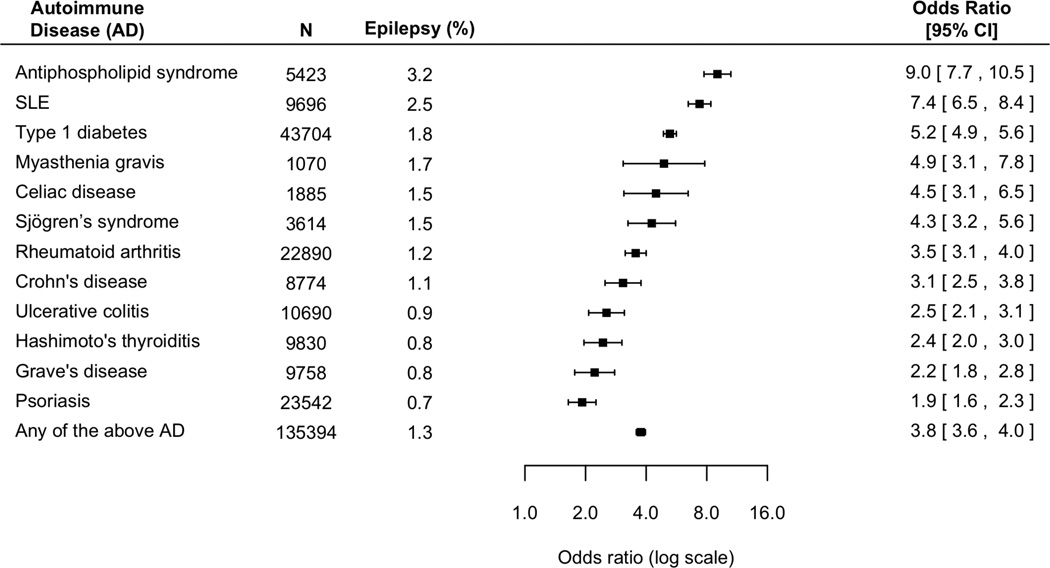
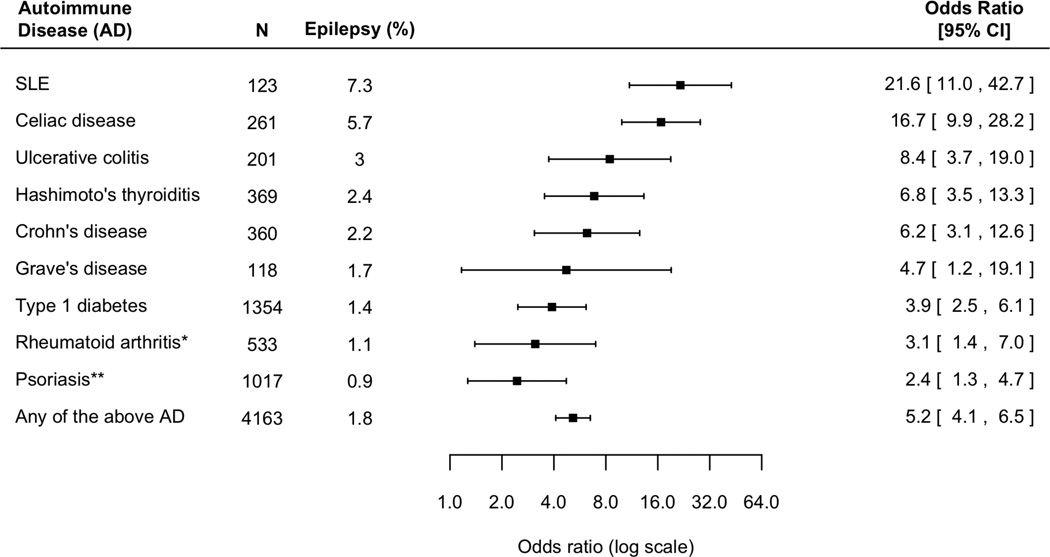
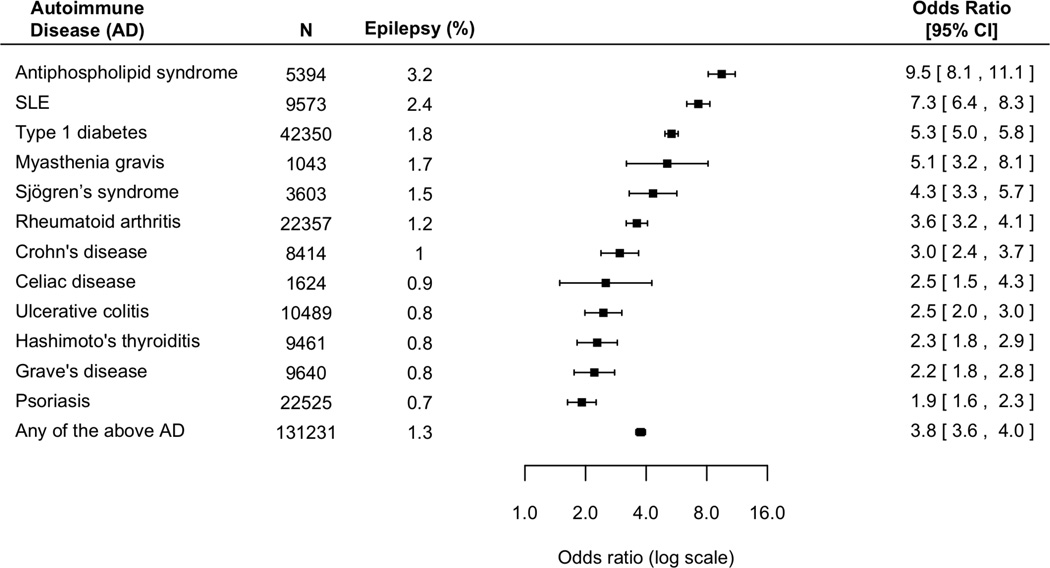
Results: The risk of epilepsy was significantly heightened among patients with autoimmune diseases (odds ratio, 3.8; 95% CI, 3.6-4.0; P < .001) and was especially pronounced in children (5.2; 4.1-6.5; P < .001). Elevated risk was consistently observed across all 12 autoimmune diseases.
Conclusions and relevance: Epilepsy and autoimmune disease frequently co-occur; patients with either condition should undergo surveillance for the other. The potential role of autoimmunity must be given due consideration in epilepsy so that we are not overlooking a treatable cause.
Conflict of interest statement
Figures
References
-
- Kwan P, Brodie MJ. Early Identification of Refractory Epilepsy. N Eng J Med. 2000;342(5):314–319. - PubMed
-
- de Tisi J, Bell GS, Peacock JL, et al. The long-term outcome of adult epilepsy surgery, patterns of seizure remission, and relapse: a cohort study. Lancet. 2011;378(9800):1388–1395. - PubMed
-
- Wieser HG, Ortega M, Friedman A, Yonekawa Y. Long-term seizure outcomes following amygdalohippocampectomy. J Neurosurg. 2003;98(4):751–763. - PubMed
-
- Bergey GK. Autoantibodies in the patient with drug-resistant epilepsy: are we missing a treatable etiology? Arch Neurol. 2012;69(5):565–566. - PubMed
Publication types
MeSH terms
Grants and funding
LinkOut - more resources
Full Text Sources
Other Literature Sources
Medical