Influence of the perceived taste intensity of chemesthetic stimuli on swallowing parameters given age and genetic taste differences in healthy adult women
- PMID: 24687466
- PMCID: PMC4318239
- DOI: 10.1044/1092-4388(2013/13-0005)
Influence of the perceived taste intensity of chemesthetic stimuli on swallowing parameters given age and genetic taste differences in healthy adult women
Abstract
Purpose: This study examined whether the perceived taste intensity of liquids with chemesthetic properties influenced lingua-palatal pressures and submental surface electromyography (sEMG) in swallowing, compared with water.
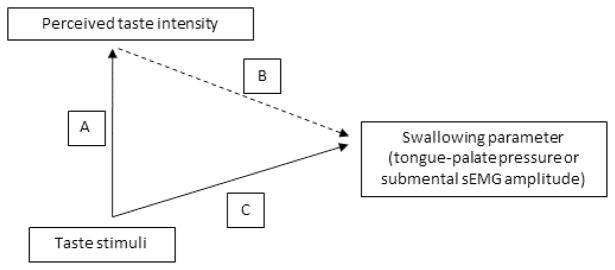
Method: Swallowing was studied in 80 healthy women, stratified by age group and genetic taste status. General Labeled Magnitude Scale ratings of taste intensity were collected for deionized water; carbonated water; 2.7% w/v citric acid; and diluted ethanol. These stimuli were swallowed, with measurement of tongue-palate pressures and submental sEMG. Path analysis differentiated stimulus, genetic taste status, age, and perceived taste intensity effects on swallowing. Signal amplitude during effortful saliva swallowing served as a covariate representing participant strength.
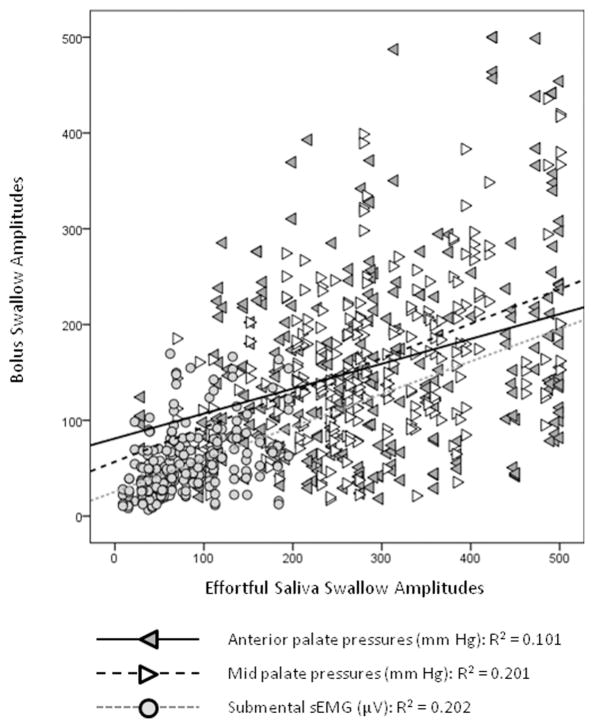
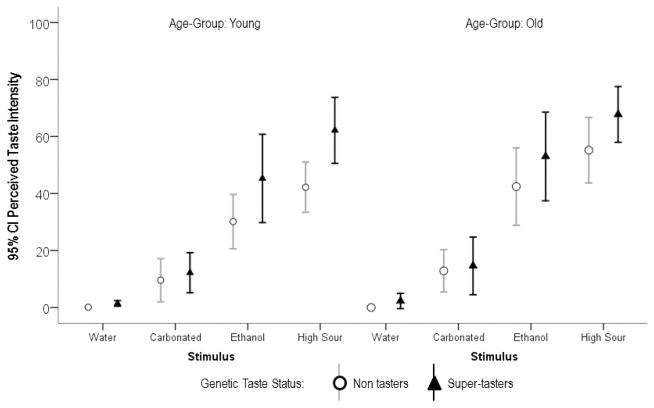
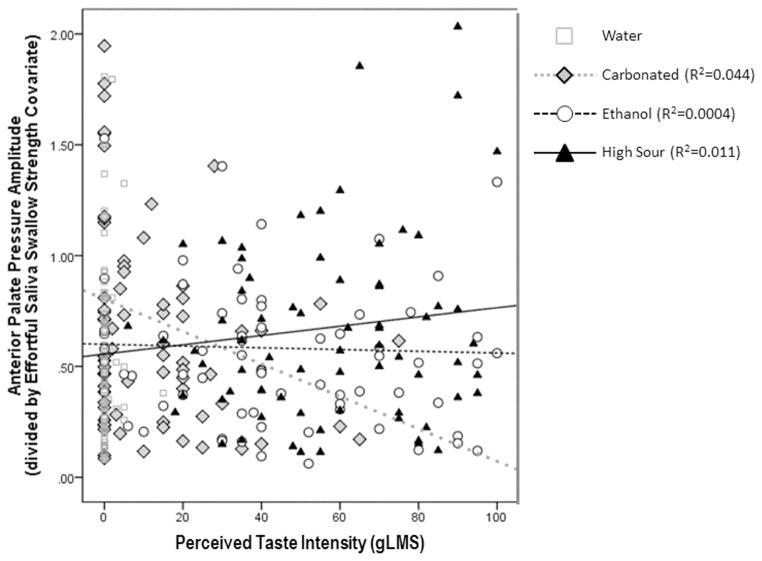
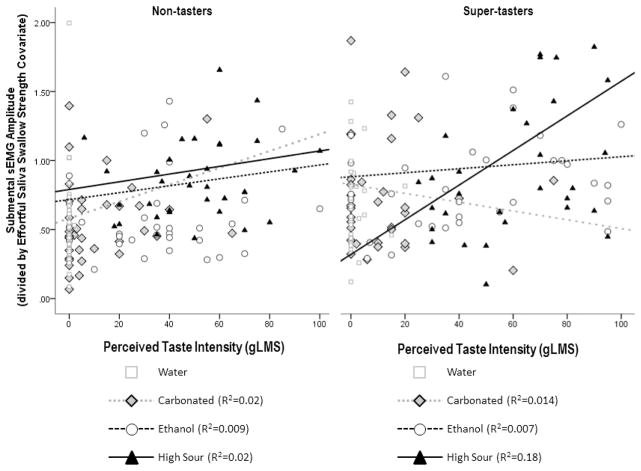
Results: Significant differences (p < .05) in taste intensity were seen across liquids: citric acid > ethanol > carbonated water > water. Supertasters perceived greater taste intensity than did nontasters. Lingua-palatal pressure and sEMG amplitudes were correlated with the strength covariate. Anterior palate pressures and sEMG amplitudes were significantly higher for the citric acid stimulus. Perceived taste intensity was a significant mediator of stimulus differences.
Conclusion: These data provide confirmatory evidence that high-intensity sour stimuli do influence swallowing behaviors. In addition, taste genetics influence the perception of taste intensity for stimuli with chemesthetic properties, which modulates behavioral responses.
Figures

References
-
- Bartoshuk LM. Genetic and pathological taste variation: what can we learn from animal models and human disease? Ciba Found Symp. 1993;179:251–262. - PubMed
-
- Bartoshuk LM. Comparing sensory experiences across individuals: Recent psychophysical advances illuminate genetic variation in taste perception. Chemical Senses. 2000;25(4):447–460. - PubMed
-
- Bartoshuk LM. Psychophysics: a journey from the laboratory to the clinic. Appetite. 2004;43(1):15–18. - PubMed
-
- Bartoshuk LM, Beauchamp GK. Chemical senses. Annu Rev Psychol. 1994;45:419–449. - PubMed
-
- Bartoshuk LM, Duffy VB, Green BG, Hoffman HJ, Ko CW, Lucchina LA, Weiffenbach JM. Valid across-group comparisons with labeled scales: The gLMS versus magnitude matching. Physiology and Behavior. 2004;82(1):109–114. - PubMed
Publication types
MeSH terms
Substances
Grants and funding
LinkOut - more resources
Full Text Sources
Other Literature Sources
Medical