


Molecular epidemiology of ascariasis: a global perspective on the transmission dynamics of Ascaris in people and pigs
- PMID: 24688073
- PMCID: PMC4136802
- DOI: 10.1093/infdis/jiu193
Molecular epidemiology of ascariasis: a global perspective on the transmission dynamics of Ascaris in people and pigs
Abstract
Background: The roundworm Ascaris lumbricoides infects 0.8 billion people worldwide, and Ascaris suum infects innumerable pigs across the globe. The extent of natural cross-transmission of Ascaris between pig and human hosts in different geographical settings is unknown, warranting investigation.
Methods: Adult Ascaris organisms were obtained from humans and pigs in Europe, Africa, Asia, and Latin America. Barcodes were assigned to 536 parasites on the basis of sequence analysis of the mitochondrial cytochrome c oxidase I gene. Genotyping of 410 worms was also conducted using a panel of microsatellite markers. Phylogenetic, population genetic, and Bayesian assignment methods were used for analysis.
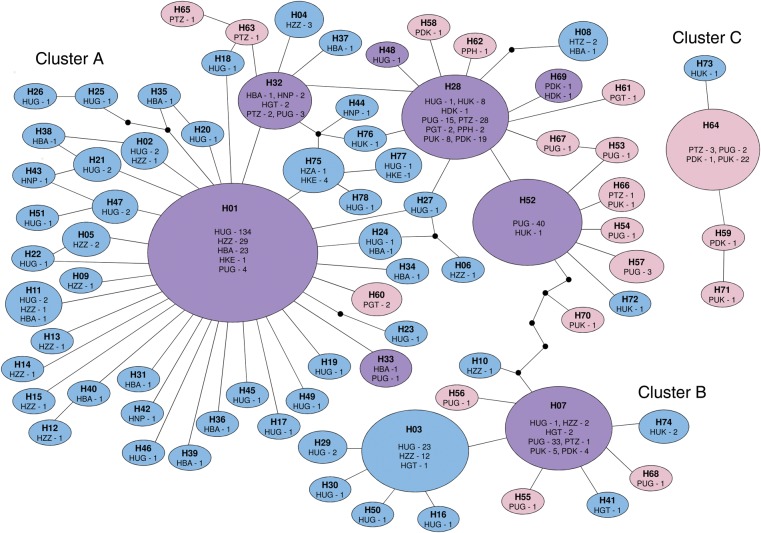
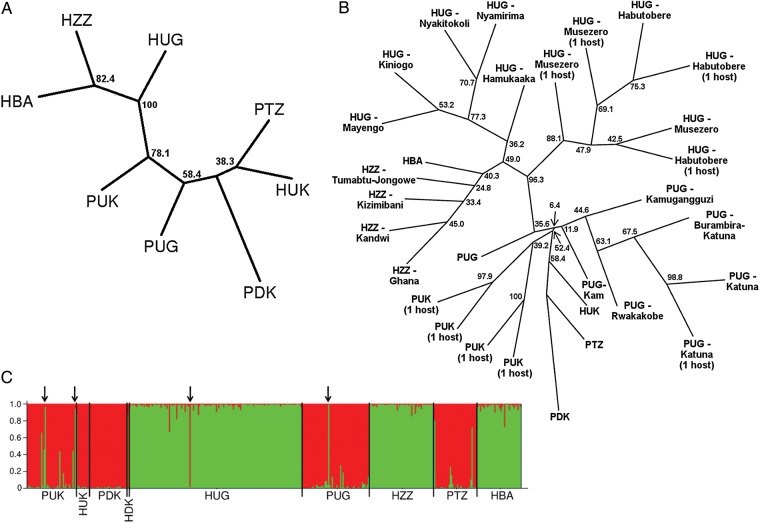
Results: There was marked genetic segregation between worms originating from human hosts and those originating from pig hosts. However, human Ascaris infections in Europe were of pig origin, and there was evidence of cross-transmission between humans and pigs in Africa. Significant genetic differentiation exists between parasite populations from different countries, villages, and hosts.
Conclusions: In conducting an analysis of variation within Ascaris populations from pig and human hosts across the globe, we demonstrate that cross-transmission takes place in developing and developed countries, contingent upon epidemiological potential and local phylogeography. Our results provide novel insights into the transmission dynamics and speciation of Ascaris worms from humans and pigs that are of importance for control programs.
Keywords: Ascaris; barcode; giant roundworm; microsatellite; neglected tropical disease; population genetics; soil-transmitted helminth; zoonosis.
© The Author 2014. Published by Oxford University Press on behalf of the Infectious Diseases Society of America.
Figures
Comment in
-
Ascaris lumbricoides, Ascaris suum, or "Ascaris lumbrisuum"?J Infect Dis. 2016 Apr 15;213(8):1355. doi: 10.1093/infdis/jiw027. Epub 2016 Feb 4. J Infect Dis. 2016. PMID: 26908753 No abstract available.
-
Ascaris lumbricoides or Ascaris suum: What's in a Name?J Infect Dis. 2016 Apr 15;213(8):1355-6. doi: 10.1093/infdis/jiw037. Epub 2016 Feb 4. J Infect Dis. 2016. PMID: 26908754 Free PMC article. No abstract available.
References
-
- Pullan RL, Brooker S. Ascaris lumbricoides and ascariasis: estimating numbers infected and burden of disease. In: Holland C, editor. Ascaris the neglected parasite. London: Academic Press; 2013. pp. 343–62.
-
- Anderson TJC. Ascaris infections in humans from North America: molecular evidence for cross-infection. Parasitology. 1995;110:215–9. - PubMed
-
- Murray CJ, Vos T, Lozano R, et al. Disability-adjusted life years (DALYs) for 291 diseases and injuries in 21 regions, 1990–2010: a systematic analysis for the Global Burden of Disease Study 2010. Lancet. 2012;380:2197–223. - PubMed
Publication types
MeSH terms
Substances
Grants and funding
LinkOut - more resources
Full Text Sources
Other Literature Sources
