


Quantification of viral proteins of the avian H7 subtype of influenza virus: an isotope dilution mass spectrometry method applicable for producing more rapid vaccines in the case of an influenza pandemic
- PMID: 24689548
- PMCID: PMC4815428
- DOI: 10.1021/ac4040778
Quantification of viral proteins of the avian H7 subtype of influenza virus: an isotope dilution mass spectrometry method applicable for producing more rapid vaccines in the case of an influenza pandemic
Abstract
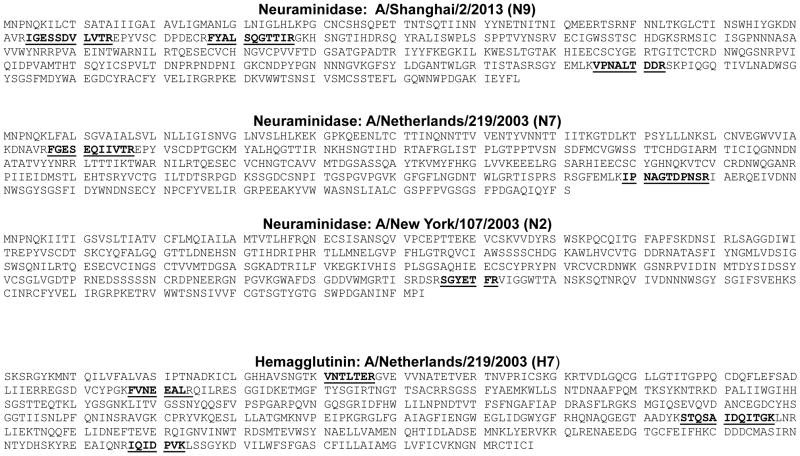
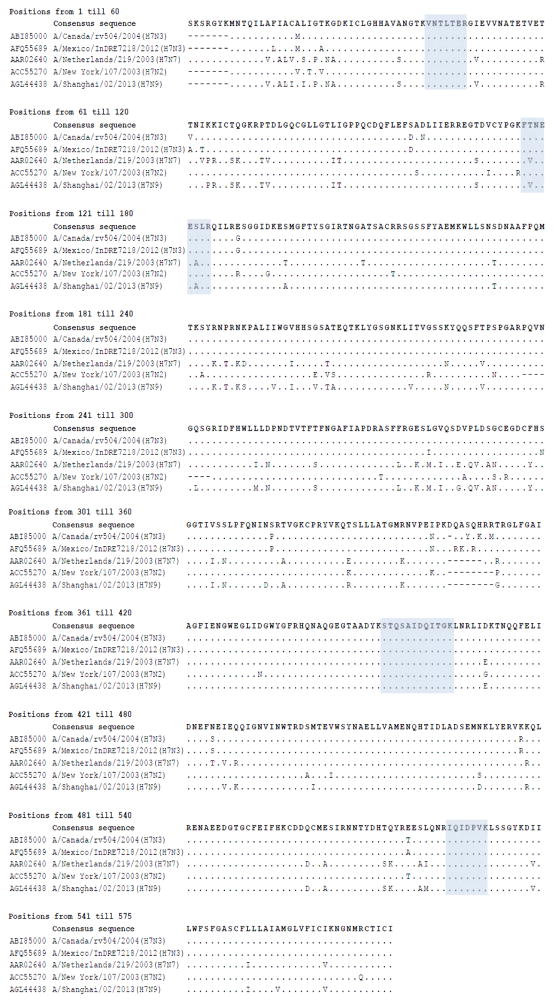
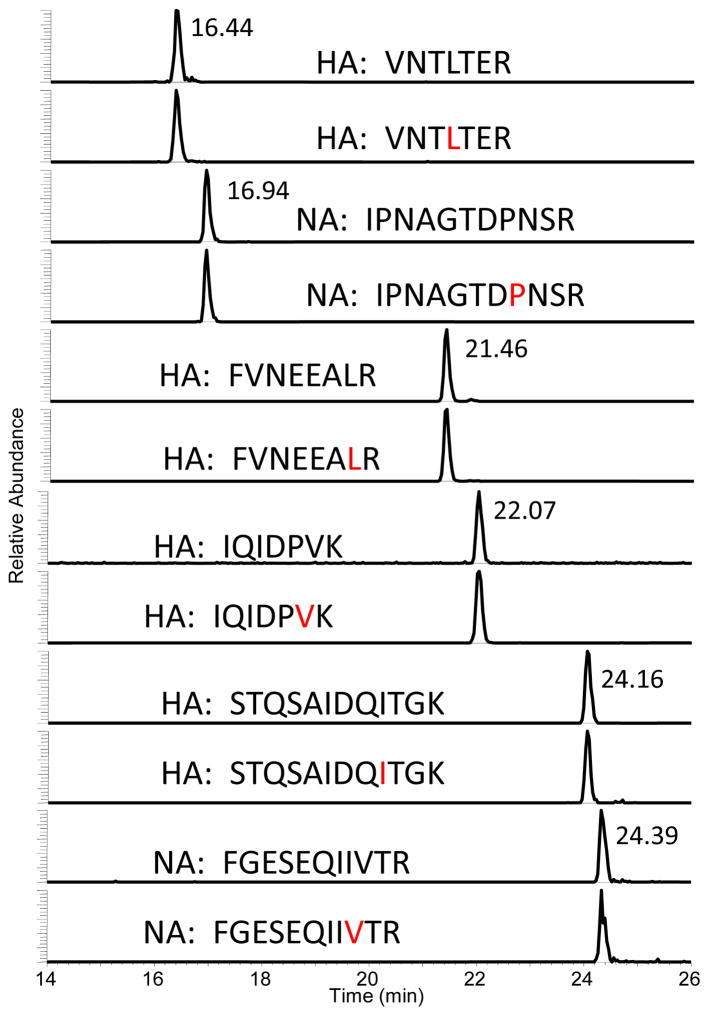
Vaccination is the most effective means to prevent influenza and its serious complications. Influenza viral strains undergo rapid mutations of the surface proteins hemagglutinin (HA) and neuraminidase (NA) requiring vaccines to be frequently updated to include current circulating strains. It is nearly impossible to predict which strains will be circulating in the next influenza season. It is, therefore, imperative that the process of producing a vaccine be streamlined and as swift as possible. We have developed an isotope dilution mass spectrometry (IDMS) method to quantify HA and NA in H7N7, H7N2, and H7N9 influenza. The IDMS method involves enzymatic digestion of viral proteins and the specific detection of evolutionarily conserved target peptides. The four target peptides that were initially chosen for analysis of the HA protein of H7N2 and H7N7 subtypes were conserved and available for analysis of the H7N9 subtype that circulated in China in the spring of 2013. Thus, rapid response to the potential pandemic was realized. Quantification of a protein is performed by employing multiple peptides to ensure that the enzymatic digestion of the protein is efficient in the region of the target peptides, verify the accuracy of the measurement, and provide flexibility in the case of amino acid changes among newly emerging strains. The IDMS method is an accurate, sensitive, and selective method to quantify the amount of HA and NA antigens in primary liquid standards, crude allantoic fluid, purified virus samples, and final vaccine presentations.
Figures
References
MeSH terms
Substances
Grants and funding
LinkOut - more resources
Full Text Sources
Other Literature Sources
Medical
