


Episodic binge ethanol exposure impairs murine macrophage infiltration and delays wound closure by promoting defects in early innate immune responses
- PMID: 24689549
- PMCID: PMC4001884
- DOI: 10.1111/acer.12369
Episodic binge ethanol exposure impairs murine macrophage infiltration and delays wound closure by promoting defects in early innate immune responses
Abstract
Background: Exacerbation of cutaneous wound infections and delayed wound closure are frequent complications seen in alcohol exposed subjects who sustain injuries. We previously reported that acute alcohol exposure alters the early dermal inflammatory phase of wound healing and also several parameters of the proliferative wound healing phase in wounds from ethanol (EtOH)-treated mice for several days or weeks after EtOH exposure. Hence, it is likely that the cumulative defects arising in the early phases of the wound healing process directly contribute to the increased complications observed in intoxicated patients at the time of injury.
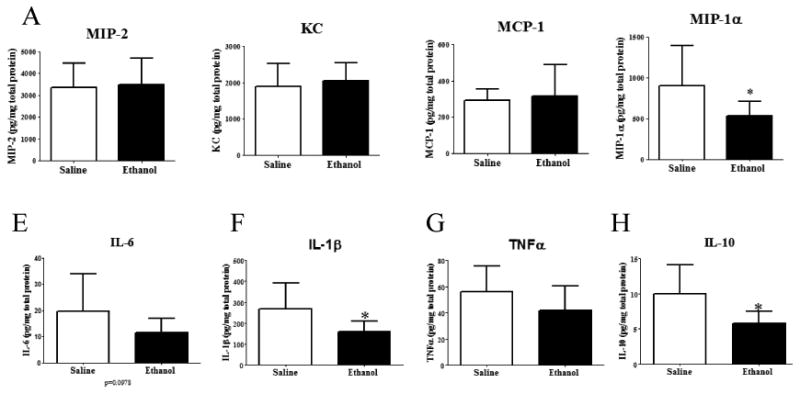
Methods: C57BL/6 mice were given intraperitoneal EtOH (2.2 g/kg body weight) or vehicle (saline) EtOH using our episodic binge EtOH exposure protocol (3 days EtOH, 4 days off, 3 days EtOH) to yield a blood alcohol concentration (BAC) of 300 mg/dl at the time of wounding. Mice were subjected to six 3 mm full-thickness dorsal wounds and immediately treated topically with 10 μl of sterile saline (control) or diluted Staphylococcus aureus corresponding to 1 × 10(4) CFU/wound. Wounds were harvested at 24 hours post injury to evaluate wound area, neutrophil and macrophage accumulation, and the protein levels of cytokines, interleukin-6 (IL-6), IL-1β, and IL-10, and chemokines, macrophage inflammatory protein-2 (MIP-2) and MIP-1α, monocyte chemotactic protein-1 (MCP-1), and keratinocyte-derived chemokine (KC). The abundance and localization of cathelicidin-related antimicrobial peptide (CRAMP) and the kallikrein epidermal proteases (KLK5 and KLK7) were also determined.
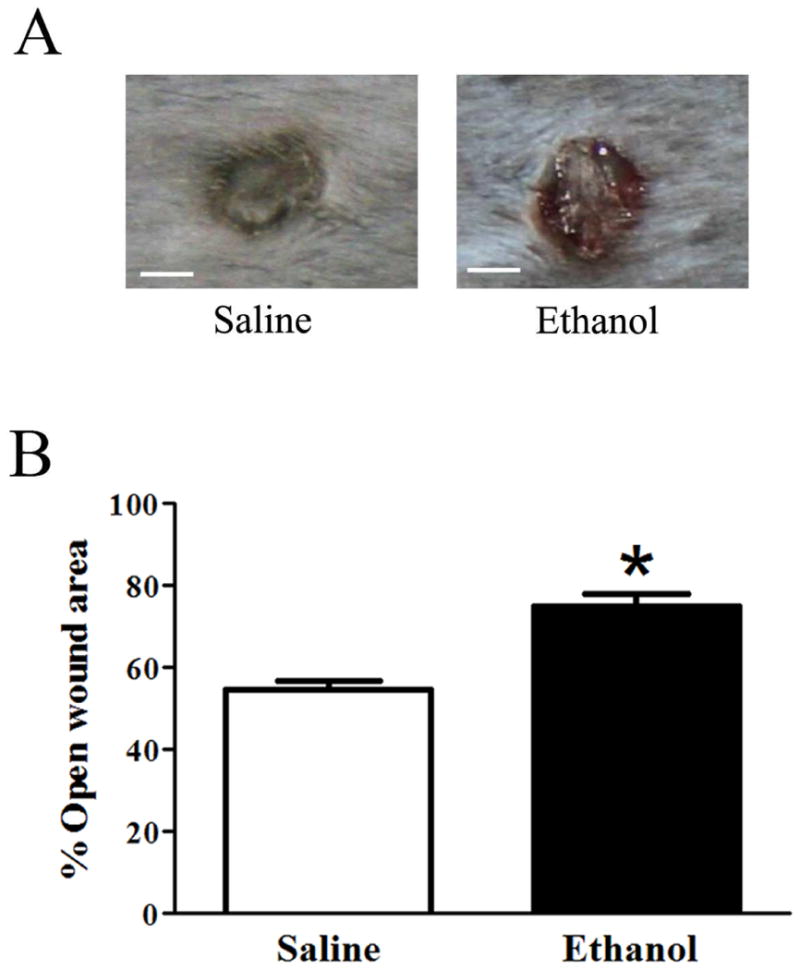
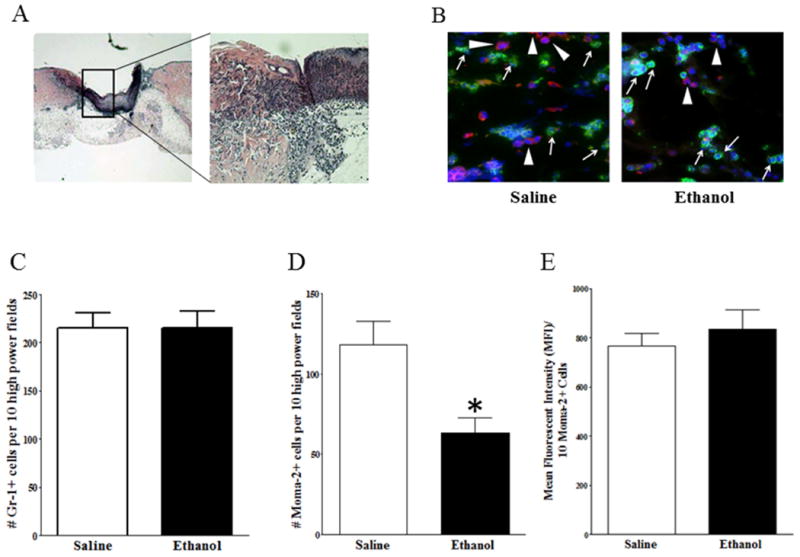
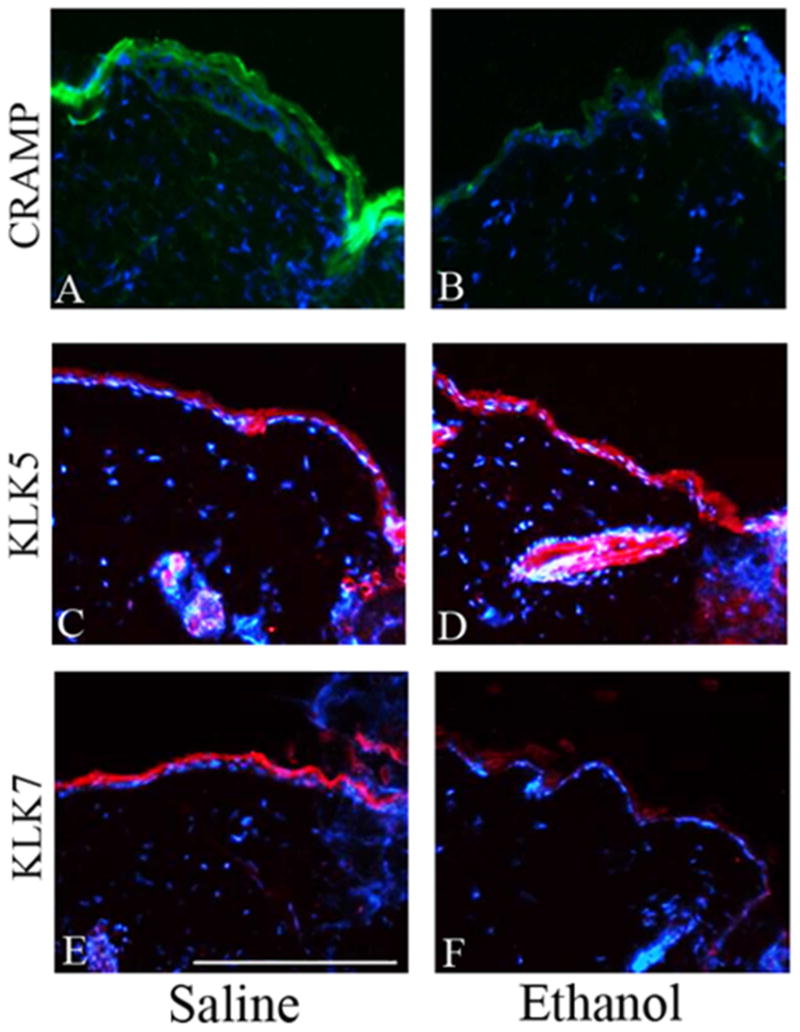
Results: Compared to control mice, EtOH-treated mice exhibited delayed wound closure, decreased macrophage accumulation, and impaired production of MIP-1α. Furthermore, skin from EtOH-treated mice demonstrated a reduction in the abundance of epidermal CRAMP and KLK7.
Conclusions: These findings suggest that EtOH exposure hinders several distinct components of the innate immune response, including phagocyte recruitment and chemokine/cytokine and AMP production. Together, these effects likely contribute to delayed wound closure and enhanced infection severity observed in intoxicated patients.
Keywords: Antimicrobial Peptides; Cathelicidin; Inflammation; Macrophages; Proteases; Wound Healing.
Copyright © 2014 by the Research Society on Alcoholism.
Figures
References
-
- Agerberth B, Charo J, Werr J, Olsson B, Idali F, Lindbom L, Kiessling R, Jornvall H, Wigzell H, Gudmundsson GH. The human antimicrobial and chemotactic peptides LL-37 and alpha-defensins are expressed by specific lymphocyte and monocyte populations. Blood. 2000;96:3086–3093. - PubMed
-
- Bradley KA, Rubinsky AD, Sun H, Bryson CL, Bishop MJ, Blough DK, Henderson WG, Maynard C, Hawn MT, Tonnesen H, Hughes G, Beste LA, Harris AH, Hawkins EJ, Houston TK, Kivlahan DR. Alcohol screening and risk of postoperative complications in male VA patients undergoing major non-cardiac surgery. Journal of general internal medicine. 2011;26:162–169. - PMC - PubMed
-
- de Wit M, Goldberg S, Hussein E, Neifeld JP. Health care-associated infections in surgical patients undergoing elective surgery: are alcohol use disorders a risk factor? Journal of the American College of Surgeons. 2012;215:229–236. - PubMed
Publication types
MeSH terms
Substances
Grants and funding
LinkOut - more resources
Full Text Sources
Other Literature Sources
Research Materials
Miscellaneous
