


The natural antimicrobial carvacrol inhibits quorum sensing in Chromobacterium violaceum and reduces bacterial biofilm formation at sub-lethal concentrations
- PMID: 24691035
- PMCID: PMC3972150
- DOI: 10.1371/journal.pone.0093414
The natural antimicrobial carvacrol inhibits quorum sensing in Chromobacterium violaceum and reduces bacterial biofilm formation at sub-lethal concentrations
Abstract
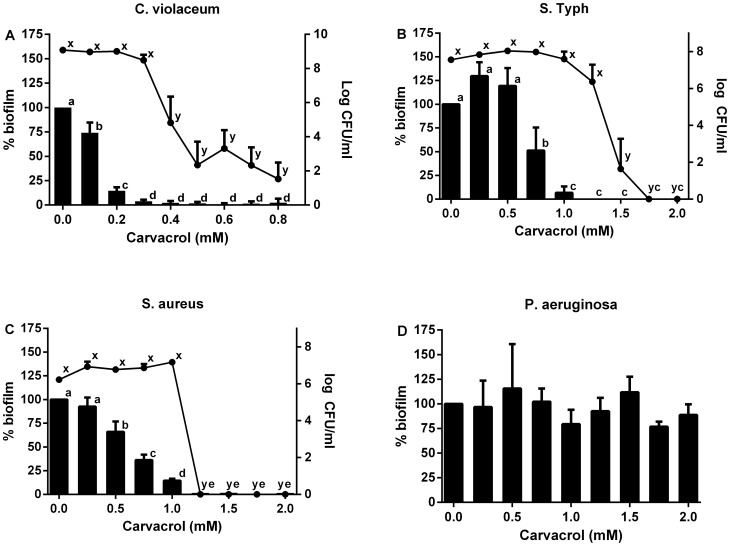
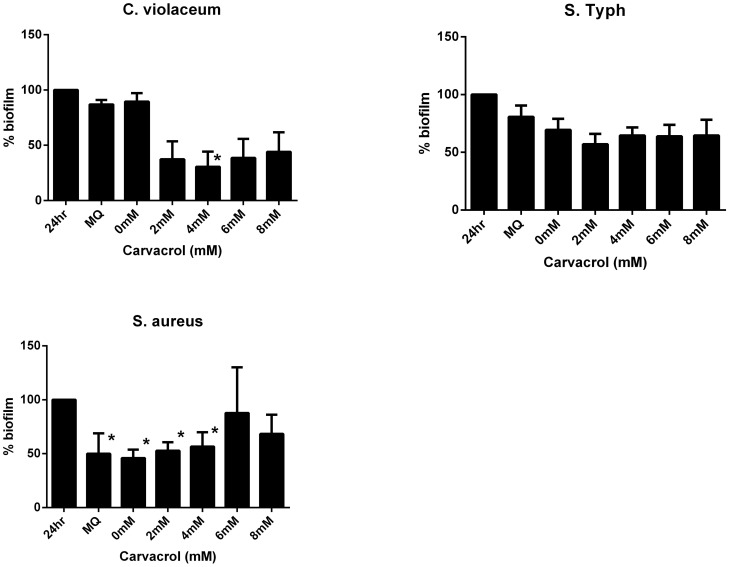
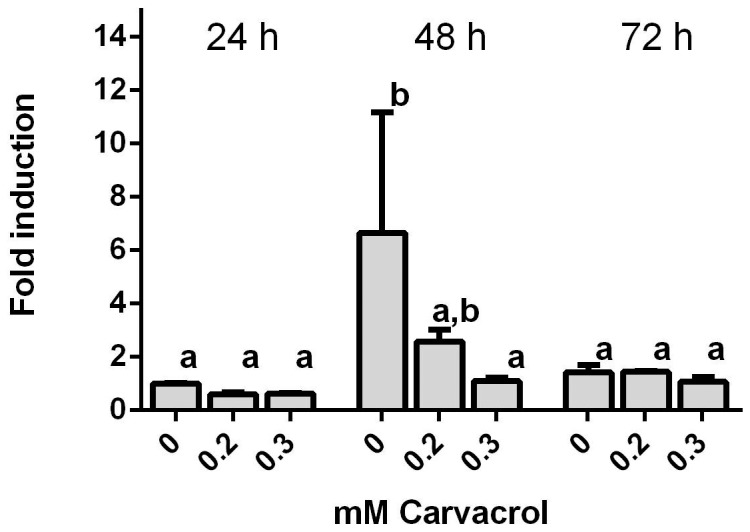
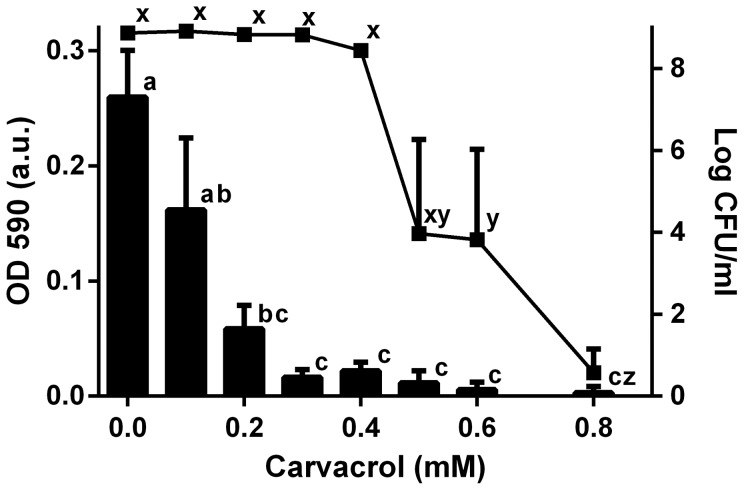
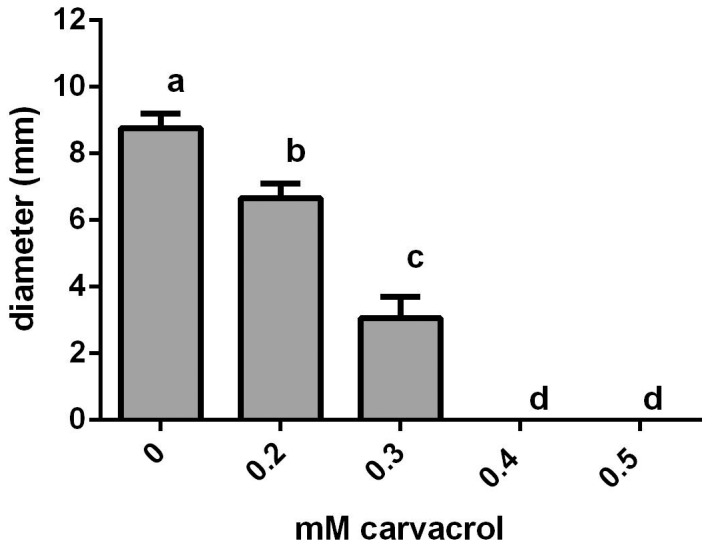
The formation of biofilm by bacteria confers resistance to biocides and presents problems in medical and veterinary clinical settings. Here we report the effect of carvacrol, one of the major antimicrobial components of oregano oil, on the formation of biofilms and its activity on existing biofilms. Assays were carried out in polystyrene microplates to observe (a) the effect of 0-0.8 mM carvacrol on the formation of biofilms by selected bacterial pathogens over 24 h and (b) the effect of 0-8 mM carvacrol on the stability of pre-formed biofilms. Carvacrol was able to inhibit the formation of biofilms of Chromobacterium violaceum ATCC 12472, Salmonella enterica subsp. Typhimurium DT104, and Staphylococcus aureus 0074, while it showed no effect on formation of Pseudomonas aeruginosa (field isolate) biofilms. This inhibitory effect of carvacrol was observed at sub-lethal concentrations (<0.5 mM) where no effect was seen on total bacterial numbers, indicating that carvacrol's bactericidal effect was not causing the observed inhibition of biofilm formation. In contrast, carvacrol had (up to 8 mM) very little or no activity against existing biofilms of the bacteria described, showing that formation of the biofilm also confers protection against this compound. Since quorum sensing is an essential part of biofilm formation, the effect of carvacrol on quorum sensing of C. violaceum was also studied. Sub-MIC concentrations of carvacrol reduced expression of cviI (a gene coding for the N-acyl-L-homoserine lactone synthase), production of violacein (pigmentation) and chitinase activity (both regulated by quorum sensing) at concentrations coinciding with carvacrol's inhibiting effect on biofilm formation. These results indicate that carvacrol's activity in inhibition of biofilm formation may be related to the disruption of quorum sensing.
Conflict of interest statement
Figures
References
-
- Hoiby N, Bjarnsholt T, Givskov M, Moli S, Ciofu O (2010) Antibiotic resistance of bacterial biofilms. Int J Antimicr Ag 35: 322–332. - PubMed
-
- Sperandio V, Torres AG, Kaper JB (2002) Quorum sensing Escherichia coli regulators B and C (QseBC): a novel two-component regulatory system involved in the regulation of flagella and motility by quorum sensing in E. coli. Mol Microbiol 43: 809–821. - PubMed
-
- Xue T, Zhao L, Sun B (2013) LuxS/AI-2 system is involved in antibiotic susceptibility and autolysis in Staphylococcus aureus NCTC 8325. Int J Antimicr Ag 41: 85–89. - PubMed
-
- Niu C, Afre S, Gilbert ES (2006) Subinhibitory concentrations of cinnamaldehyde interfere with quorum sensing. Lett Appl Microbiol 43: 489–494. - PubMed
Publication types
MeSH terms
Substances
LinkOut - more resources
Full Text Sources
Other Literature Sources
Molecular Biology Databases
