


Association of adiponectin with hepatic steatosis: a study of 1,349 subjects in a random population sample
- PMID: 24693952
- PMCID: PMC3977975
- DOI: 10.1186/1756-0500-7-207
Association of adiponectin with hepatic steatosis: a study of 1,349 subjects in a random population sample
Abstract
Background: Objective of the present study was to examine the association between adiponectin and hepatic steatosis, and other biochemical and anthropometric parameters in healthy subjects.
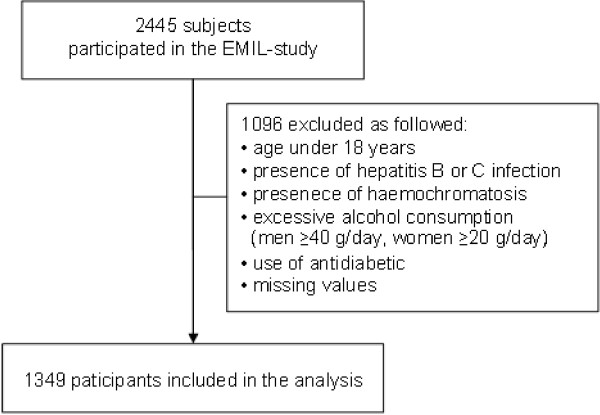
Results: A total of 1349 subjects (age 18-65 years) underwent ultrasound examination of the liver. Mean adiponectin concentration for the study collective was 11.35 ± 6.28 μg/mL. The following parameters were assessed for their association with adiponectin: body-mass index (BMI); age; sex; arterial blood pressure; nicotine use; alcohol consumption; physical activity; metabolic syndrome; total, low-density lipoprotein (LDL) and high-density lipoprotein (HDL) cholesterol; triglycerides; aspartate aminotransferase (AST); alanine aminotransferase (ALT); γ-glutamyltransferase (GGT); alkaline phosphatase (AP); C-reactive protein (CRP); insulin sensitivity according to the Homeostasis Model Assessment (HOMA); random blood glucose; and the degree of steatosis of the liver. The numerical differences in the variables influencing adiponectin returned in the descriptive analysis were confirmed at bivariate analysis for BMI, ALT, AST, GGT, AP, total and HDL cholesterol, triglycerides, CRP, arterial blood pressure, metabolic syndrome, nicotine use and alcohol consumption. The logistic regression of the multivariate analysis showed that male sex, hepatic steatosis, BMI, metabolic syndrome, tobacco smoking and CRP correlate negatively with adiponectin, while age, moderate alcohol consumption and HDL cholesterol exhibit a positive association.
Conclusions: The results of the present study confirm the findings of previous research. Adiponectin correlates negatively with cardiometabolic risk factors and is an independent indicator for non-alcoholic fatty liver disease (NAFLD).
Figures
References
-
- Sanyal AJ. NASH a global health problem. Hepatol Res. 2011;41:670–674. - PubMed
-
- Tannapfel A, Denk H, Dienes HP, Langner C, Schirmacher P, Trauner M, Flott-Rahmel B. Histopathological diagnosis of non-alcoholic and alcoholic fatty liver disease. Virchows Arch. 2011;458:511–523. - PubMed
-
- Petta S, Muratore C, Craxi A. Non-alcoholic fatty liver disease pathogenesis: the present and the future. Dig Liver Dis. 2009;41:615–625. - PubMed
-
- Farrell GC, Larter CZ. Nonalcoholic fatty liver disease: from steatosis to cirrhosis. Hepatology. 2006;43(2 Suppl 1):99–112. - PubMed
-
- Starley BQ, Calcagno CJ, Harrison SA. Nonalcoholic fatty liver disease and hepatocellular carcinoma: a weighty connection. Hepatology. 2010;51:1820–1832. - PubMed
MeSH terms
Substances
LinkOut - more resources
Full Text Sources
Other Literature Sources
Medical
Research Materials
Miscellaneous
