


Long-term psychological consequences of symptomatic pulmonary embolism: a qualitative study
- PMID: 24694625
- PMCID: PMC3987719
- DOI: 10.1136/bmjopen-2013-004561
Long-term psychological consequences of symptomatic pulmonary embolism: a qualitative study
Abstract
Objective: To explore the psychological consequences of experiencing symptomatic pulmonary embolism (PE).
Design: Qualitative interview-based study using interpretative phenomenological analysis.
Setting: Outpatients who attended an anticoagulation clinic in a district general hospital.
Participants: Patients attending an anticoagulation clinic following hospital admission for symptomatic PE were approached to participate. A total of 9 (4 women, 5 men) of 11 patients approached agreed to be interviewed. Participants were aged between 26 and 72 years and had previously experienced a PE between 9 and 60 months (median=26 months, mean=24 months).
Intervention: Audiotaped semistructured qualitative interviews were undertaken to explore participants experiences of having a PE and how it had affected their lives since. Data were transcribed and analysed using interpretative phenomenological analysis to identify emergent themes.
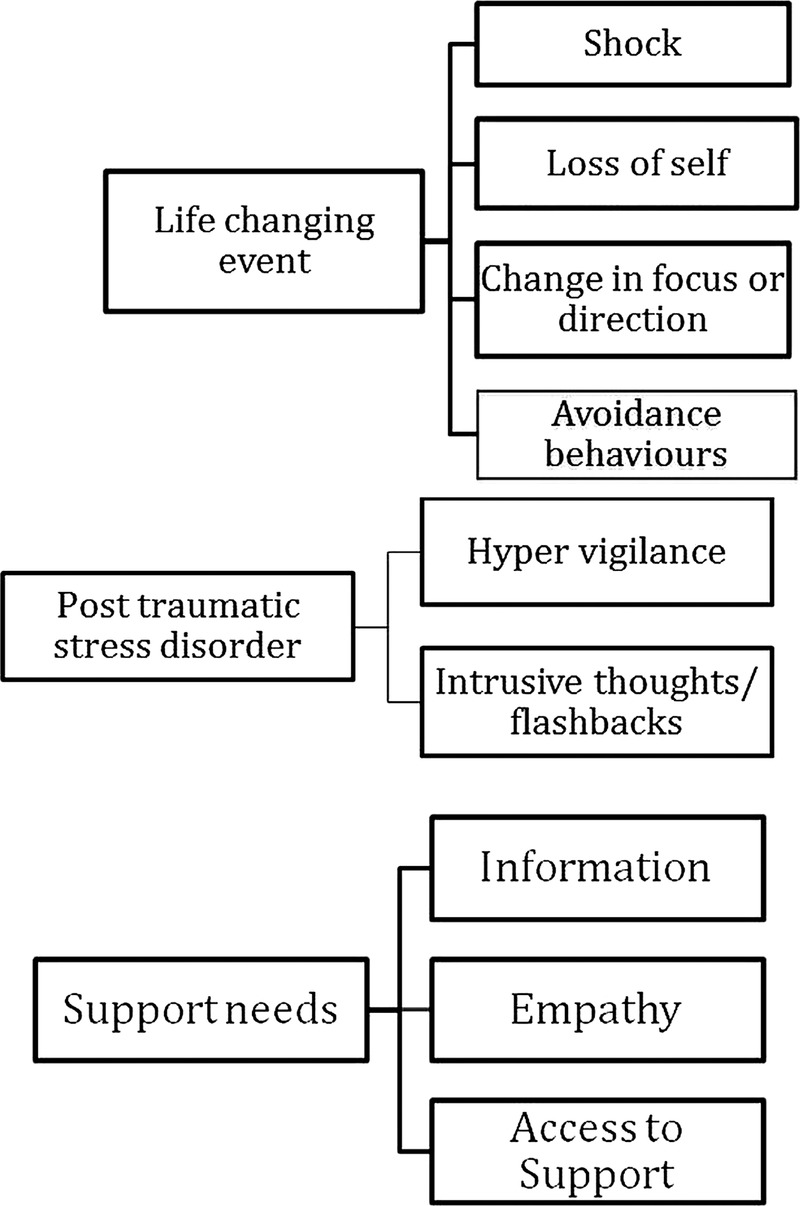
Results: Three major themes with associated subthemes were identified. Participants described having a PE as a life-changing experience comprising initial shock, followed by feeling of loss of self, life-changing decisions and behaviour modification. Features of post-traumatic stress disorder (PTSD) were described with flashbacks, hypervigilance and intrusive thoughts being most prevalent. Participants identified several areas of support needed for such patients including easier access to support through information giving and emotional support.
Conclusions: Long-term consequences of venous thromboembolism go beyond the physical alone. Patients describe experiencing symptomatic PE to be a life-changing distressing event leading to behaviour modification and in some PTSD. It is likely that earlier psychological intervention may reduce such long-term sequelae.
Keywords: QUALITATIVE RESEARCH; VASCULAR MEDICINE.
Figures
References
-
- Silverstein MD, Heit JA, Mohr DN, et al. Trends in the incidence of deep vein thrombosis and pulmonary embolism: a 25-year population-based study. Arch Intern Med 1998;158:585–93 - PubMed
-
- Prandoni P, Lensing AW, Cogo A, et al. The long-term clinical course of acute deep venous thrombosis. Ann Intern Med 1996;125:1–7 - PubMed
-
- Yamaki T, Hamahata A, Soejima K, et al. Factors predicting development of post-thrombotic syndrome in patients with a first episode of deep vein thrombosis: preliminary report. Eur J Vasc Endovasc Surg 2011;41:126–33 - PubMed
-
- Mohr DN, Silverstein MD, Heit JA, et al. The venous stasis syndrome after deep venous thrombosis or pulmonary embolism: a population-based study. Mayo Clin Proc 2000;75:1249–56 - PubMed
-
- Kahn SR, Shrier I, Julian JA, et al. Determinants and time course of the postthrombotic syndrome after acute deep venous thrombosis. Ann Intern Med 2008;149:698–707 - PubMed
MeSH terms
Grants and funding
LinkOut - more resources
Full Text Sources
Other Literature Sources
Medical
