


A window into the intoxicated mind? Speech as an index of psychoactive drug effects
- PMID: 24694926
- PMCID: PMC4138742
- DOI: 10.1038/npp.2014.80
A window into the intoxicated mind? Speech as an index of psychoactive drug effects
Abstract
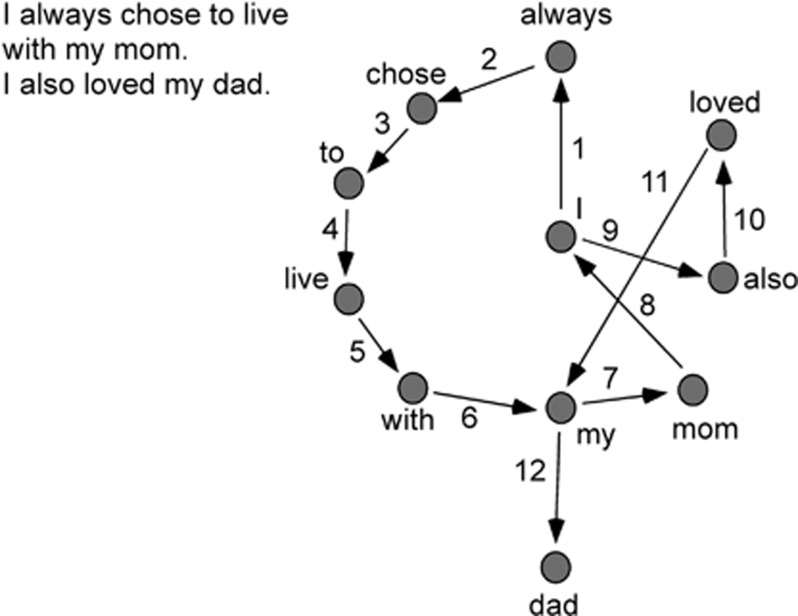
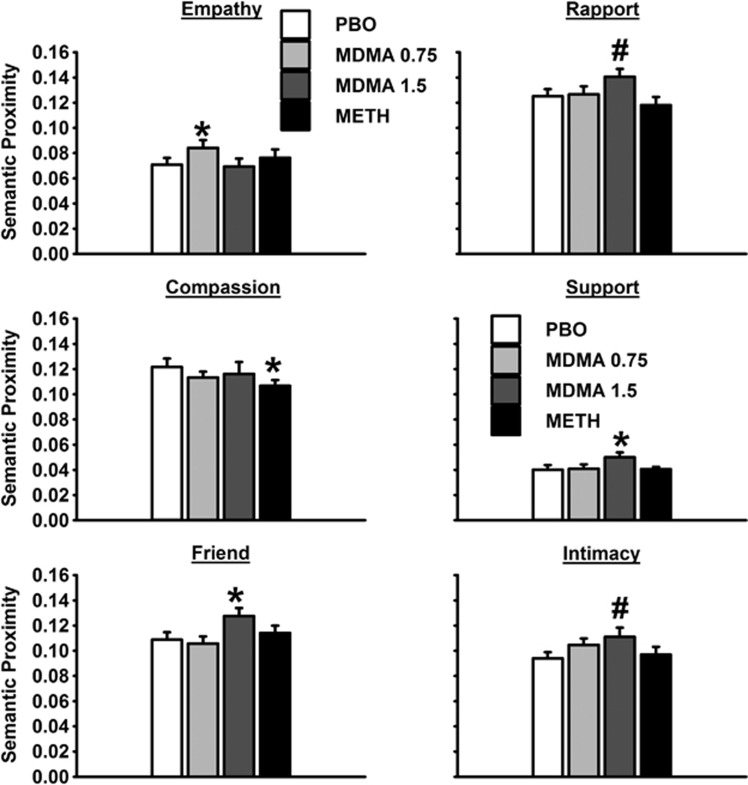
Abused drugs can profoundly alter mental states in ways that may motivate drug use. These effects are usually assessed with self-report, an approach that is vulnerable to biases. Analyzing speech during intoxication may present a more direct, objective measure, offering a unique 'window' into the mind. Here, we employed computational analyses of speech semantic and topological structure after ±3,4-methylenedioxymethamphetamine (MDMA; 'ecstasy') and methamphetamine in 13 ecstasy users. In 4 sessions, participants completed a 10-min speech task after MDMA (0.75 and 1.5 mg/kg), methamphetamine (20 mg), or placebo. Latent Semantic Analyses identified the semantic proximity between speech content and concepts relevant to drug effects. Graph-based analyses identified topological speech characteristics. Group-level drug effects on semantic distances and topology were assessed. Machine-learning analyses (with leave-one-out cross-validation) assessed whether speech characteristics could predict drug condition in the individual subject. Speech after MDMA (1.5 mg/kg) had greater semantic proximity than placebo to the concepts friend, support, intimacy, and rapport. Speech on MDMA (0.75 mg/kg) had greater proximity to empathy than placebo. Conversely, speech on methamphetamine was further from compassion than placebo. Classifiers discriminated between MDMA (1.5 mg/kg) and placebo with 88% accuracy, and MDMA (1.5 mg/kg) and methamphetamine with 84% accuracy. For the two MDMA doses, the classifier performed at chance. These data suggest that automated semantic speech analyses can capture subtle alterations in mental state, accurately discriminating between drugs. The findings also illustrate the potential for automated speech-based approaches to characterize clinically relevant alterations to mental state, including those occurring in psychiatric illness.
Figures
References
-
- Adler CM, Goldberg T, Malhotra AK, Pickar D, Breier A. Effects of ketamine on thought disorder, working memory, and semantic memory in healthy volunteers. Biol Psychiatry. 1998;43:811–816. - PubMed
-
- Adler CM, Malhotra AK, Elman I, Goldberg T, Egan M, Pickar D, et al. Comparison of ketamine-induced thought disorder in healthy volunteers and thought disorder in schizophrenia. Am J Psychiatry. 1999;156:1646–1649. - PubMed
-
- Bird S, Klein E, Loper E. Natural Language Processing with Python. O'Reilly Media: Sebastopol, CA; 2009.
Publication types
MeSH terms
Substances
Grants and funding
LinkOut - more resources
Full Text Sources
Other Literature Sources
Medical
