Review
. 2014 Apr;27(2):346-70.
doi: 10.1128/CMR.00105-13.

Genital Chlamydia trachomatis: understanding the roles of innate and adaptive immunity in vaccine research

Affiliations
Review

Genital Chlamydia trachomatis: understanding the roles of innate and adaptive immunity in vaccine research

Sam Vasilevsky et al. Clin Microbiol Rev. 2014 Apr.

Abstract

Chlamydia trachomatis is the leading cause of bacterial sexually transmitted disease worldwide, and despite significant advances in chlamydial research, a prophylactic vaccine has yet to be developed. This Gram-negative obligate intracellular bacterium, which often causes asymptomatic infection, may cause pelvic inflammatory disease (PID), ectopic pregnancies, scarring of the fallopian tubes, miscarriage, and infertility when left untreated. In the genital tract, Chlamydia trachomatis infects primarily epithelial cells and requires Th1 immunity for optimal clearance. This review first focuses on the immune cells important in a chlamydial infection. Second, we summarize the research and challenges associated with developing a chlamydial vaccine that elicits a protective Th1-mediated immune response without inducing adverse immunopathologies.


Figures
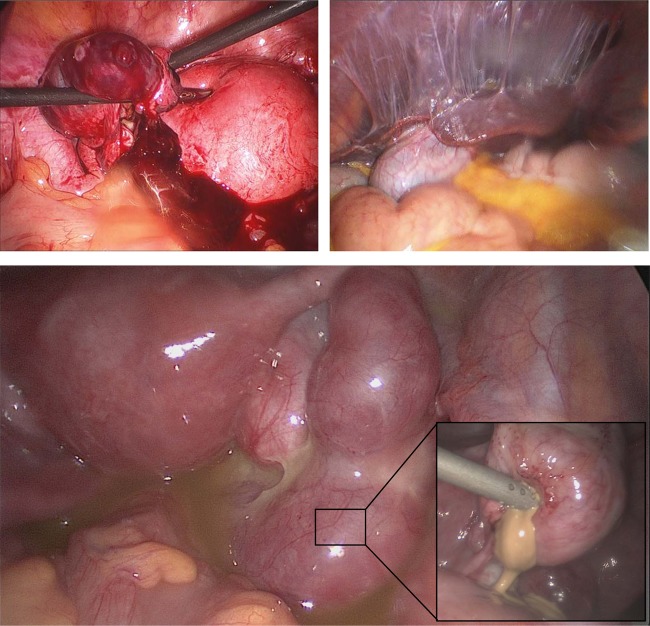
FIG 1
FIG 1
(Top left) Laparoscopy surgical procedure showing a ruptured left fallopian tube as a result of ectopic pregnancy. The image shows the presence of significant hemoperitoneum. The patient was positive for Chlamydia trachomatis by PCR. (Top right) Fitz-Hugh-Curtis syndrome caused by Chlamydia trachomatis. (Bottom) Pelvic inflammatory disease (PID) caused by Chlamydia trachomatis infection of the uterus, fallopian tubes, and ovaries. The image shows the presence of a large dilation of the right fallopian tube, representing a tubo-ovarian abscess. (Inset) Drainage of the tubo-ovarian abscess.
None
None
None
None

References

    1. Bebear C, de Barbeyrac B. 2009. Genital Chlamydia trachomatis infections. Clin. Microbiol. Infect. 15:4–10. 10.1111/j.1469-0691.2008.02647.x - DOI - PubMed
    1. World Health Organization. 2008. Global incidence and prevalence of selected curable sexually transmitted infections. World Health Organization, Geneva, Switzerland
    1. Baud D, Goy G, Jaton K, Osterheld MC, Blumer S, Borel N, Vial Y, Hohlfeld P, Pospischil A, Greub G. 2011. Role of Chlamydia trachomatis in miscarriage. Emerg. Infect. Dis. 17:1630–1635. 10.3201/eid1709.100865 - DOI - PMC - PubMed
    1. Karaer A, Mert I, Cavkaytar S, Batioglu S. 2013. Serological investigation of the role of selected sexually transmitted infections in the aetiology of ectopic pregnancy. Eur. J. Contracept. Reprod. Health Care 18:68–74. 10.3109/13625187.2012.744818 - DOI - PubMed
    1. Kavanagh K, Wallace LA, Robertson C, Wilson P, Scoular A. 2013. Estimation of the risk of tubal factor infertility associated with genital chlamydial infection in women: a statistical modelling study. Int. J. Epidemiol. 42:493–503. 10.1093/ije/dyt011 - DOI - PubMed

Publication types

MeSH terms

Substances

LinkOut - more resources