


No clinically relevant effect on cognitive outcomes after low-dose radiation to the infant brain: a population-based cohort study in Sweden
- PMID: 24697746
- PMCID: PMC4219853
- DOI: 10.3109/0284186X.2014.899434
No clinically relevant effect on cognitive outcomes after low-dose radiation to the infant brain: a population-based cohort study in Sweden
Abstract
While the detrimental effects of cranial radiotherapy on the developing brain are well known, the effects on cognitive performance of low doses of ionizing radiation is less studied. We performed a population-based cohort study to determine whether low doses of ionizing radiation to the brain in infancy affects cognitive function later in life. Further we hypothesized that the dose to the hippocampus predicts cognitive late side effects better than the anterior or the posterior brain doses.
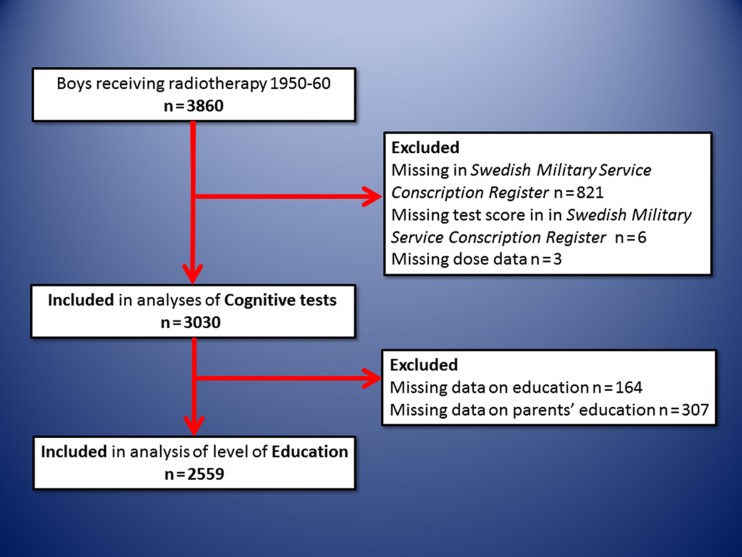
Material and methods: During 1950-1960 3860 boys were treated with radiation in Sweden for cutaneous hemangiomas before the age of 18 months. Of these, 3030 were analyzed for military test scores at the age of 18 years and 2559 for the highest obtained educational level.
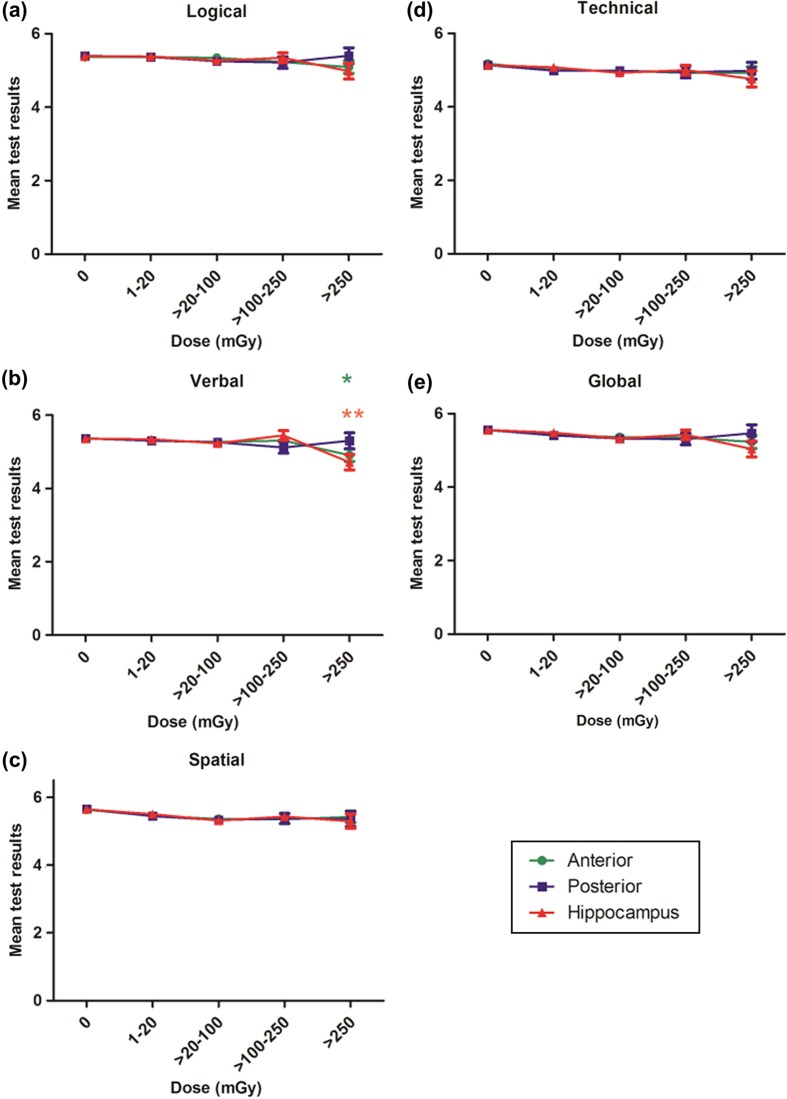
Results: Logical, spatial and technical test scores were not affected by increasing irradiation doses. The verbal test scores displayed a significant trend for decreasing scores with increasing doses to the hippocampus (p = 0.005). However, the absolute mean difference between the zero dose and the highest dose category (median 680 mGy) was very small, only 0.64 stanine points, and the significance was dependent on the highest dose category, containing few subjects. The educational level was not affected by brain irradiation. Overall, the hippocampal dose was a better predictor of late cognitive side effects than the doses to the anterior or the posterior brain. In conclusion, there was no decrease in logical, spatial and technical verbal or global test scores after ionizing radiation doses up to 250 mGy, but a subtle decrease in verbal test scores if the highest dose category was included (median 680 mGy). However, the clinical relevance of this decline in the highest dose group is questionable, since we could not find any effect on the highest obtained educational level.
Figures
References
-
- Mulhern RK, Merchant TE, Gajjar A, Reddick WE, Kun LE. Late neurocognitive sequelae in survivors of brain tumours in childhood. Lancet Oncol. 2004;5:399–408. - PubMed
-
- Pollack IF, Jakacki RI. Childhood brain tumors: Epidemiology, current management and future directions. Nature Rev Neurol. 2011;7:495–506. - PubMed
-
- Packer RJ, Gurney JG, Punyko JA, Donaldson SS, Inskip PD, Stovall M, et al. Long-term neurologic and neurosensory sequelae in adult survivors of a childhood brain tumor: Childhood cancer survivor study. J Clin Oncol. 2003;21:3255–61. - PubMed
-
- Lannering B, Marky I, Lundberg A, Olsson E. Long-term sequelae after pediatric brain tumors: Their effect on disability and quality of life. Med Pediatr Oncol. 1990;18:304–10. - PubMed
-
- Neglia JP, Robison LL, Stovall M, Liu Y, Packer RJ, Hammond S, et al. New primary neoplasms of the central nervous system in survivors of childhood cancer: A report from the Childhood Cancer Survivor Study. J Natl Cancer Inst. 2006;98:1528–37. - PubMed
Publication types
MeSH terms
LinkOut - more resources
Full Text Sources
Other Literature Sources