


Time-resolved photoluminescence spectroscopy and imaging: new approaches to the analysis of cultural heritage and its degradation
- PMID: 24699285
- PMCID: PMC4029699
- DOI: 10.3390/s140406338
Time-resolved photoluminescence spectroscopy and imaging: new approaches to the analysis of cultural heritage and its degradation
Abstract
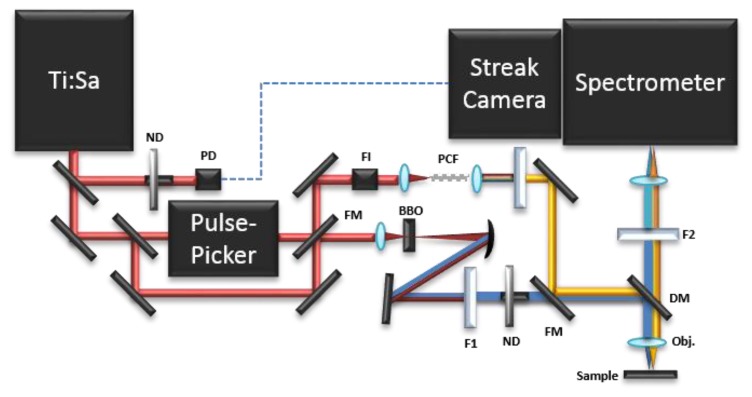
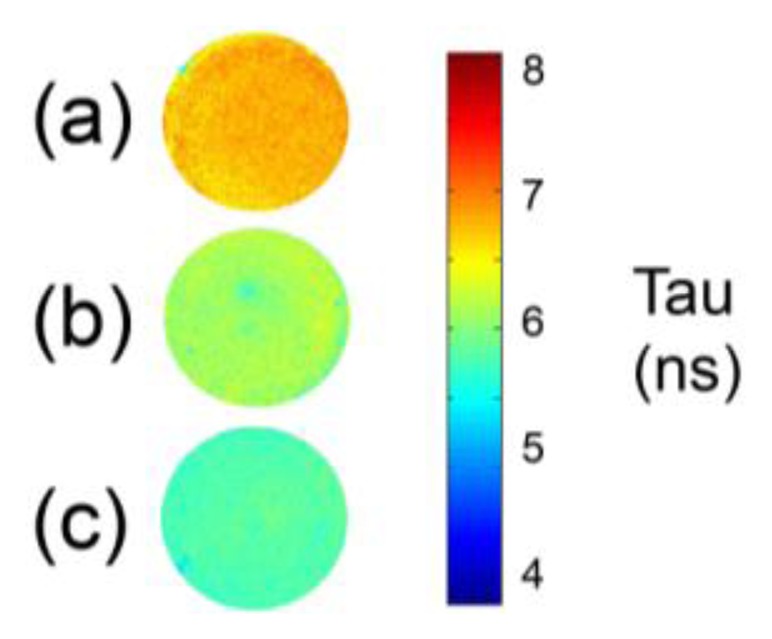
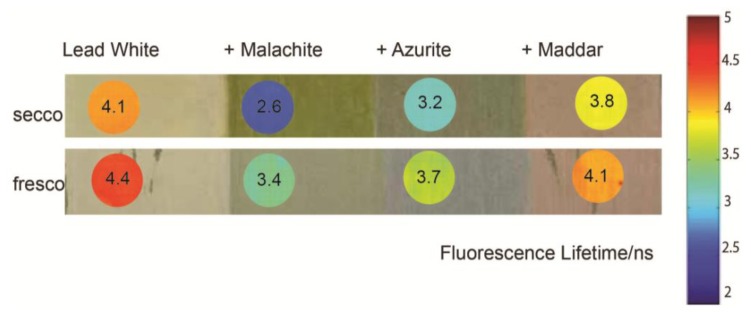
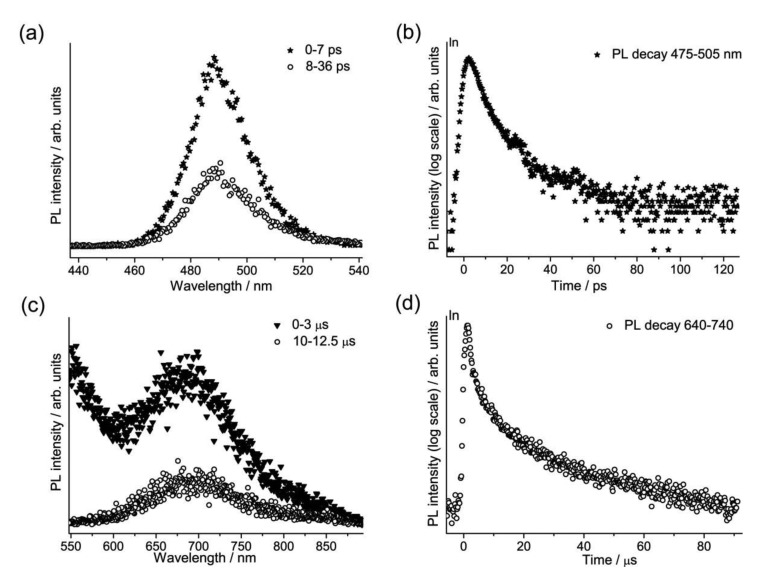
Applications of time-resolved photoluminescence spectroscopy (TRPL) and fluorescence lifetime imaging (FLIM) to the analysis of cultural heritage are presented. Examples range from historic wall paintings and stone sculptures to 20th century iconic design objects. A detailed description of the instrumentation developed and employed for analysis in the laboratory or in situ is given. Both instruments rely on a pulsed laser source coupled to a gated detection system, but differ in the type of information they provide. Applications of FLIM to the analysis of model samples and for the in-situ monitoring of works of art range from the analysis of organic materials and pigments in wall paintings, the detection of trace organic substances on stone sculptures, to the mapping of luminescence in late 19th century paintings. TRPL and FLIM are employed as sensors for the detection of the degradation of design objects made in plastic. Applications and avenues for future research are suggested.
Figures


References
-
- Nevin A., Spoto G., Anglos D. Laser spectroscopies for elemental and molecular analysis in art and archaeology. Appl. Phys. A. 2012;106:339–361.
-
- De la Rie R. Fluorescence of paint and varnish layers (part I-II-III) Stud. Conserv. 1982;27:1–7. 65–69, 102–108.
-
- Miyoshi T., Ikeya M., Kinoshita S., Takashi K. Laser-Induced Fluorescence of Oil Colours and Its Application to the Identification of Pigments in Oil Paintings. Jpn. J. Appl. Phys. 1982;21:1032–1036.
-
- Bottiroli G., Gallone-Galassi A., Bernacchi E. Microspectrofluorometric techniques as applied to the analysis of binding media and varnishes in color samples taken from paintings. Proceedings of the Symposium on Scientific Methodologies Applied to Works of Art; Florence, Italy. 2–5 May 1984; pp. 168–170.
-
- Larson L.J., Shin K.K., Zink J.I. Photoluminescence Spectroscopy of Natural Resins and Organic Binding Media of Paintings. J. Am. Inst. Conserv. 1991;30:89–104.
Publication types
MeSH terms
Substances
LinkOut - more resources
Full Text Sources
Other Literature Sources
