Review
. 2014 Oct;35(4):439-46.
doi: 10.1016/j.yfrne.2014.03.004. Epub 2014 Apr 1.

Vital and vulnerable functions of the primate placenta critical for infant health and brain development

Affiliations
Review

Vital and vulnerable functions of the primate placenta critical for infant health and brain development

Christopher L Coe et al. Front Neuroendocrinol. 2014 Oct.

Abstract

The placenta is essential to mammalian pregnancy with many roles beyond just nutrient supply, including both endocrine and immune functions. During the course of evolution, the placenta of higher primates has acquired some unique features, including the capacity to secrete corticotropin-releasing hormone (CRH). In addition, a placental receptor for IgG enables particularly high levels of protective maternal antibody to reach the fetus before birth. This paper reviews the placental biology of primates, and discusses its involvement in adrenocortical hormone activity during pregnancy, the transfer of maternal antibody, and finally the delivery of maternal iron to the fetus, which is needed for normal brain development. An understanding of these vital functions during a full-term, healthy pregnancy provides insights into the consequences of gestational disturbances, such as maternal stress, illness, and undernutrition, which have even larger ramifications if the infant is born premature.

Keywords: Anemia; Antibody; Cortisol; Immune, Iron; Monkey; Placenta; Pregnancy; Prematurity; Primate; Stress.


Figures

Figure 1
Figure 1
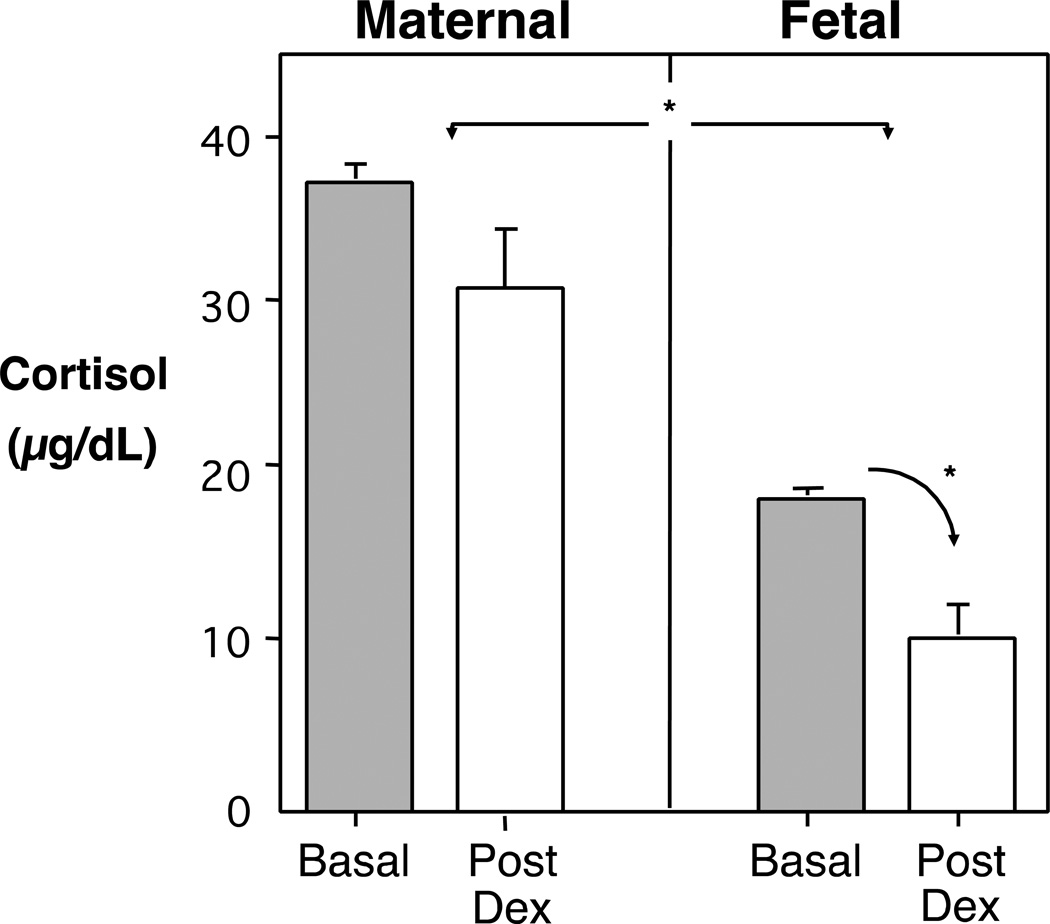
Mean (SE) cortisol during mid-to-late pregnancy in rhesus monkeys, demonstrating significant differences between levels in the maternal and fetal compartments. Sixteen matched samples were obtained at caesarian delivery across Days 125–162 ga. Dexamethasone (0.5 mg/kg at 12 hr intervals) was administered to 4 other gravid females, and blood samples obtained 5–7 days later on Day 135 ga. The Dex inhib ition of fetal cortisol was significantly more prolonged, reflecting the permissive placental transfer of Dex and its persistence in the fetal compartment.
Figure 2
Figure 2
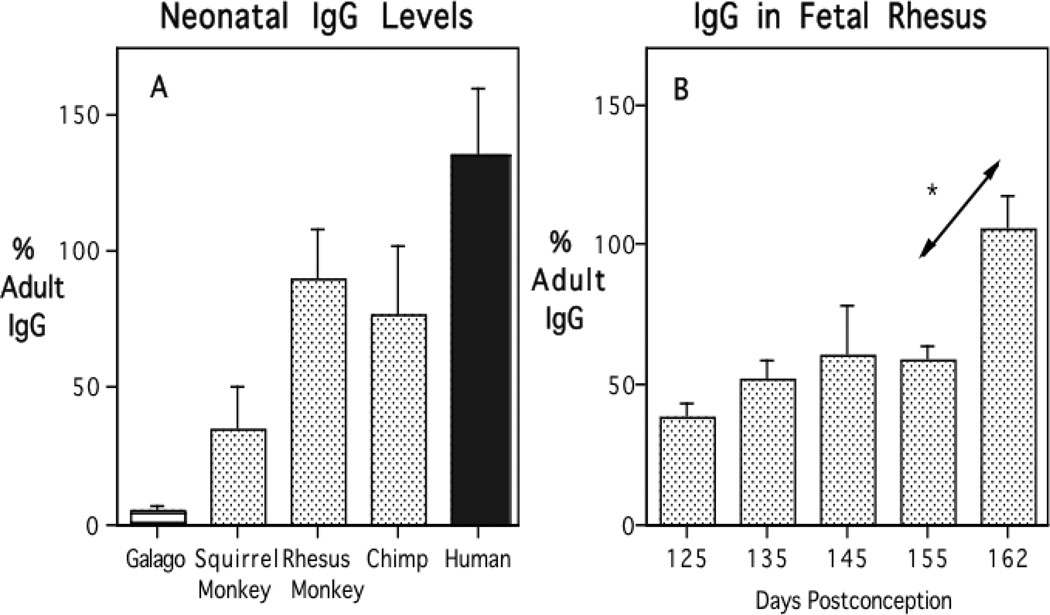
Placental transfer of maternal IgG to infant primates, revealing low levels in the prosimian galago, intermediate transmission in a New World monkey, and the equivalence with maternal values reached in Old World monkey and chimpanzee neonates (Panel A). All are less than the more active placental IgG transfer evident in the human newborn. Placental transfer of maternal IgG determined in fetal rhesus monkeys across late gestation, demonstrating the significant increment during the final 2 weeks before term (Panel B).
Figure 3
Figure 3
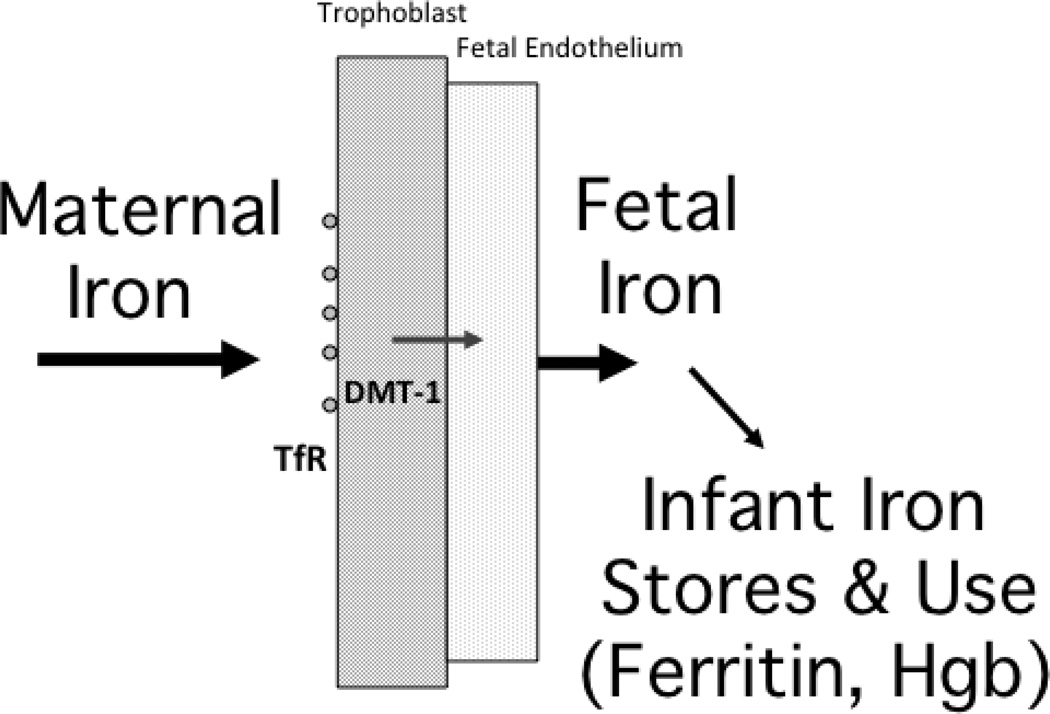
Flow diagram illustrating placental transfer of maternal iron via the transferrin receptor (TfR) and divalent metal transporter (DMT-1), which ensures substantial iron stores, both in the human and monkey neonate. If born with low ferritin, there is a higher risk for anemia by 4–8 months of age, as growth-related needs exceed bioavailable iron in breast milk.
Figure 4
Figure 4
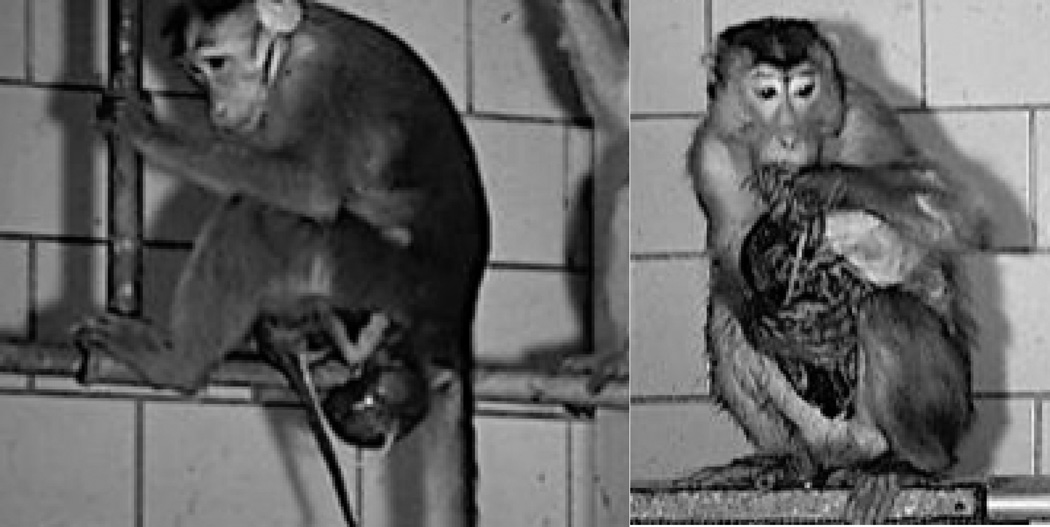
The placenta fulfills several additional functions after it passes soon after delivery in nonhuman primates (A). It is a source of energy and hormones for the parturient female. In addition, as female monkeys engage in placentophagia they raise the placenta above the infant and compress it, providing a substantial blood transfusion to the neonate (B). When those red blood cells die, iron is scavenged by the infant’s macrophages and recycled. In our research, we track placental delivery by administering stable iron isotopes to the gravid female and quantifying the iron incorporated into the infant’s red blood cells for months after birth.

References

    1. Althaus ZR, Bailey JR, Leakey JEA, Slikker W. Transplacental metabolism of dexamethasone and cortisol in the late gestational age rhesus monkey (Macaca mulatta) Devel. Pharmacol. Therap. 1986;9:332–349. - PubMed
    1. Bauman MD, Iosif A-M, Ashwood P, Braunschweig D, Lee A, Schumann CM, Van de Water J, Amaral DG. Maternal antibodies from mothers of children with autism alter brain growth and social behavioral development in the rhesus monkey. Translat. Psychiatr. 2013;3:e278. Doi:10.1038/tp.2013.47. - PMC - PubMed
    1. Bailey MT, Lubach GR, Coe CL. Prenatal conditions alter the bacterial colonization of the gut in the infant monkey. J. Pediatr. Clin. Gastroenterol. 2004;38:414–421. - PubMed
    1. Bianchi DW, Zickwolf GK, Weil GJ, Sylvester S, DeMaria MA. Male fetal progenitor cells persist in maternal blood for as long as 27 years postpartum. Proc. Nat. Acad. Sci. 1996;93(2):705–708. - PMC - PubMed
    1. Braunschweig D, Ashwood P, Krakowiak P, Hertz-Picciotto I, Hansen R, Croen L, Pessah IN, Van de Water J. Autism: maternally derived antibodies specific for fetal brain proteins. Neurotoxicol. 2009;29:226–231. - PMC - PubMed

Publication types

Substances

LinkOut - more resources