Review
. 2014 Jun;35(6):278-86.
doi: 10.1016/j.it.2014.02.010. Epub 2014 Apr 2.

Emerging concepts on T follicular helper cell dynamics in HIV infection

Affiliations
Review

Emerging concepts on T follicular helper cell dynamics in HIV infection

Franco Pissani et al. Trends Immunol. 2014 Jun.

Abstract

Inducing cross-reactive broadly neutralizing antibody (bNAb) responses to HIV through vaccination remains an insurmountable challenge. T follicular helper (TFH) cells are fundamental for the development of antigen-specific antibody responses and therefore crucial for anti-HIV vaccine design. Here, we review recent studies supporting an intricate involvement of TFH cells in HIV pathogenesis and bNAb development during HIV infection. We also examine emerging data suggesting that TFH cell responses may be traceable in peripheral blood, and discuss the implications of these findings in the context of vaccine design and future research in TFH cell immunobiology.

Keywords: HIV; HIV neutralizing antibody; T follicular helper cells; broadly neutralizing antibody; follicular B helper T cell; peripheral blood T follicular helper T cell (pTfh); vaccine.


Figures

Figure 1
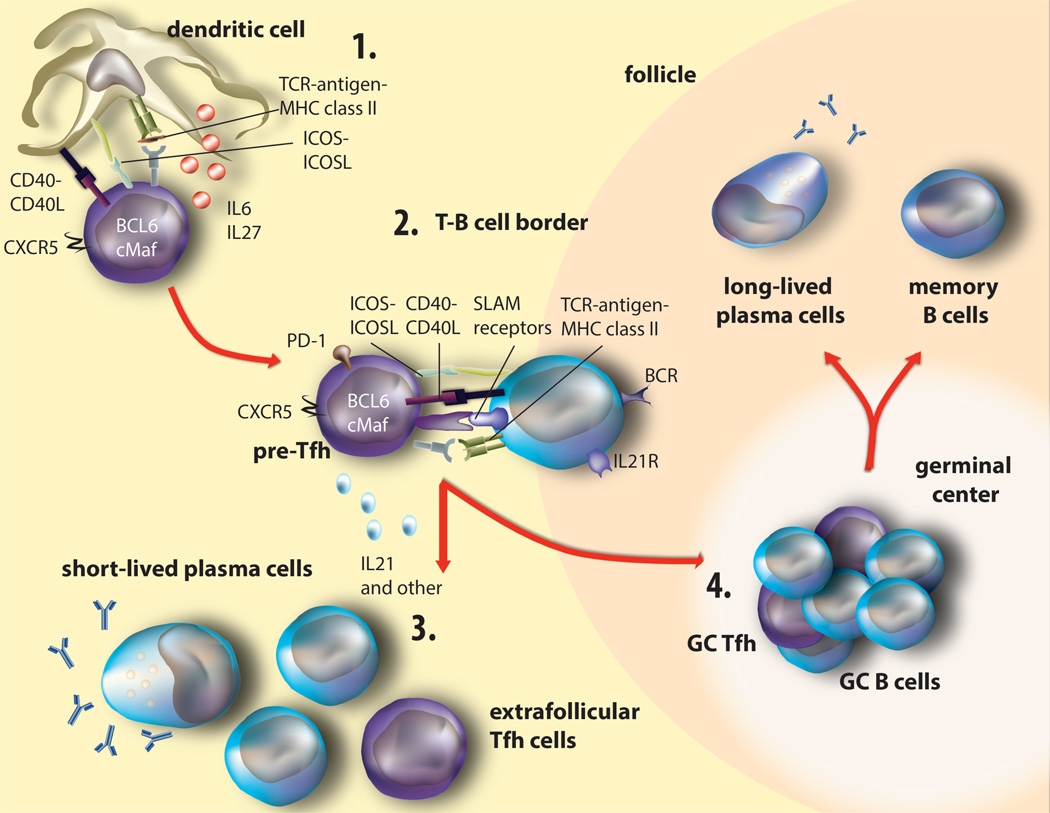
Figure 1. Development of TFH cells and the germinal center reaction
(1) Dendritic cells present antigen and activate naïve CD4 T cells via TCR:MHC-II, ICOS-ICOS-L, and CD40:CD40L interactions to initiate the TFH program. DC- and B cell-derived IL-6 and IL-27 cytokines maintain and reinforce this lineage, leading to upregulation of the TFH transcription factors Bcl6, cMaf, and CXCR5. (2) Expression of CXCR5 facilitates the migration of pre-TFH cells toward the T—B cell interphase. Here, cognate pre-TFH and B cells exchange molecular signals including ICOS:ICOS-L, CD40:CD40L, TCR:MHC-II, and several SLAM receptor family members, as well as several cytokines including the cardinal cytokine IL-21, that reinforce expression of Bcl6 and c-Maf that further increase expression of TFH surface receptors. B cells simultaneously undergo diverse signals that instruct their maturation pathway: either extrafollicular or GC. (3) Extrafollicular activated B cells then convert to short-lived plasma cells and secrete Ab with or without extrafollicular TFH help. (4) In the GC, prolonged interactions between GC TFH and GC B cells further confirm the TFH lineage commitment, resulting in mutual exchange of survival signals that result in GC maintenance. GC TFH cells provide a limiting source of antigen for which B cells compete for survival signals based on BCR affinity. Furthermore, here GC TFH cells instruct GC B cells to phosphorylate and express Activation-induced Deaminase (AID) that mediates SHM, CSR, memory cell and long-lived plasma cell formation.
Figure 2
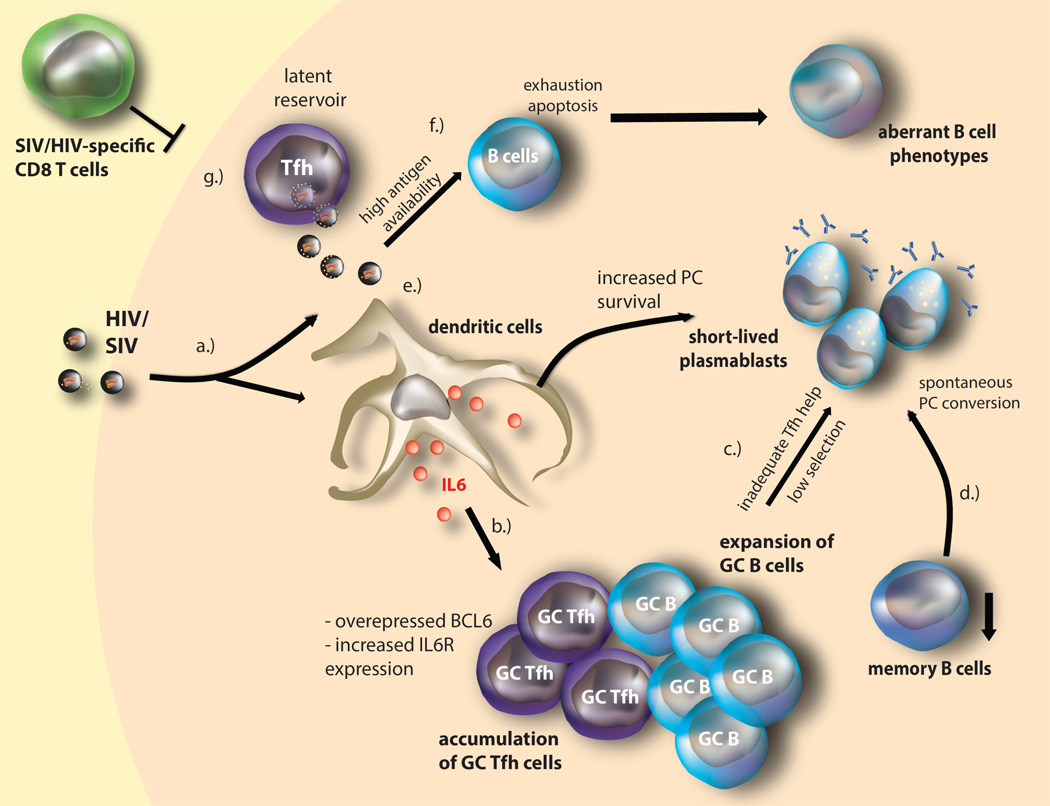
Figure 2. HIV/SIV-mediated TFH dysfunction and immunopathogenesis
(a.) HIV/SIV mediated immune activation induces high IL-6 production found within infected lymph nodes. (b.) IL-6 induces expansion of (potentially dysfunctional) TFH cells expressing high levels of Bcl6 and IL-6Rα. TFH expansion is further associated with increased numbers of GC B cells. (c.) GC TFH expansion increases contact with PD-L1-expressing GC B cells, resulting in deregulated GC TFH cells and inadequate help provisioned to GC B cells, likely by lowering the selection threshold and decreasing IL-21 signaling (and other TFH cytokines such as IFN γ and IL-10) that lead B cell differentiation into short-lived PC formation and increased polyclonal and HIV/SIV-specific (primarily targeting Gag) IgG production. (d.) Similarly, direct IL-6 signaling may also mediate spontaneous terminal differentiation of memory B cell into plasma cells, resulting in observed decrease of memory B cells in HIV/SIV infection. (e.) High antigenic availability within the lymph node likely also enhances plasma cell survival. (f.) High antigenemia likely also contributes to B cell exhaustion, apoptosis, and the subsequent aberrant B cell phenotypes. (g.) HIV/SIV infection of TFH cells (enhanced by IL-6) likely maintains the viral reservoir, as infected TFH cells, may be resistant to apoptosis; this likely constitutes a latent reservoir within a privileged tissue, as HIV/SIV-specific CD8 CTL relatively seldom enters the lymphoid tissue.

References

    1. Rerks-Ngarm S, et al. Vaccination with ALVAC and AIDSVAX to prevent HIV-1 infection in Thailand. N Engl J Med. 2009;361:2209–2220. - PubMed
    1. Haynes BF, et al. Immune-correlates analysis of an HIV-1 vaccine efficacy trial. N Engl J Med. 2012;366:1275–1286. - PMC - PubMed
    1. Plotkin SA. Vaccines: correlates of vaccine-induced immunity. Clin Infect Dis. 2008;47:401–409. - PubMed
    1. Moldt B, et al. Highly potent HIV-specific antibody neutralization in vitro translates into effective protection against mucosal SHIV challenge in vivo. Proc Natl Acad Sci U S A. 2012;109:18921–18925. - PMC - PubMed
    1. Balazs AB, et al. Antibody-based protection against HIV infection by vectored immunoprophylaxis. Nature. 2012;481:81–84. - PMC - PubMed

Publication types

MeSH terms