. 2014 Apr 4;9(4):e91596.
doi: 10.1371/journal.pone.0091596. eCollection 2014.

Overexpression of EMMPRIN isoform 2 is associated with head and neck cancer metastasis

Affiliations

Overexpression of EMMPRIN isoform 2 is associated with head and neck cancer metastasis

Zhiquan Huang et al. PLoS One. .

Abstract

Extracellular matrix metalloproteinase inducer (EMMPRIN), a plasma membrane protein of the immunoglobulin (Ig) superfamily, has been reported to promote cancer cell invasion and metastasis in several human malignancies. However, the roles of the different EMMPRIN isoforms and their associated mechanisms in head and neck cancer progression remain unknown. Using quantitative real-time PCR, we found that EMMPRIN isoform 2 (EMMPRIN-2) was the only isoform that was overexpressed in both head and neck cancer tissues and cell lines and that it was associated with head and neck cancer metastasis. To determine the effects of EMMPRIN-2 on head and neck cancer progression, we transfected head and neck cancer cells with an EMMPRIN-2 expression vector and EMMPRIN-2 siRNA to exogenously modulate EMMPRIN-2 expression and examined the functional importance of EMMPRIN-2 in head and neck cancer invasion and metastasis. We found that EMMPRIN-2 promoted head and neck cancer cell invasion, migration, and adhesion in vitro and increased lung metastasis in vivo. Mechanistic studies revealed that EMMPRIN-2 overexpression promoted the secretion of extracellular signaling molecules, including matrix metalloproteinases-2(MMP-2), urokinase-type plasminogen activator(uPA) and Cathepsin B, in head and neck cancer cells. While MMP-2 and uPA have been demonstrated to be important mediators of EMMPRIN signaling, the role of Cathepsin B in EMMPRIN-mediated molecular cascades and tumorigenesis has not been established. We found that EMMPRIN-2 overexpression and Cathepsin B down-regulation significantly inhibited the invasion, migration and adhesion of Tca8133 cells, suggesting that Cathepsin B is required for EMMPRIN-2 enhanced cell migration and invasion in head and neck cancer. The results of our study demonstrate the important role of EMMPRIN-2 in head and neck cancer progression for the first time and reveal that increased extracellular secretion of Cathepsin B may be a novel mechanism underlying EMMPRIN-2 enhanced tumor progression in head and neck cancer.


Conflict of interest statement

Competing Interests: The authors have declared that no competing interests exist.

Figures

Figure 1
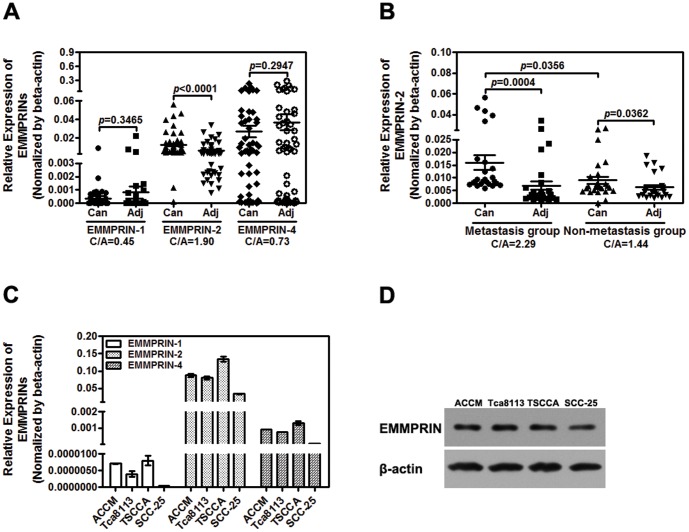
Figure 1. EMMPRIN-2 is overexpressed in head and neck cancer and is associated with head and neck cancer metastasis.
(A) EMMPRIN mRNA expression in 51 head and neck cancer tissues and the adjacent non-cancerous tissues was analyzed using qPCR. EMMPRIN-2 mRNA expression in head and neck tumor tissues is higher than that in adjacent non-cancerous tissues (p<0.01). No significant differences were observed in EMMPRIN-1 and EMMPRIN-4 mRNA expression between tumor tissues and the adjacent non-cancerous tissues (p>0.05). (B) Comparison of EMMPRIN-2 mRNA expression between 26 cases of metastatic tumors and 25 cases of tumors without any sign of local and distant metastases. EMMPRIN-2 mRNA expression was significantly increased in metastatic head and neck cancer tissues compared to non-metastatic head and neck cancer tissues (p<0.05). (C) qPCR detection of EMMPRIN mRNA expression in head and neck cancer cell lines. (D) Detection of EMMPRIN expression in head and neck cancer cell lines using Western blot. High levels of protein encoded by the EMMPRIN-2 gene were detected in all 4 of the cancer cell lines.
Figure 2
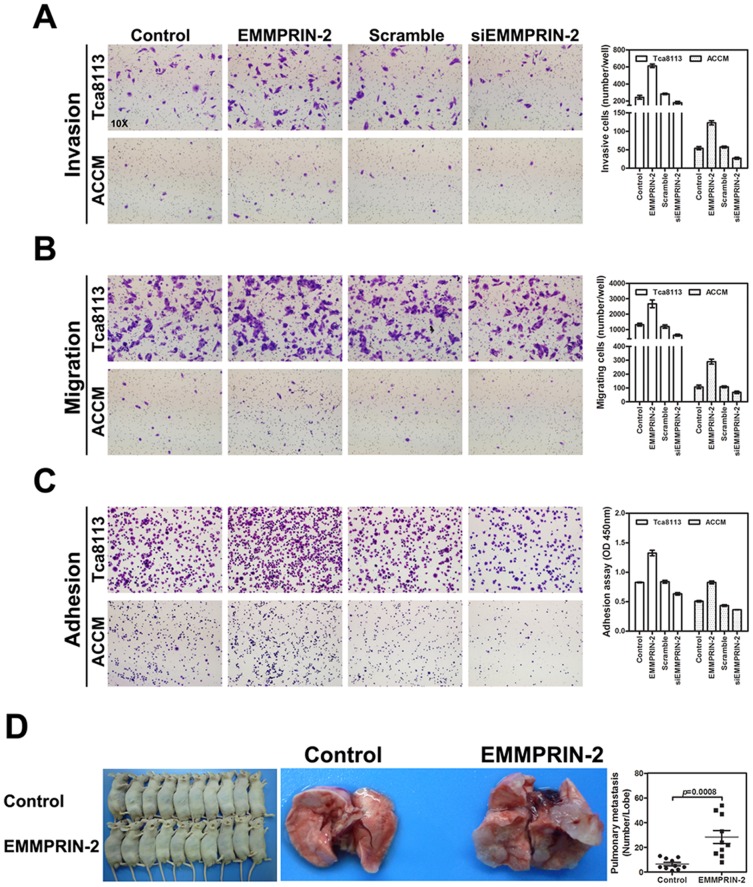
Figure 2. EMMPRIN-2 expression modulated head and neck cancer cell invasion, migration, and adhesion in vitro, and metastasis in vivo.
Exogenous overexpression of EMMPRIN-2 using an expression construct enhanced head and neck cancer cell invasion (A), migration (B) and adhesion (C), whereas down-regulation of EMMPRIN-2 using siRNA (siEMMPRIN-2) suppressed head and neck cancer cell invasion (A), migration (B) and adhesion (C). The differences in cell invasion, migration and adhesion between the construct- or siRNA-transfected groups and the mock controls were statistically significant (p<0.05). The effects of EMMPRIN-2 expression on tumor metastasis in vivo were further investigated in nude mouse models. (D) Tca8113 head and neck cancer cell lines with stably expressed EMMPRIN-2 or a mock control vector were intravenously injected into nude mice. Metastatic foci in the lungs of nude mice were calculated at week 6 after injection. The average number of metastatic foci in the lungs from the mice with the EMMPRIN-2 expressing cells was 28.4 compared to 6.4 in the lungs from the mice injected with cells bearing the control vector (p<0.01).
Figure 3
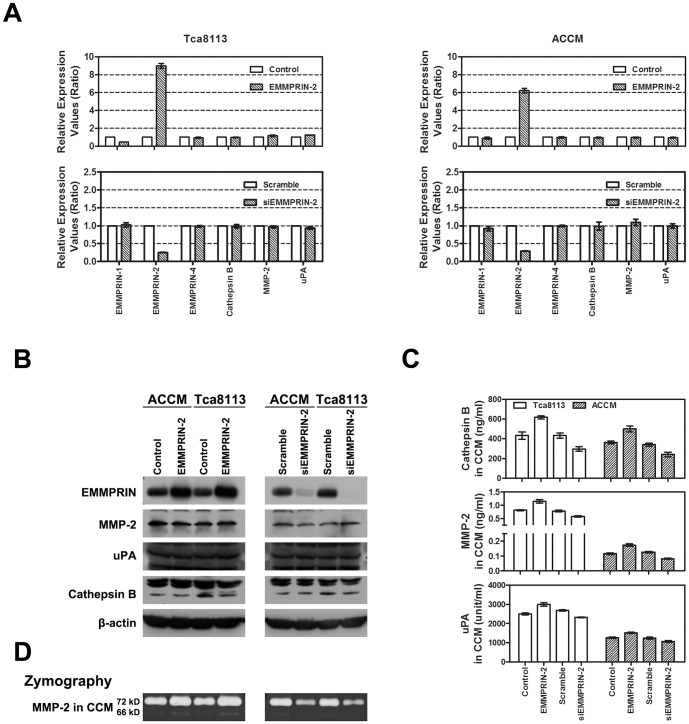
Figure 3. Overexpression of EMMPRIN-2 promotes the secretion of MMP-2, Cathepsin B and uPA in head and neck cancer cells.
(A) The mRNA expression levels of uPA, Cathepsin B, MMP-2 and different EMMPRIN isoforms in head and neck cancer cells were examined after exogenous expression of EMMPRIN-2. Transfection of an EMMPRIN-2 expression vector or siRNA (siEMMPRIN) selectively enhanced or attenuated the mRNA expression levels of EMMPRIN-2 in both ACCM and Tca8113 cells, while the expression of other EMMPRIN isoforms, uPA, Cathepsin B and MMP-2 remained unaffected (p>0.05). (B) The mRNA expression findings were confirmed by analyzing protein expression using western blot. (C) Detection of extracellular MMP-2, Cathepsin B and uPA using ELISA. MMP-2, Cathepsin B and uPA secretion into the culture medium was increased in cells that had been transfected with the EMMPRIN-2 expression vector, while secretion was decreased in EMMPRIN-2 siRNA transfected cells (p<0.05). (D) Analysis of extracellular MMP-2 activity using a gelatin zymography assay. Extracellular MMP-2 activity was increased after EMMPRIN-2 expression was enhanced, while MMP-2 activity was reduced after EMMPRIN-2 expression knockdown.
Figure 4
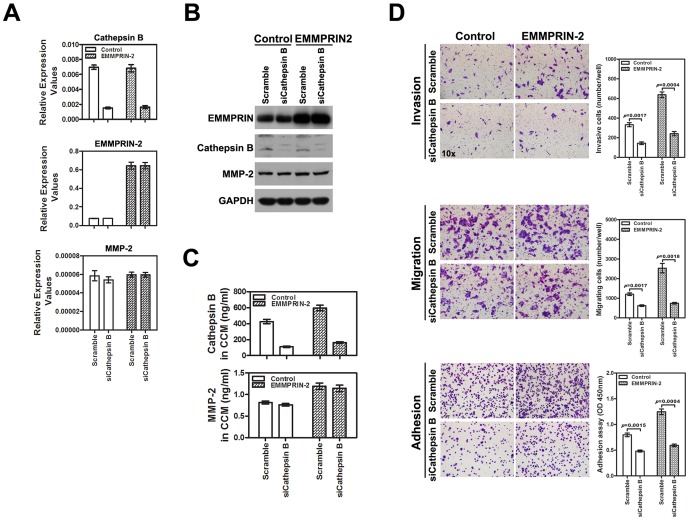
Figure 4. Cathepsin B is required for EMMPRIN-2-mediated invasion, migration and adhesion of head and neck cancer cells.
(A) Treatment with Cathepsin B siRNA resulted in corresponding reductions in Cathepsin B mRNA levels in both EMMPRIN-2 overexpressing and parental Tca8113 cells (p<0.05), while EMMPRIN-2 and MMP-2 were unaffected by Cathepsin B siRNA transfection (p>0.05). (B) The effects on Cathepsin B, EMMPRIN-2 and MMP-2 expression following Cathepsin B siRNA transfection in EMMPRIN-2 overexpressing and parental Tca8113 cells were further confirmed using western blot analyses. (C) The extracellular secretion of Cathepsin B was also reduced by siRNA treatment in Tca8113 cells both in the presence and absence of EMMPRIN-2 overexpression (p<0.05). (D) As observed in the experiments above, Tca8113 cells overexpressing EMMPRIN-2 displayed increased cell invasion, migration and adhesion as compared to parental Tca8113 cells. In contrast, down-regulation of Cathepsin B using siRNA significantly inhibited the invasion, migration and adhesion of Tca8113 cells overexpressing EMMPRIN-2.

References

    1. Haddad RI, Shin DM (2008) Recent advances in head and neck cancer. N Engl J Med 359: 1143–1154. - PubMed
    1. Hunter KD, Parkinson EK, Harrison PR (2005) Profiling early head and neck cancer. Nat Rev Cancer 5: 127–135. - PubMed
    1. Galanski M (2006) Recent developments in the field of anticancer platinum complexes. Recent Pat Anticancer Drug Discov 1: 285–295. - PubMed
    1. Colevas AD (2006) Chemotherapy options for patients with metastatic or recurrent squamous cell carcinoma of the head and neck. J Clin Oncol 24: 2644–2652. - PubMed
    1. Vermorken JB, Specenier P (2010) Optimal treatment for recurrent/metastatic head and neck cancer. Ann Oncol 7: 252–261. - PubMed

Publication types

MeSH terms