. 2014 Apr 3:15:258.
doi: 10.1186/1471-2164-15-258.

Comparative transcript profiling of the fertile and sterile flower buds of pol CMS in B. napus

Affiliations

Comparative transcript profiling of the fertile and sterile flower buds of pol CMS in B. napus

Hong An et al. BMC Genomics. .

Abstract

Background: The Polima (pol) system of cytoplasmic male sterility (CMS) and its fertility restoration gene Rfp have been used in hybrid breeding in Brassica napus, which has greatly improved the yield of rapeseed. However, the mechanism of the male sterility transition in pol CMS remains to be determined.

Results: To investigate the transcriptome during the male sterility transition in pol CMS, a near-isogenic line (NIL) of pol CMS was constructed. The phenotypic features and sterility stage were confirmed by anatomical analysis. Subsequently, we compared the genomic expression profiles of fertile and sterile young flower buds by RNA-Seq. A total of 105,481,136 sequences were successfully obtained. These reads were assembled into 112,770 unigenes, which composed the transcriptome of the bud. Among these unigenes, 72,408 (64.21%) were annotated using public protein databases and classified into functional clusters. In addition, we investigated the changes in expression of the fertile and sterile buds; the RNA-seq data showed 1,148 unigenes had significantly different expression and they were mainly distributed in metabolic and protein synthesis pathways. Additionally, some unigenes controlling anther development were dramatically down-regulated in sterile buds.

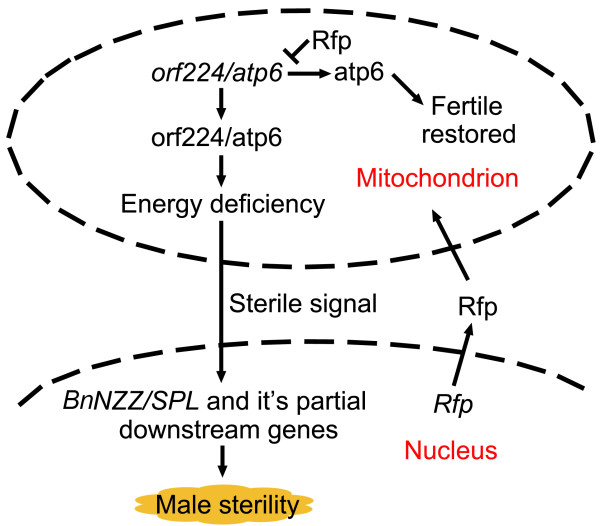
Conclusions: These results suggested that an energy deficiency caused by orf224/atp6 may inhibit a series of genes that regulate pollen development through nuclear-mitochondrial interaction. This results in the sterility of pol CMS by leading to the failure of sporogenous cell differentiation. This study may provide assistance for detailed molecular analysis and a better understanding of pol CMS in B. napus.


Figures
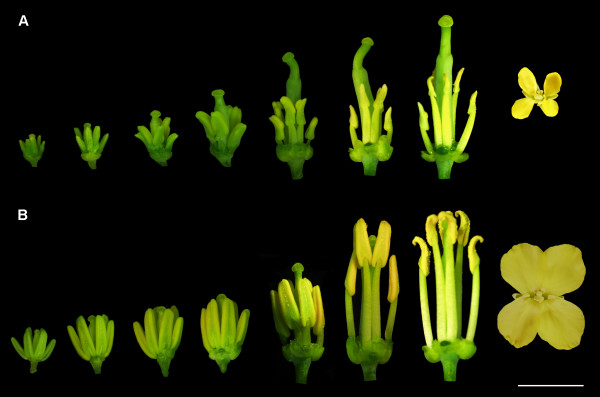
Figure 1
Figure 1
Phenotypic characterization of fertile and sterile floral buds. A: phenotype of sterile floral buds; B: phenotype of fertile floral buds. Bar for front-view is 5 mm, and for vertical-view is 15 mm.
Figure 2
Figure 2
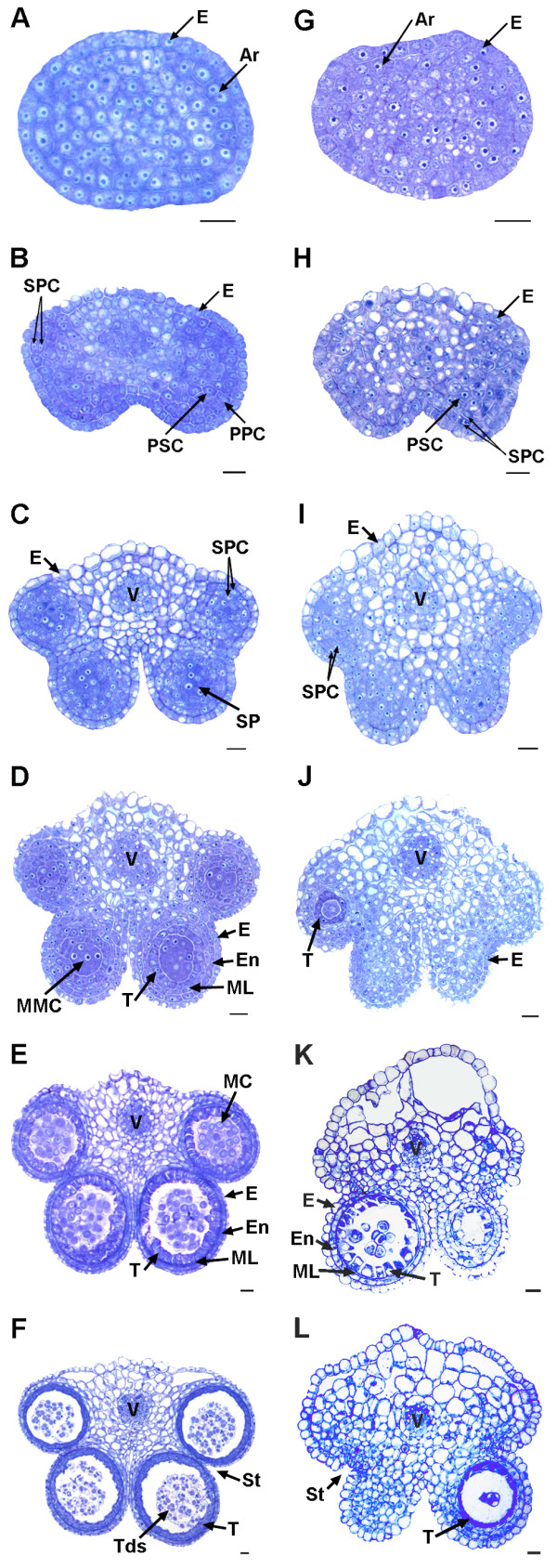
Development of fertile (A-F) and sterile (G-L) anthers in pol CMS. Bar = 10 μm for all the stages. Ar, archesporial cell; E, epidermis; En, endothecium; MC, meiotic cell; ML, middle layer; MMC, microspore mother cells; PPC, primary parietal cell; PSC, primary sporogenous cell; SP, sporogenous cell; SPC, secondary parietal cell; St, stomium; T, tapetum; Tds, tetrads; V, vascular region. A to F represent the anther development stage 2 to 7, respectively. So do G to L [25].
Figure 3
Figure 3
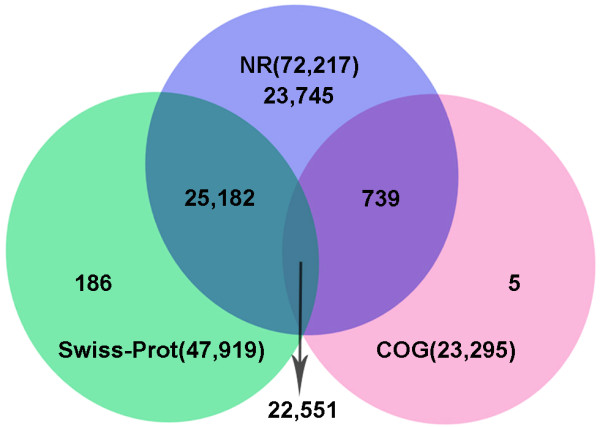
Unigenes annotated with public databases. The numbers of annotated unigenes were signified in the different regions.
Figure 4
Figure 4
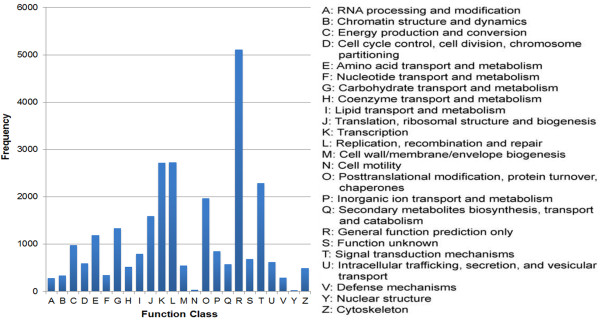
COG function classification. All the unigenes aligned in COG database were assorted in 24 clusters.
Figure 5
Figure 5
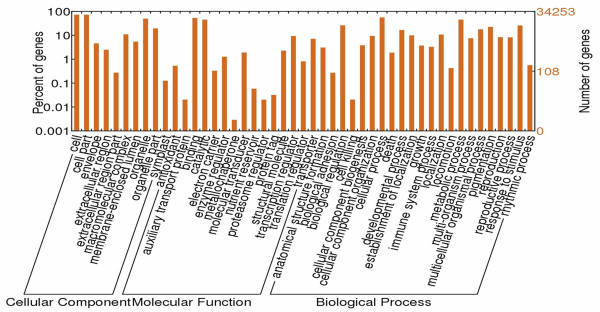
Classification of GO annotations. The x-axis indicates the sub-categories; the left y-axis indicates the percentage of a sub-category of genes in that category and the right y-axis indicates the number of unigenes in a sub-category.
Figure 6
Figure 6
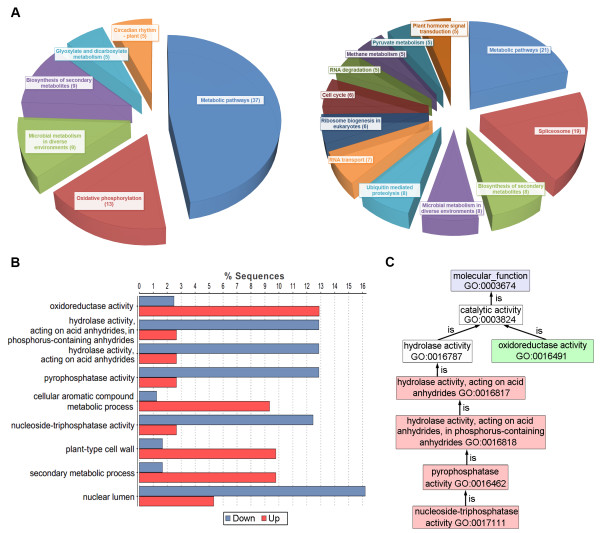
Comparison of annotations between up- and down-regulated unigenes in sterile buds. A: a pie chart of KEGG annotation in up-(left) and down-(right) regulated unigenes (n > 4), respectively; B: a statistical column diagram of GO annotation; C: an enriched graph of molecular function in GO annotation. They were filtered using default value.
Figure 7
Figure 7
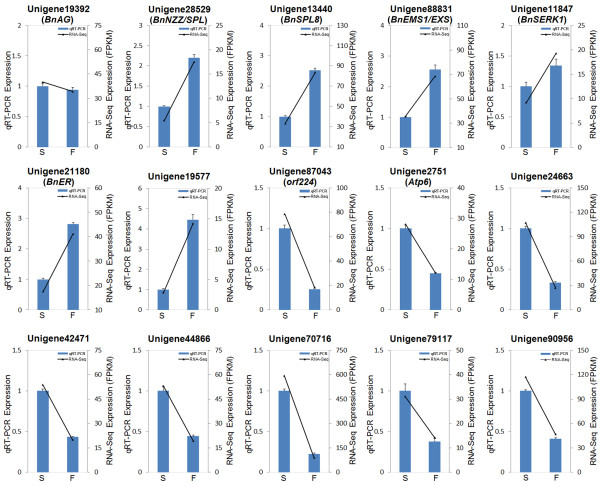
qRT-PCR verification of differentially expressed unigenes. S means sterile sample and F means fertile sample.
Figure 8
Figure 8
Proposed model for sterile and restored mechanism of pol CMS.

References

    1. Han-zhong W. Review and future development of rapeseed industry in china. Chin J Oil Crop Sci. 2010;15(2):3.
    1. Chen J, Guan R, Chang S, Du T, Zhang H, Xing H. Substoichiometrically different mitotypes coexist in mitochondrial genomes of Brassica napus L. PLoS One. 2011;15(3):e17662. doi: 10.1371/journal.pone.0017662. - DOI - PMC - PubMed
    1. Luo D, Xu H, Liu Z, Guo J, Li H, Chen L, Fang C, Zhang Q, Bai M, Yao N, Wu H, Ji C, Zheng H, Chen Y, Ye S, Li X, Zhao X, Li R, Liu Y. A detrimental mitochondrial-nuclear interaction causes cytoplasmic male sterility in rice. Nat Genet. 2013;15:573–577. doi: 10.1038/ng.2570. - DOI - PubMed
    1. Woodson JD, Chory J. Coordination of gene expression between organellar and nuclear genomes. Nat Rev Genet. 2008;15(5):383–395. doi: 10.1038/nrg2348. - DOI - PMC - PubMed
    1. L’Homme Y, Stahl RJ, Li XQ, Hameed A, Brown GG. Brassica nap cytoplasmic male sterility is associated with expression of a mtDNA region containing a chimeric gene similar to the pol CMS-associated orf224 gene. Curr Gen. 1997;15(4):325–335. doi: 10.1007/s002940050212. - DOI - PubMed

Publication types

Associated data

LinkOut - more resources