


Genomic analysis establishes correlation between growth and laryngeal neuropathy in Thoroughbreds
- PMID: 24707981
- PMCID: PMC4051171
- DOI: 10.1186/1471-2164-15-259
Genomic analysis establishes correlation between growth and laryngeal neuropathy in Thoroughbreds
Abstract
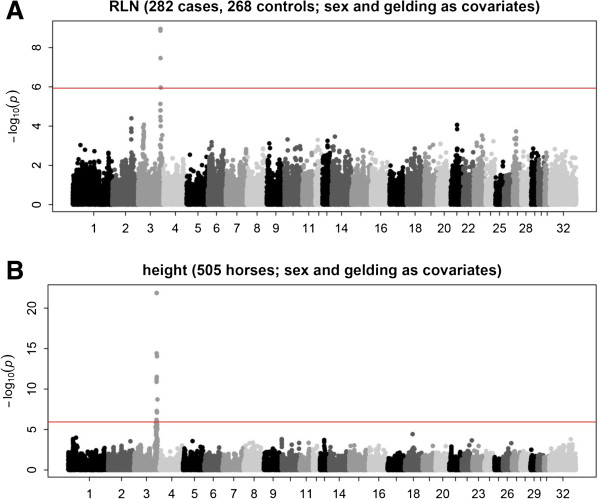
Background: Equine recurrent laryngeal neuropathy (RLN) is a bilateral mononeuropathy with an unknown pathogenesis that significantly affects performance in Thoroughbreds. A genetic contribution to the pathogenesis of RLN is suggested by the higher prevalence of the condition in offspring of RLN-affected than unaffected stallions. To better understand RLN pathogenesis and its genetic basis, we performed a genome-wide association (GWAS) of 282 RLN-affected and 268 control Thoroughbreds.
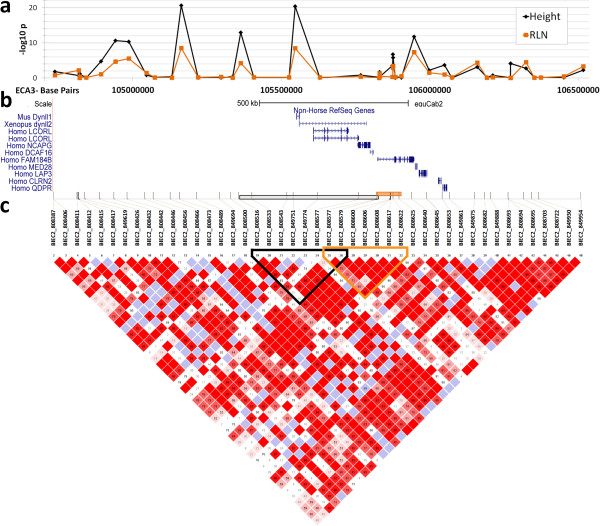
Results: We found a significant association of RLN with the LCORL/NCAPG locus on ECA3 previously shown to affect body size in horses. Using height at the withers of 505 of these horses, we confirmed the strong association of this locus with body size, and demonstrated a significant phenotypic and genetic correlation between height and RLN grade in this cohort. Secondary genetic associations for RLN on ECA18 and X did not correlate with withers height in our cohort, but did contain candidate genes likely influencing muscle physiology and growth: myostatin (MSTN) and integral membrane protein 2A (ITM2A).
Conclusions: This linkage between body size and RLN suggests that selective breeding to reduce RLN prevalence would likely reduce adult size in this population. However, our results do not preclude the possibility of modifier loci that attenuate RLN risk without reducing size or performance, or that the RLN risk allele is distinct but tightly linked to the body size locus on ECA3. This study is both the largest body size GWAS and the largest RLN GWAS within Thoroughbred horses to date, and suggests that improved understanding of the relationship between genetics, equine growth rate, and RLN prevalence may significantly advance our understanding and management of this disease.
Figures
References
Publication types
MeSH terms
Substances
LinkOut - more resources
Full Text Sources
Other Literature Sources
Miscellaneous
