


Molecular characterization and antimicrobial susceptibility of Streptococcus pneumoniae isolated from children hospitalized with respiratory infections in Suzhou, China
- PMID: 24710108
- PMCID: PMC3977860
- DOI: 10.1371/journal.pone.0093752
Molecular characterization and antimicrobial susceptibility of Streptococcus pneumoniae isolated from children hospitalized with respiratory infections in Suzhou, China
Abstract
Background: Dissemination of antibiotic resistant clones is recognized as an important factor in the emergence and prevalence of resistance in pneumococcus. This study was undertaken to survey the antimicrobial susceptibility and serotypes distribution of pneumococci and to explore the circulating clones in hospitalized children in Suzhou, China.
Methods: The pneumococci were isolated from the nasopharyngeal aspirates of children less than 5 years of age admitted to Soochow-University-Affiliated-Children's-Hospital with respiratory infections. The capsular serotypes were identified by multiplex polymerase chain reaction (PCR). Antimicrobial susceptibility was tested by E-test. The presence of ermB, mefA/E genes were detected by PCR and the genotypes were explored by Multilocus sequence typing (MLST).
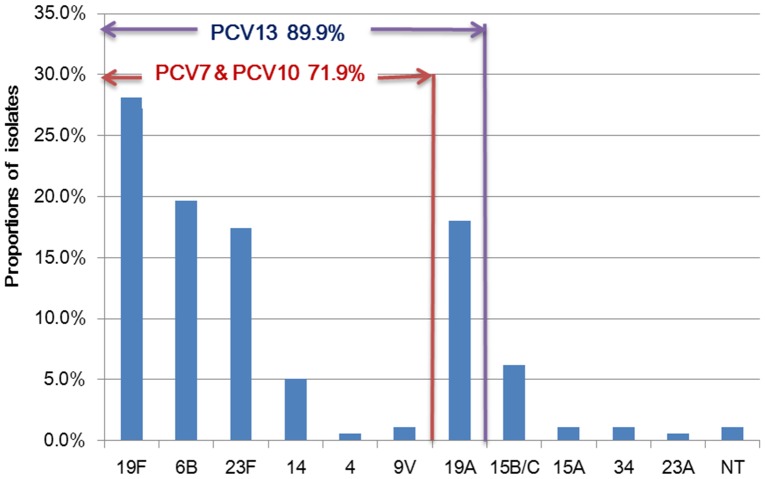
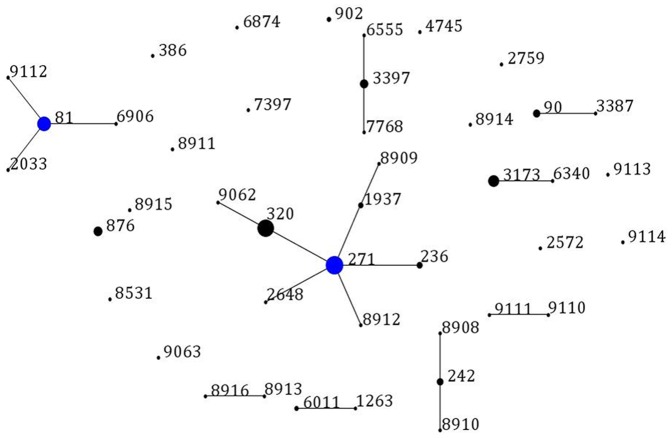
Results: From July 2012 to July 2013, a total of 175 pneumococcal isolates were collected and all strains were resistant to erythromycin and clindamycin, about 39.4% strains were non-susceptible to penicillin G. Overall, 174 (99.4%) isolates were resistant to ≥ 3 types of antibiotics. Serotypes 19F (28.1%), 6B (19.7%), 19A (18.0%), and 23F (17.4%) were the most common serotypes in all identified strains. The serotypes coverage of PCV7 and PCV13 were 71.9% and 89.9%, respectively. Four international antibiotic-resistant clones, including Taiwan19F-14 (n = 79), Spain23F-1(n = 25), Taiwan23F-15(n = 7) and Spain6B-2(n = 7), were identified. The Taiwan19F-14 clones have a higher non-susceptibility rate in β-lactams than other clones and non-clone isolates (p<0.001). In addition, 98.7% Taiwan19F-14 clones were positive of both ermB and mefA/E genes, compare to 33.3% in other clones and non-clone strains.
Conclusions: The spread of international antibiotic-resistant clones, especially Taiwan19F-14 clones, played a predominant role in the dissemination of antimicrobial resistant isolates in Suzhou, China. Considering the high prevalence of PCV7 serotypes and serotype 19A, the introduction of PCV13 may be a promising preventive strategy to control the increasing trend of clonal spread in China.
Conflict of interest statement
Figures
References
-
- WHO (2007) Pneumococcal conjugate vaccine for childhood immunization—WHO position paper. Wkly Epidemiol Rec 82: 93–104. - PubMed
-
- Siira L, Jalava J, Tissari P, Vaara M, Kaijalainen T, et al. (2012) Clonality behind the increase of multidrug-resistance among non-invasive pneumococci in Southern Finland. Eur J Clin Microbiol Infect Dis 31: 867–871. - PubMed
-
- Li CF, Liu MF, Shi ZY, Hsueh PR, Liao CH, et al. (2012) Changing trends in antimicrobial susceptibility of Streptococcus pneumoniae isolates in Taiwan, 2006-2007. J Microbiol Immunol Infect 45: 305–310. - PubMed
-
- Wierzbowski AK, Karlowsky JA, Adam HJ, Nichol KA, Hoban DJ, et al.. (2013) Evolution and molecular characterization of macrolide-resistant Streptococcus pneumoniae in Canada between 1998 and 2008. J Antimicrob Chemother. - PubMed
-
- Jones RN, Sader HS, Mendes RE, Flamm RK (2013) Update on antimicrobial susceptibility trends among Streptococcus pneumoniae in the United States: report of ceftaroline activity from the SENTRY Antimicrobial Surveillance Program (1998–2011). Diagn Microbiol Infect Dis 75: 107–109. - PubMed
Publication types
MeSH terms
Substances
Grants and funding
LinkOut - more resources
Full Text Sources
Other Literature Sources
Medical
