


Reduced cerebral blood flow with orthostasis precedes hypocapnic hyperpnea, sympathetic activation, and postural tachycardia syndrome
- PMID: 24711524
- PMCID: PMC4016155
- DOI: 10.1161/HYPERTENSIONAHA.113.02824
Reduced cerebral blood flow with orthostasis precedes hypocapnic hyperpnea, sympathetic activation, and postural tachycardia syndrome
Abstract
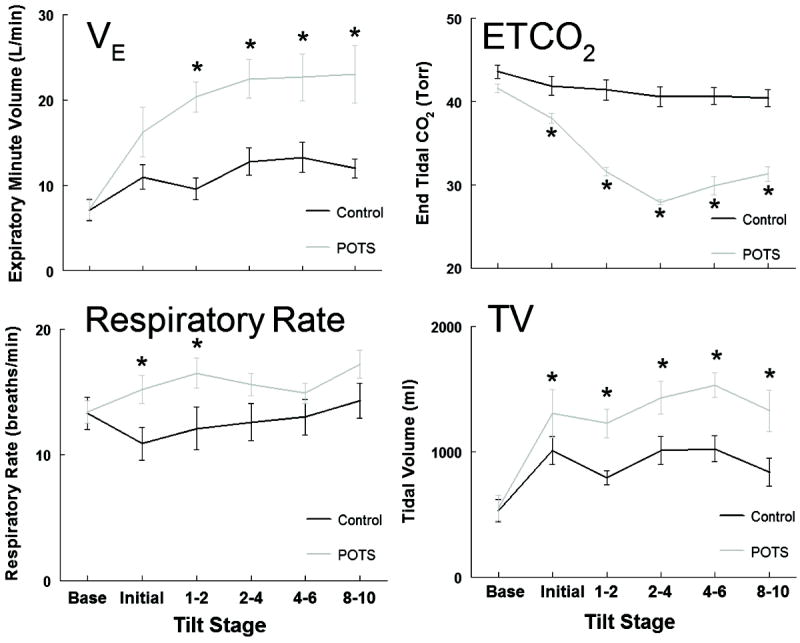
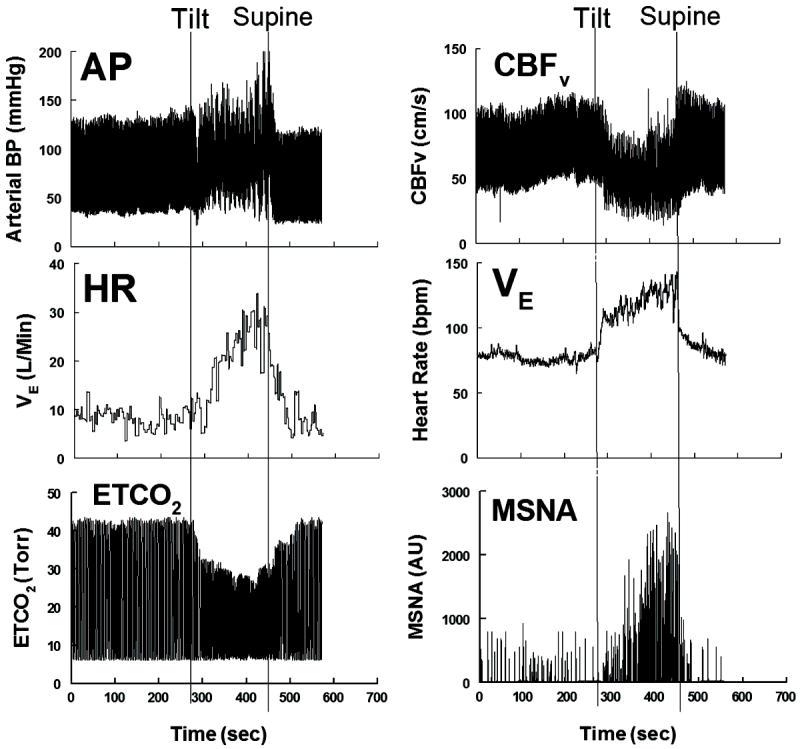
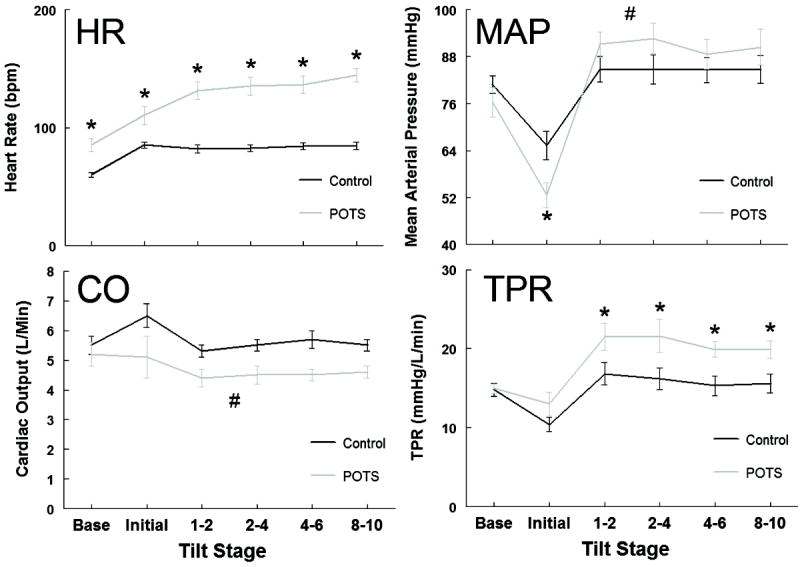
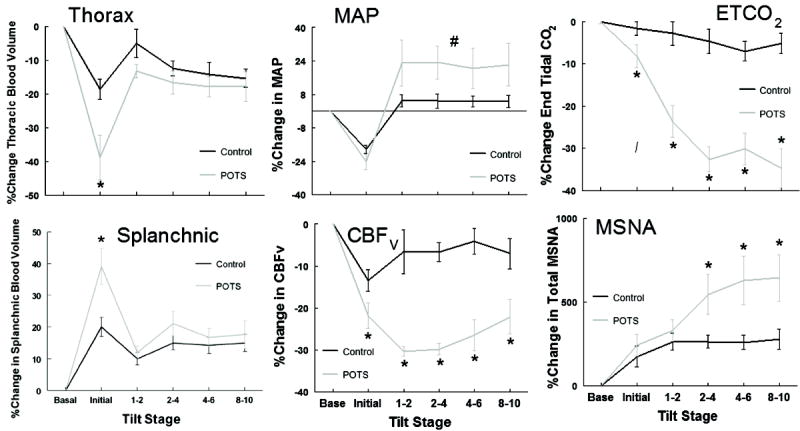
Hyperventilation and reduced cerebral blood flow velocity can occur in postural tachycardia syndrome (POTS). We studied orthostatically intolerant patients, with suspected POTS, with a chief complaint of upright dyspnea. On the basis of our observations of an immediate reduction of cerebral blood flow velocity with orthostasis, we hypothesize that the resulting ischemic hypoxia of the carotid body causes chemoreflex activation, hypocapnic hyperpnea, sympathetic activation, and increased heart rate and blood pressure in this subset of POTS. We compared 11 dyspneic POTS subjects with 10 healthy controls during a 70° head-up tilt. In POTS subjects during initial orthostasis before blood pressure recovery; central blood volume and mean arterial pressure were reduced (P<0.025), resulting in a significant (P<0.001) decrease in cerebral blood flow velocity, which temporally preceded (17±6 s; P<0.025) a progressive increase in minute ventilation and decrease in end tidal CO2 (P<0.05) when compared with controls. Sympathoexcitation, measured by muscle sympathetic nerve activity, was increased in POTS (P<0.01) and inversely proportional to end tidal CO2 and resulted in an increase in heart rate (P<0.001), total peripheral resistance (P<0.025), and a decrease in cardiac output (P<0.025). The decrease in cerebral blood flow velocity and mean arterial pressure during initial orthostasis was greater (P<0.025) in POTS. Our data suggest that exaggerated initial central hypovolemia during initial orthostatic hypotension in POTS results in reduced cerebral blood flow velocity and postural hypocapnic hyperpnea that perpetuates cerebral ischemia. We hypothesize that sustained hypocapnia and cerebral ischemia produce sympathoexcitation, tachycardia, and a statistically significant increase in blood pressure.
Keywords: autonomic nervous system; orthostatic intolerance.
Figures
References
-
- Robertson D. The epidemic of orthostatic tachycardia and orthostatic intolerance. Am J Med Sci. 1999;317:75–77. - PubMed
-
- Low PA, Opfer-Gehrking TL, McPhee BR, Fealey RD, Benarroch EE, Willner CL, Suarez GA, Proper CJ, Felten JA, Huck CA. Prospective evaluation of clinical characteristics of orthostatic hypotension. Mayo Clin Proc. 1995;70:617–622. - PubMed
-
- Burnum JF, Hickman JB, Stead EA., Jr Hyperventilation in postural hypotension. Circulation. 1954;10:362–365. - PubMed
-
- Lagi A, Cencetti S, Corsoni V, Georgiadis D, Bacalli S. Cerebral vasoconstriction in vasovagal syncope: any link with symptoms? A transcranial Doppler study. Circulation. 2001;104:2694–2698. - PubMed
Publication types
MeSH terms
Grants and funding
LinkOut - more resources
Full Text Sources
Other Literature Sources
Medical
