


Tubulointerstitial disease in diabetic nephropathy
- PMID: 24711709
- PMCID: PMC3968088
- DOI: 10.2147/IJNRD.S37883
Tubulointerstitial disease in diabetic nephropathy
Abstract
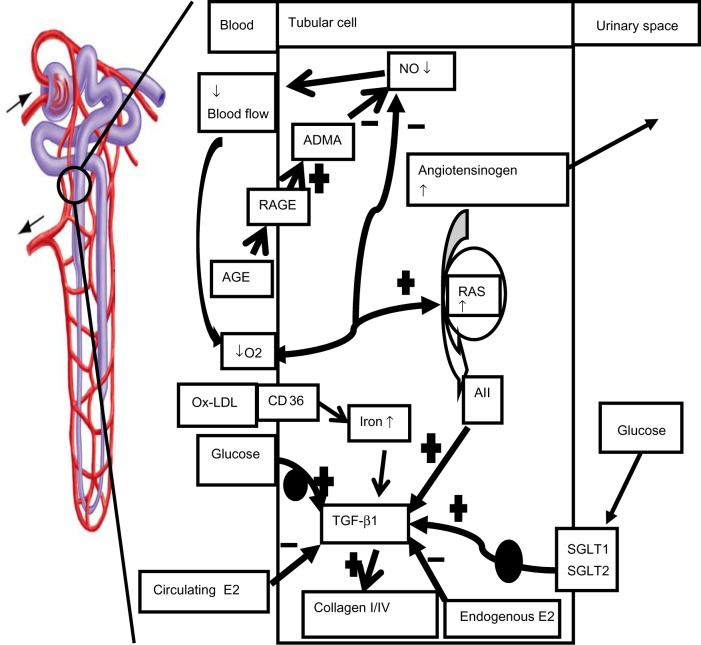
Diabetes mellitus is the major cause of end stage renal disease (ESRD). We cannot predict which patient will be affected. ESRD patients suffer an extremely high mortality rate, due to a very high incidence of cardiovascular disease. Several randomized, prospective studies have been conducted to quantify the impact of strict glycemic control on morbidity and mortality, and have consistently demonstrated an association between strict glycemic control and a reduction in ESRD. Within the past 20 years, despite the implementation of treatments that were presumed to be renoprotective, diabetes mellitus has continued to rank as the leading cause of ESRD, which clearly indicates that we are still far from understanding the mechanisms involved in the initiation of ESRD. Progressive albuminuria has been considered as the sine qua non of diabetic nephropathy, but we know now that progression to diabetic nephropathy may well happen in the absence of initial microalbuminuria. The search for new biomarkers of early kidney damage has received increasing interest, since early identification of the pathways leading to kidney damage may allow us to adopt measures to prevent the development of ESRD. Most of these biomarkers are deeply influenced by environment, genetics, sex differences, and so on, making it extremely difficult to identify the ideal biomarker to target. At present, there are no new drugs that come close to providing the solutions we desire for our patients (ie, reducing complications). Even when used in combination with standard care, renal complications are, at best, only modestly reduced, at the considerable expense of additional pill burden and exposure to serious off-target effects. In this review, some of the hypothesized mechanisms of this heterogeneous disease will be considered, with particular attention to the tubule-interstitial compartment.
Keywords: ESRD; Ox-LDL; TGF-β1; diabetes.
Figures
References
Publication types
LinkOut - more resources
Full Text Sources
Other Literature Sources
Miscellaneous
