. 2014 Apr 8:5:3563.
doi: 10.1038/ncomms4563.

D-Glucosamine supplementation extends life span of nematodes and of ageing mice

Affiliations
Free PMC article

D-Glucosamine supplementation extends life span of nematodes and of ageing mice

Sandra Weimer et al. Nat Commun. .
Free PMC article

Abstract

D-Glucosamine (GlcN) is a freely available and commonly used dietary supplement potentially promoting cartilage health in humans, which also acts as an inhibitor of glycolysis. Here we show that GlcN, independent of the hexosamine pathway, extends Caenorhabditis elegans life span by impairing glucose metabolism that activates AMP-activated protein kinase (AMPK/AAK-2) and increases mitochondrial biogenesis. Consistent with the concept of mitohormesis, GlcN promotes increased formation of mitochondrial reactive oxygen species (ROS) culminating in increased expression of the nematodal amino acid-transporter 1 (aat-1) gene. Ameliorating mitochondrial ROS formation or impairment of aat-1-expression abolishes GlcN-mediated life span extension in an NRF2/SKN-1-dependent fashion. Unlike other calorie restriction mimetics, such as 2-deoxyglucose, GlcN extends life span of ageing C57BL/6 mice, which show an induction of mitochondrial biogenesis, lowered blood glucose levels, enhanced expression of several murine amino-acid transporters, as well as increased amino-acid catabolism. Taken together, we provide evidence that GlcN extends life span in evolutionary distinct species by mimicking a low-carbohydrate diet.


Figures
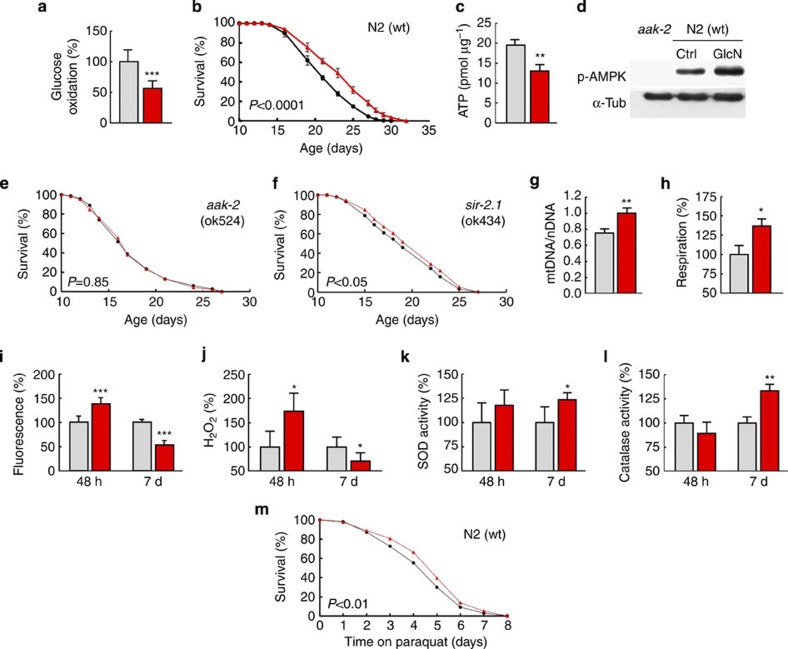
Figure 1
Figure 1. GlcN induces mitochondrial metabolism and extends C. elegans life span.
(a) Glucose oxidation rates in control wild-type (wt) nematodes (grey) and wild-type nematodes exposed to GlcN (red) (P<0.001, Student’s t-test, n=6); colour coding applies to all subsequent panels and figures. (b) Life expectancy of untreated wild-type-nematodes and GlcN-treated C. elegans (P<0.0001, log-rank test, n=3). (c) ATP content at different time points in GlcN- and untreated nematodes (P<0.01, Student’s t-test, n=3). (d) Representative western blot of whole-worm lysates in the presence and absence of GlcN in wild-type worms, as well as untreated AAK-2-deficient worms. (e) Life span assay on AAK-2-deficient nematodes in the presence and absence of GlcN (P=0.85, log-rank test, n=3). (f) Life span assay on SIR-2.1-deficient nematodes (P<0.05, log-rank test, n=3). (g) mtDNA content normalized to nuclear DNA content in whole worms in the presence and absence of GlcN (P<0.01, Student’s t-test, n=3). (h) Relative respiration rates of whole worms (P<0.05, Student’s t-test, n=3), and (i) relative MitoTracker Red CM-H2X fluorescence of whole worms in the presence and absence of GlcN at different time points (P<0.001, Student’s t-test, n=3). (j) Relative Amplex Red fluorescence in suspensions of alive nematodes (P<0.05, Student’s t-test, n=3). (k) Relative superoxide dismutase activities (P<0.05, Student’s t-test, n=3). (l) Relative catalase activities (P<0.01, Student’s t-test, n=3); and (m) survival on PQ exposure, all in the presence and absence of GlcN, respectively (P<0.01, log-rank test, n=3). The bars represent the mean+s.d. *P<0.05, **P<0.01, ***P<0.001 versus control.
Figure 2
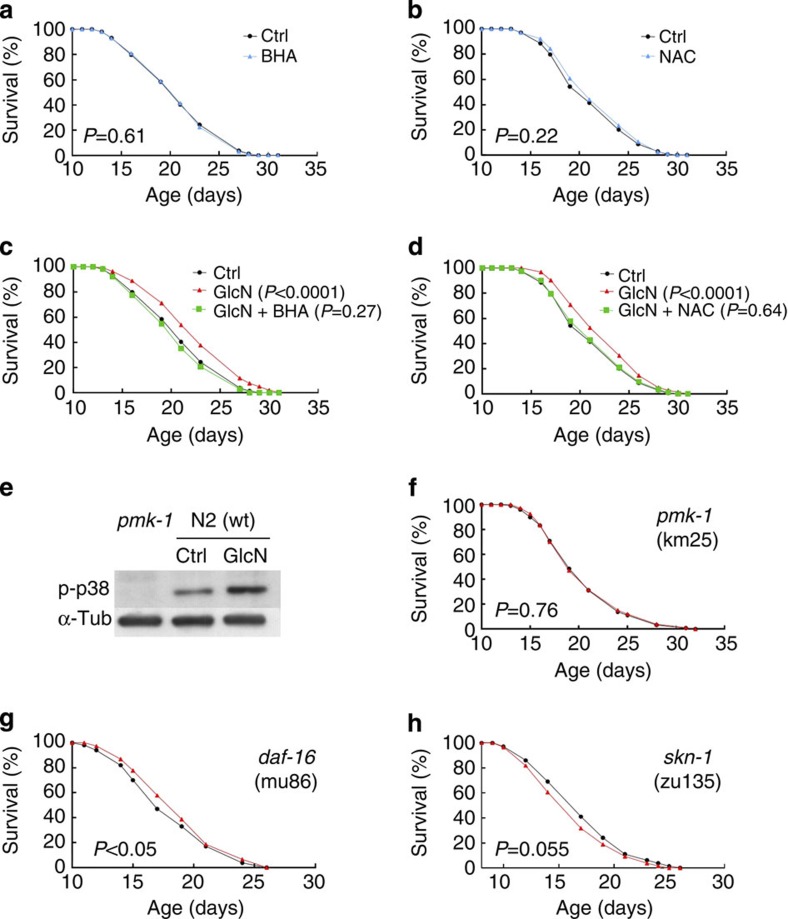
Figure 2. GlcN-induced ROS formation is required for life span extension.
Life span assays of N2 wild-type (wt) nematodes in the presence and absence of the antioxidants (a) BHA (P=0.61, log-rank test, n=3) and (b) NAC (P=0.22, log-rank test, n=3). Life span assays of N2 wild-type worms on GlcN (P<0.0001, log-rank test, n=3), as well as in the co-presence of (c) BHA (green; P=0.27, log-rank test, n=3) and (d) NAC (green; P=0.64, log-rank test, n=3). (e) Representative western blot of whole-worm lysates in the presence and absence of GlcN in wild-type worms, as well as untreated PMK-1-deficient worms. Life span assay on (f) PMK-1-deficient nematodes in the presence and absence of GlcN (P=0.76, log-rank test, n=6) on (g) DAF-16-deficient nematodes (P<0.05, log-rank test, n=3) and on (h) SKN-1-deficient nematodes (P=0.055, log-rank test, n=3), all in the presence and absence of GlcN.
Figure 3
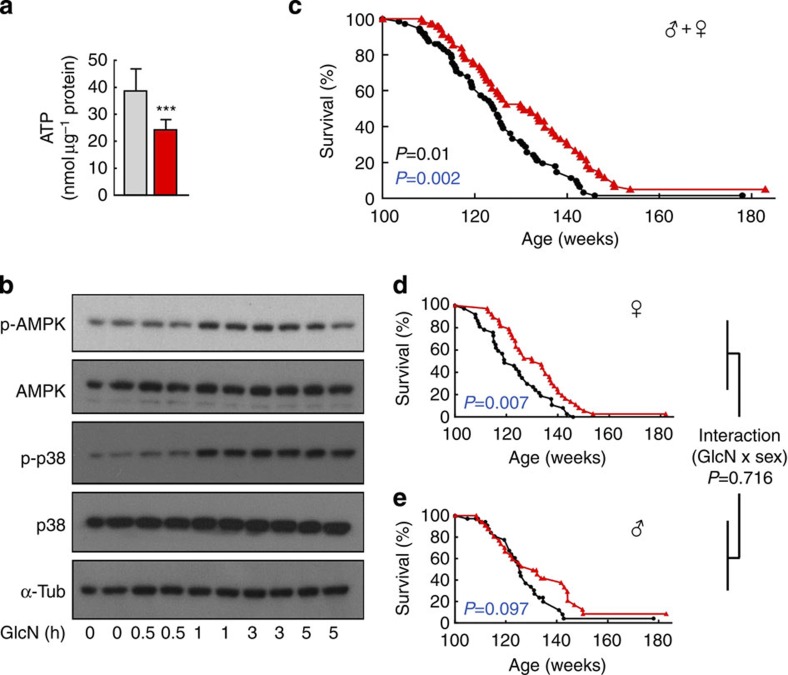
Figure 3. GlcN promotes hepatic energy depletion and increases life span in ageing mice.
(a) ATP content of HepG2 cells exposed to GlcN for 30 min (bars represent mean+s.d. ***P<0.001 versus unexposed; Student’s t-test, n=8). (b) Representative western blots of HepG2 cells following exposure to GlcN for indicated durations using indicated primary antibodies. (ce) Survival curves of C57BL/6NRj mice on a GlcN-containing diet starting at an age of 100 weeks (red) in comparison with control mice. (c) Survival of combined male and female C57BL/6NRj mice (log-rank: P=0.002; Cox regression: P=0.01; n=74 control mice and n=72 mice on GlcN-containing diet). (d) Survival of female C57BL/6NRj mice (log-rank: P=0.007; n=37 control mice and n=38 mice on GlcN-containing diet). (e) Survival of male C57BL/6NRj mice (log-rank: P=0.097; n=37 control mice and n=34 mice on GlcN-containing diet); P-values that were obtained using Cox regression analyses (including interaction term for ‘treatment by sex’) are given in black font, P-values that were calculated using the log-rank test are given in blue font. Controls are always depicted in black or grey colour, whereas GlcN-treatment is depicted in red.
Figure 4
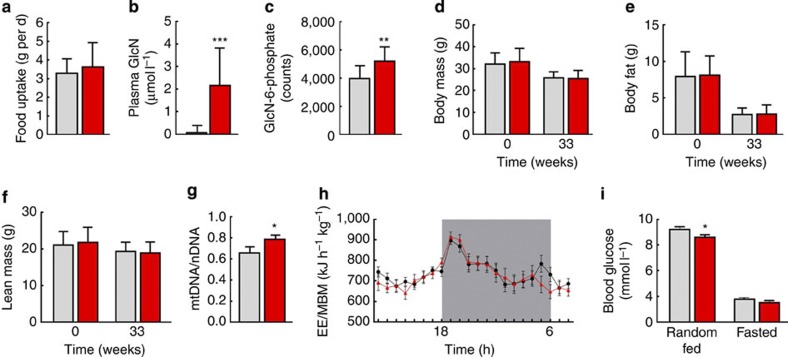
Figure 4. Metabolic consequences of GlcN supplementation.
(a) Food uptake of C57BL/6-NRj mice (both sexes) chronically exposed to GlcN (red) and respective controls (grey). (b) Plasma levels of GlcN in mice (both sexes) on a GlcN-containing diet in comparison with control mice (F(1,33)=27.67, P<0.001, n=18 control mice and n=19 GlcN-fed mice). (c) Hepatic levels of GlcN-6-phosphate (F(1,16)=8.74, P<0.01, n=10 control mice and n=10 GlcN-fed mice). (df) Body mass and body composition parameters in such mice. (g) Relative mtDNA content in liver specimen (F(1,21)=5.05, P<0.05, n=12 control mice and n=13 GlcN-fed mice). (h) Energy expenditure normalized to metabolic body mass of such mice; calculated means for every hour during day, grey area reflects dark phase of the light cycle. (i) Random fed (F(1,36)=4.49, P<0.05, n=20 control mice and n=20 GlcN-fed mice) as well as fasting blood glucose levels in such mice. Controls are always depicted in black and grey colour, whereas GlcN-treatment is depicted in red. The bars represent the mean+s.d. *P<0.05, **P<0.01, ***P<0.001 versus control; two-way ANOVA.
Figure 5
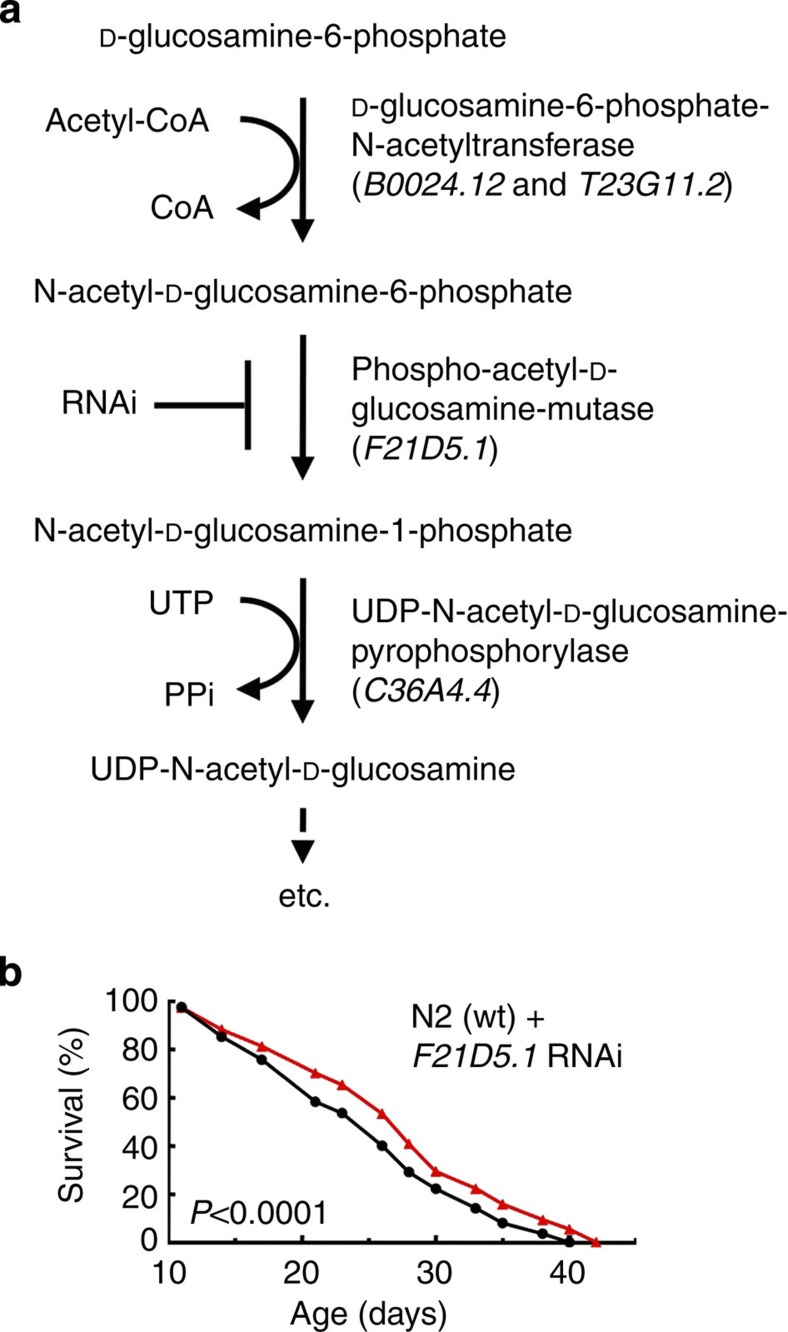
Figure 5. GlcN extends life span independent of the hexosamine pathway.
(a) Schematic overview on initial enzymatic steps of GlcN metabolism (so-called hexosamine pathway), and the corresponding C. elegans orthologues. (b) Life span analysis in C. elegans treated with RNAi against F21D5.1 (phospho-acetyl-D-glucosamine-mutase) in the presence (red) and absence of GlcN (P<0.0001, log-rank test, n=1).
Figure 6
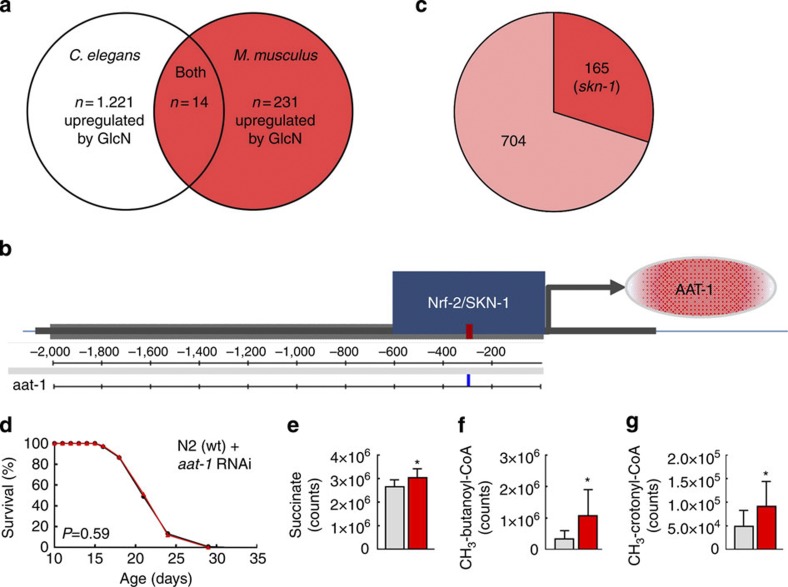
Figure 6. GlcN induces amino-acid uptake and catabolism to extend life span.
(a) Venn analysis of RNAseq-based mRNA expression levels of genes uniformly upregulated in both C. elegans (whole-worm lysates) and M. musculus (liver). (b) In silico promoter analysis of aat-1 regarding putative binding sites for SKN-1/NRF-2. (c) Percentage of SKN-1-dependent genes upregulated following exposure to GlcN in nematodes. (d) Life span analysis of nematodes exposed to RNAi against the amino-acid transporter aat-1 in the presence (red) and absence (black) of GlcN (P=0.59, log-rank test, n=3). (eg) Tissue levels of succinate (F(1,16)=6.46, P=0.022, n=10 control mice and n=10 GlcN-fed mice) (e); methyl-butanoyl-CoA (F(1,16)=5.65, P=0.03, n=10 control mice and n=10 GlcN-fed mice) (f); and methyl-crotonyl-CoA (F(1,16)=7.97, P=0.012, n=10 control mice and n=10 GlcN-fed mice) (g) in liver specimen of mice on a GlcN-containing diet in comparison with control mice. Controls are always depicted in grey colour, whereas GlcN-treatment is depicted in red. The bars represent the mean+s.d. *P<0.05 versus control; two-way ANOVA.

References

    1. McAlindon T. E., LaValley M. P., Gulin J. P. & Felson D. T. Glucosamine and chondroitin for treatment of osteoarthritis: a systematic quality assessment and meta-analysis. JAMA 283, 1469–1475 (2000). - PubMed
    1. Reginster J. Y. et al. Long-term effects of glucosamine sulphate on osteoarthritis progression: a randomised, placebo-controlled clinical trial. Lancet 357, 251–256 (2001). - PubMed
    1. Wandel S. et al. Effects of glucosamine, chondroitin, or placebo in patients with osteoarthritis of hip or knee: network meta-analysis. BMJ 341, c4675 (2010). - PMC - PubMed
    1. Silverman J. L. Glucosamine Inhibition of (I-14C)glucose oxidation as measured by rat adipose tissue in vitro. Biochim. Biophys. Acta. 78, 94–100 (1963). - PubMed
    1. Oguchi M., Sato M., Miyatake Y. & Akamatsu N. Studies on the metabolism of hexosamine. A kinase activity for D-glucosamine without inhibition by glucose in rat liver and its possible identity with glucokinase. J. Biochem. 82, 559–567 (1977). - PubMed

Publication types

Associated data