


Effects of glutamine alone or in combination with zinc and vitamin A on growth, intestinal barrier function, stress and satiety-related hormones in Brazilian shantytown children
- PMID: 24714829
- PMCID: PMC3971359
- DOI: 10.6061/clinics/2014(04)02
Effects of glutamine alone or in combination with zinc and vitamin A on growth, intestinal barrier function, stress and satiety-related hormones in Brazilian shantytown children
Abstract
Objective: To determine the impact of supplemental zinc, vitamin A, and glutamine alone or in combination on growth, intestinal barrier function, stress and satiety-related hormones among Brazilian shantytown children with low median height-for-age z-scores.
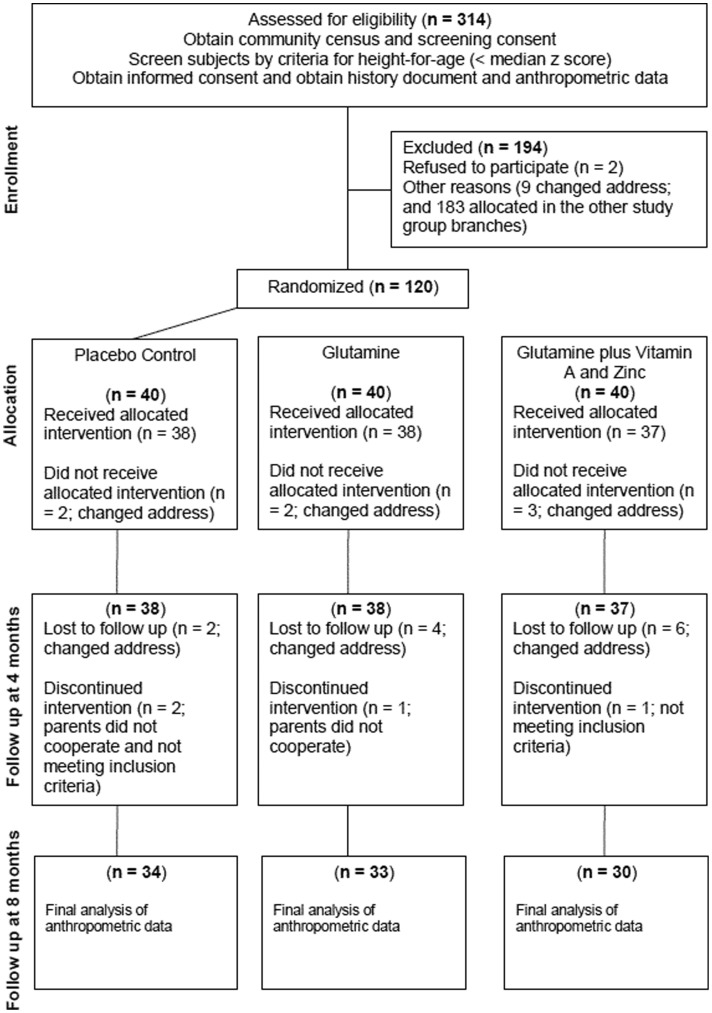
Methods: A randomized, double-blind, placebo-controlled trial was conducted in children aged two months to nine years from the urban shanty compound community of Fortaleza, Brazil. Demographic and anthropometric information was assessed. The random treatment groups available for testing (a total of 120 children) were as follows: (1) glutamine alone, n = 38; (2) glutamine plus vitamin A plus zinc, n = 37; and a placebo (zinc plus vitamin A vehicle) plus glycine (isonitrogenous to glutamine) control treatment, n = 38. Leptin, adiponectin, insulin-like growth factor (IGF-1), and plasma levels of cortisol were measured with immune-enzymatic assays; urinary lactulose/mannitol and serum amino acids were measured with high-performance liquid chromatography. ClinicalTrials.gov: NCT00133406.
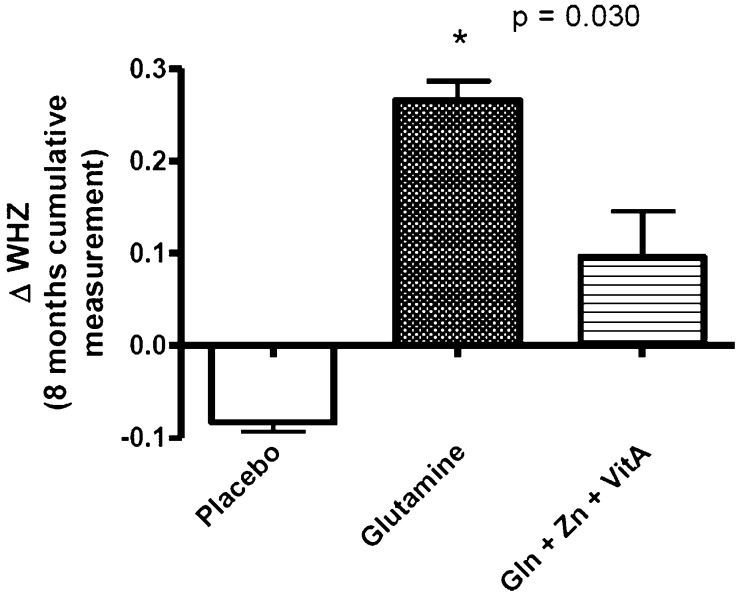
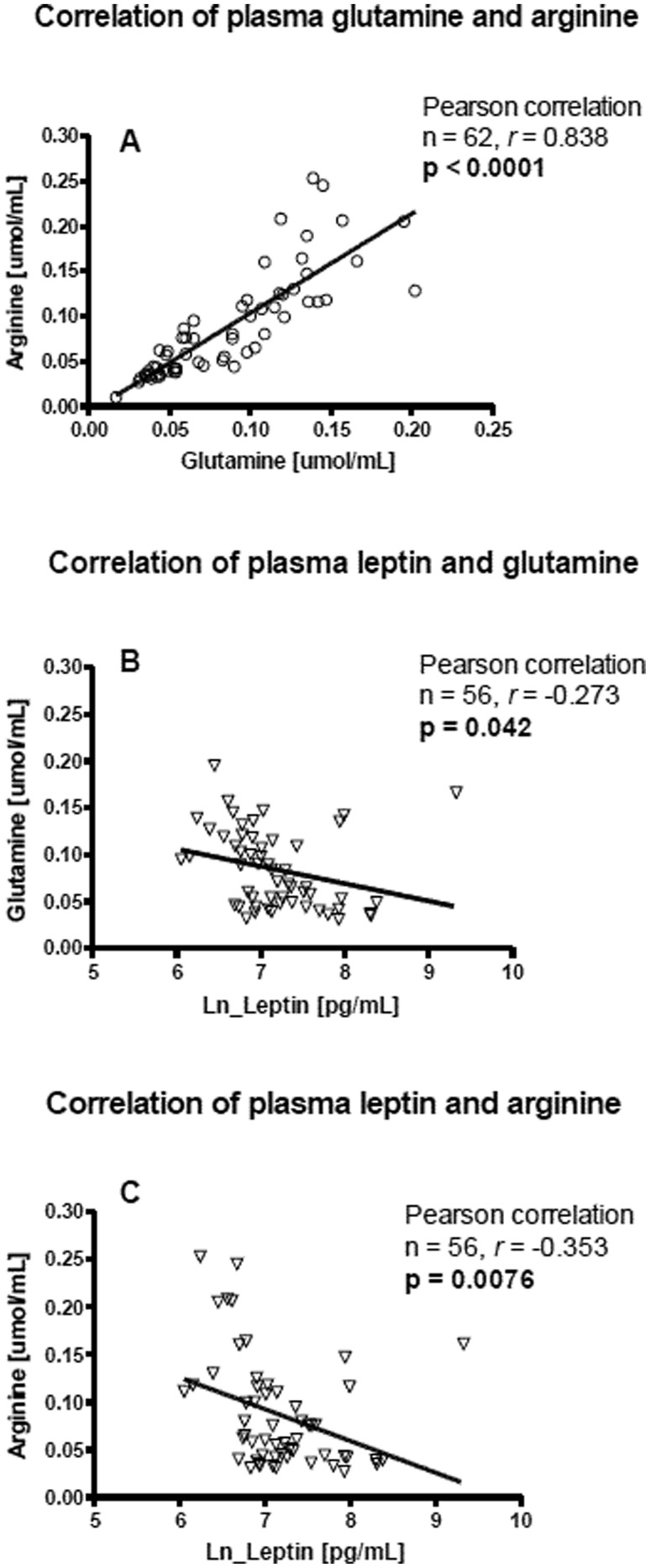
Results: Glutamine treatment significantly improved weight-for-height z-scores compared to the placebo-glycine control treatment. Either glutamine alone or all nutrients combined prevented disruption of the intestinal barrier function, as measured by the percentage of lactulose urinary excretion and the lactulose:mannitol absorption ratio. Plasma leptin was negatively correlated with plasma glutamine (p = 0.002) and arginine (p = 0.001) levels at baseline. After glutamine treatment, leptin was correlated with weight-for-age (WAZ) and weight-for-height z-scores (WHZ) (p≤0.002) at a 4-month follow-up. In addition, glutamine and all combined nutrients (glutamine, vitamin A, and zinc) improved the intestinal barrier function in these children.
Conclusion: Taken together, these findings reveal the benefits of glutamine alone or in combination with other gut-trophic nutrients in growing children via interactions with leptin.
Conflict of interest statement
No potential conflict of interest was reported.
Figures
References
-
- Black RE, Allen LH, Bhutta ZA, Caulfield LE, de Onis M, Ezzati M, et al. Maternal and child undernutrition: global and regional exposures and health consequences. Lancet. 2008;371(9608):243–60. - PubMed
-
- Lima NL, Soares AM, Mota RM, Monteiro HS, Guerrant RL, Lima AA. Wasting and intestinal barrier function in children taking alanyl-glutamine-supplemented enteral formula. J Pediatr Gastroenterol Nutr. 2007;44(3):365–74. - PubMed
-
- Niehaus MD, Moore SR, Patrick PD, Derr LL, Lorntz B, Lima AA, et al. Early childhood diarrhea is associated with diminished cognitive function 4 to 7 years later in children in a northeast Brazilian shantytown. Am J Trop Med Hyg. 2002;66(5):590–3. - PubMed
Publication types
MeSH terms
Substances
Associated data
Grants and funding
LinkOut - more resources
Full Text Sources
Other Literature Sources
Medical
Miscellaneous
