Molecular strategies for detecting chromosomal translocations in soft tissue tumors (review)
- PMID: 24714847
- PMCID: PMC4055444
- DOI: 10.3892/ijmm.2014.1726
Molecular strategies for detecting chromosomal translocations in soft tissue tumors (review)
Abstract
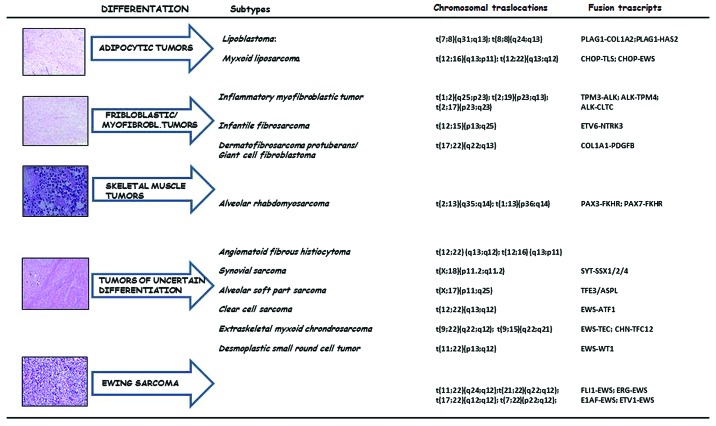
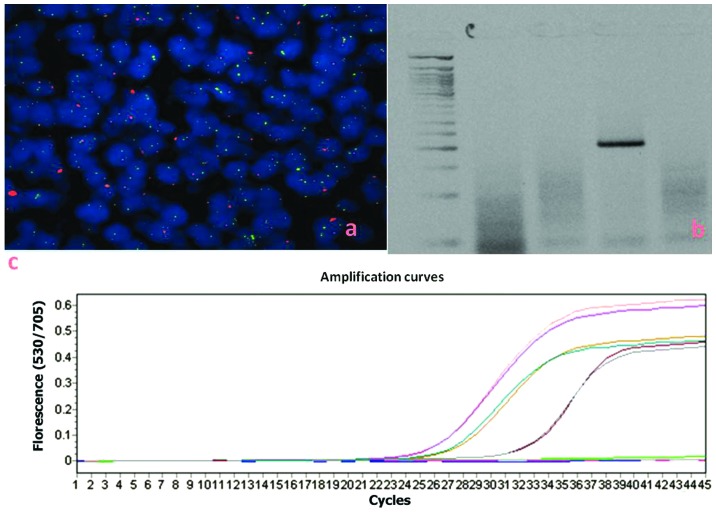
Approximately one third of soft tissue tumors are characterized by chromosomal aberrations, in particular, translocations and amplifications, which appear to be highly specific. The identification of fusion transcripts not only supports the diagnosis, but provides the basis for the development of novel therapeutic strategies aimed at blocking the aberrant activity of chimeric proteins. Molecular biology, and in particular, cytogenetic and qualitative and quantitative polymerase chain reaction technologies, allow with high efficiency and specificity, the determination of specific fusion transcripts resulting from chromosomal translocations, as well as the analysis of gene amplifications. In this review, various molecular techniques that allow the identification of translocations and consequent fusion transcripts generated are discussed in the broad spectrum of soft tissue tumors.
Figures
References
-
- Dei Tos AP, Dal Cin P. The role of cytogenetics in the classification of soft tissue tumours. Virchows Arch. 1997;431:83–94. - PubMed
-
- Bennicelli JL, Barr FG. Genetics and the biologic basis of sarcomas. Curr Opin Oncol. 1999;11:267–274. - PubMed
-
- Fletcher Christopher DM, Unni K Krishnan, Mertens Fredrik. WHO: Pathology and Genetics of Tumours of Soft Tissue and Bone. IARC Press; Lyon: 2002.
-
- Martins C, Fonseca I, Roque L, Pereira T, Ribeiro C, Bullerdiek J, Soares J. PLAG1 gene alterations in salivary gland pleomorphic adenoma and carcinoma ex-pleomorphic adenoma: a combined study using chromosome banding, in situ hybridization and immunocytochemistry. Mod Pathol. 2005;18:1048–1055. - PubMed
Publication types
MeSH terms
LinkOut - more resources
Full Text Sources
Other Literature Sources