


Cannulation technique influences arteriovenous fistula and graft survival
- PMID: 24717298
- PMCID: PMC4184025
- DOI: 10.1038/ki.2014.96
Cannulation technique influences arteriovenous fistula and graft survival
Abstract
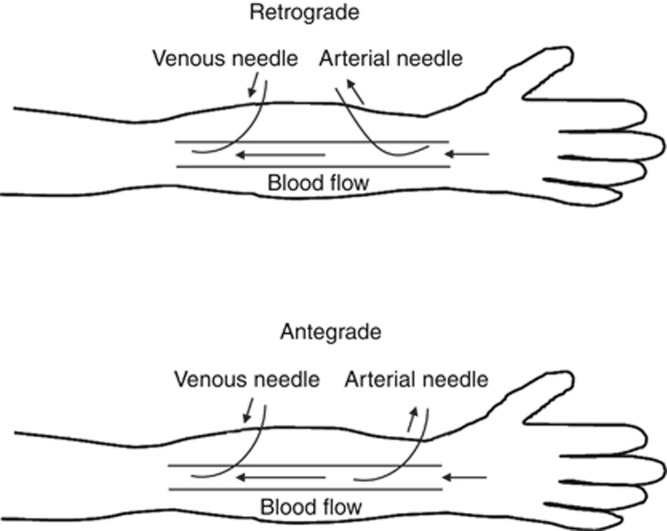
Hemodialysis patient survival is dependent on the availability of a reliable vascular access. In clinical practice, procedures for vascular access cannulation vary from clinic to clinic. We investigated the impact of cannulation technique on arteriovenous fistula and graft survival. Based on an April 2009 cross-sectional survey of vascular access cannulation practices in 171 dialysis units, a cohort of patients with corresponding vascular access survival information was selected for follow-up ending March 2012. Of the 10,807 patients enrolled in the original survey, access survival data were available for 7058 patients from nine countries. Of these, 90.6% had an arteriovenous fistula and 9.4% arteriovenous graft. Access needling was by area technique for 65.8%, rope-ladder for 28.2%, and buttonhole for 6%. The most common direction of puncture was antegrade with bevel up (43.1%). A Cox regression model was applied, adjusted for within-country effects, and defining as events the need for creation of a new vascular access. Area cannulation was associated with a significantly higher risk of access failure than rope-ladder or buttonhole. Retrograde direction of the arterial needle with bevel down was also associated with an increased failure risk. Patient application of pressure during cannulation appeared more favorable for vascular access longevity than not applying pressure or using a tourniquet. The higher risk of failure associated with venous pressures under 100 or over 150 mm Hg should open a discussion on limits currently considered acceptable.
Figures



Comment in
-
Vascular access cannulation practices and outcomes.Kidney Int. 2014 Oct;86(4):671-3. doi: 10.1038/ki.2014.158. Kidney Int. 2014. PMID: 25265949
References
-
- Pastan S, Soucie JM, McClellan WM. Vascular access and increased risk of death among hemodialysis patients. Kidney Int. 2002;62:620–626. - PubMed
-
- Allon M, Daugirdas J, Depner TA, et al. Effect of change in vascular access on patient mortality in hemodialysis patients. Am J Kidney Dis. 2006;47:469–477. - PubMed
-
- Dhingra RK, Young EW, Hulbert-Shearon TE, et al. Type of vascular access and mortality in US hemodialysis patients. Kidney Int. 2001;60:1443–1451. - PubMed
-
- Polkinghorne KR, McDonald SP, Atkins RC, et al. Vascular access and all-cause mortality: a propensity score analysis. J Am Soc Nephrol. 2004;15:477–486. - PubMed
-
- Xue JL, Dahl D, Ebben JP, et al. The association of initial hemodialysis access type with mortality outcomes in elderly Medicare ESRD patients. Am J Kidney Dis. 2003;42:1013–1019. - PubMed
MeSH terms
LinkOut - more resources
Full Text Sources
Other Literature Sources
Medical
Miscellaneous
