


Effects of neuropeptides and mechanical loading on bone cell resorption in vitro
- PMID: 24717410
- PMCID: PMC4013601
- DOI: 10.3390/ijms15045874
Effects of neuropeptides and mechanical loading on bone cell resorption in vitro
Abstract
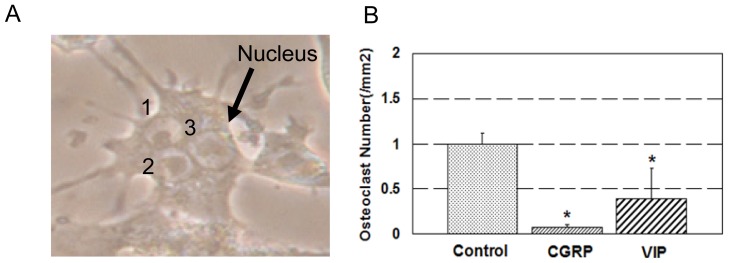
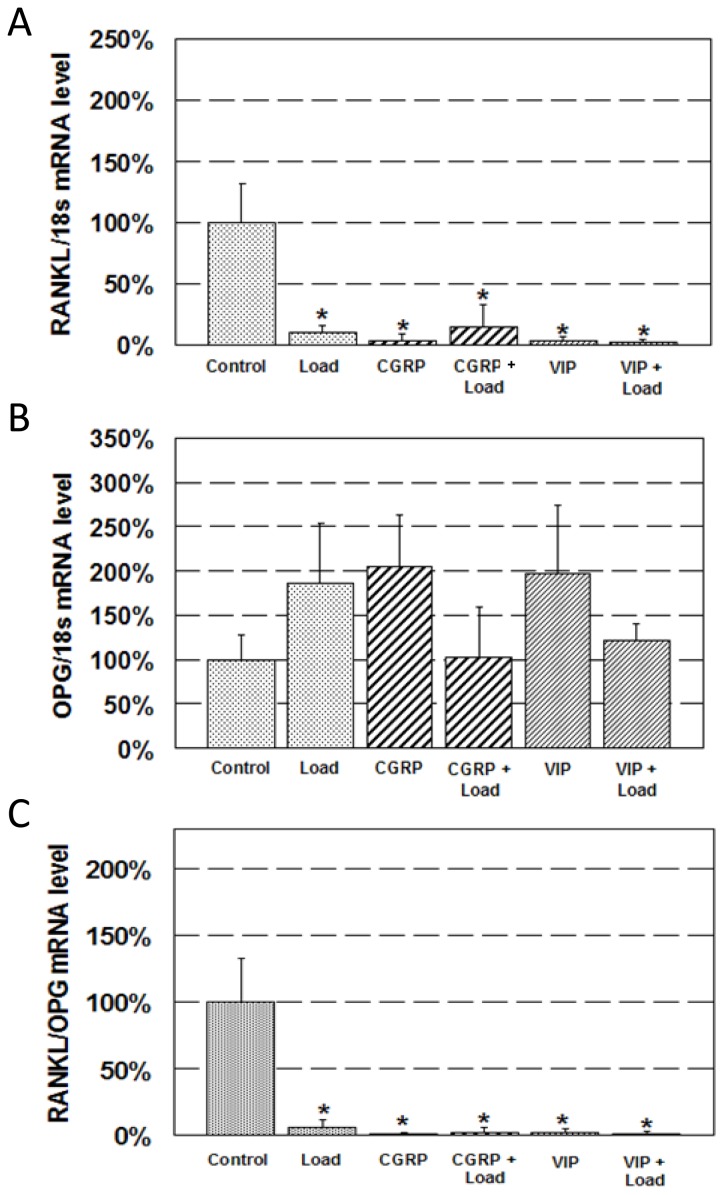
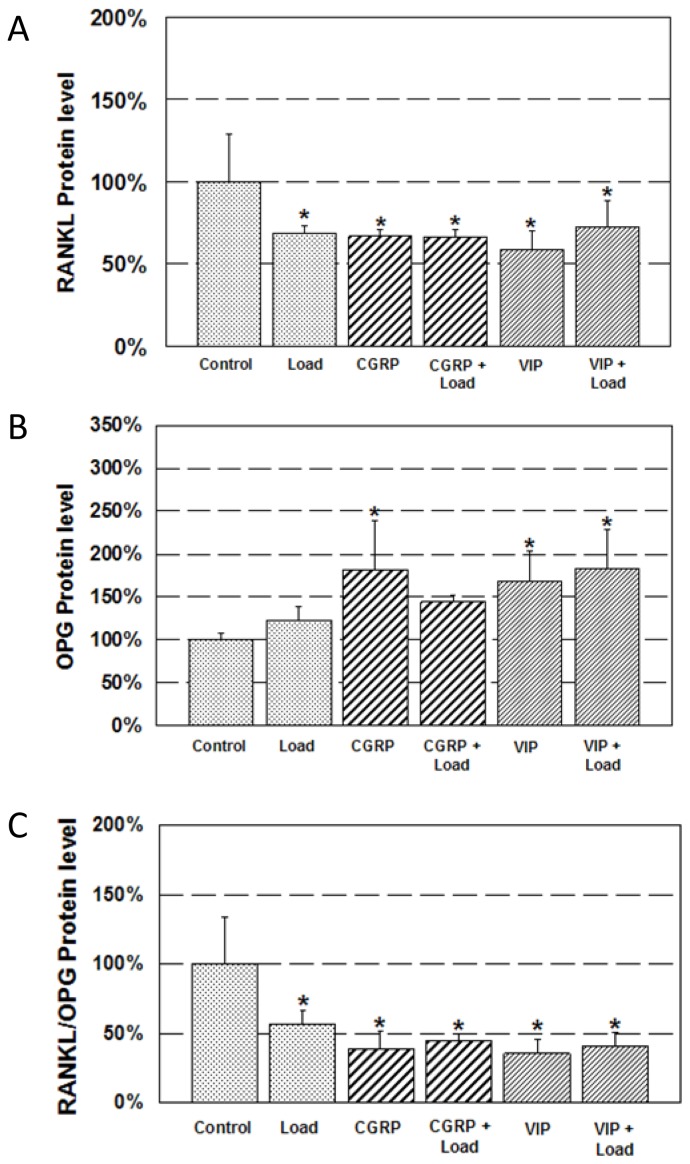
Neuropeptides such as vasoactive intestinal peptide (VIP) and calcitonin gene-related peptide (CGRP) are present in nerve fibers of bone tissues and have been suggested to potentially regulate bone remodeling. Oscillatory fluid flow (OFF)-induced shear stress is a potent signal in mechanotransduction that is capable of regulating both anabolic and catabolic bone remodeling. However, the interaction between neuropeptides and mechanical induction in bone remodeling is poorly understood. In this study, we attempted to quantify the effects of combined neuropeptides and mechanical stimuli on mRNA and protein expression related to bone resorption. Neuropeptides (VIP or CGRP) and/or OFF-induced shear stress were applied to MC3T3-E1 pre-osteoblastic cells and changes in receptor activator of nuclear factor kappa B (NF-κB) ligand (RANKL) and osteoprotegerin (OPG) mRNA and protein levels were quantified. Neuropeptides and OFF-induced shear stress similarly decreased RANKL and increased OPG levels compared to control. Changes were not further enhanced with combined neuropeptides and OFF-induced shear stress. These results suggest that neuropeptides CGRP and VIP have an important role in suppressing bone resorptive activities through RANKL/OPG pathway, similar to mechanical loading.
Figures
References
-
- Reddi A.H. Bone morphogenesis and modeling: Soluble signals sculpt osteosomes in the solid state. Cell. 1997;89:159–161. - PubMed
-
- Rodan G.A., Martin T.J. Role of osteoblasts in hormonal control of bone resorption—A hypothesis. Calcif. Tissue Int. 1981;33:349–351. - PubMed
-
- Matsuo K., Irie N. Osteoclast-osteoblast communication. Arch. Biochem. Biophys. 2008;473:201–209. - PubMed
-
- Lacey D.L., Timms E., Tan H.L., Kelley M.J., Dunstan C.R., Burgess T., Elliott R., Colombero A., Elliott G., Scully S., et al. Osteoprotegerin ligand is a cytokine that regulates osteoclast differentiation and activation. Cell. 1998;93:165–176. - PubMed
-
- Secchiero P., Vaccarezza M., Gonelli A., Zauli G. TNF-related apoptosis-inducing ligand (TRAIL): A potential candidate for combined treatment of hematological malignancies. Curr. Pharm. Des. 2004;10:3673–3681. - PubMed
Publication types
MeSH terms
Substances
LinkOut - more resources
Full Text Sources
Other Literature Sources
Research Materials
