. 2014 Apr 9;9(4):e94132.
doi: 10.1371/journal.pone.0094132. eCollection 2014.

Targeting class IA PI3K isoforms selectively impairs cell growth, survival, and migration in glioblastoma

Affiliations

Targeting class IA PI3K isoforms selectively impairs cell growth, survival, and migration in glioblastoma

Katrin Höland et al. PLoS One. .

Abstract

The phosphoinositide 3-kinase (PI3K)/Akt/mammalian target of rapamycin (mTOR) pathway is frequently activated in human cancer and plays a crucial role in glioblastoma biology. We were interested in gaining further insight into the potential of targeting PI3K isoforms as a novel anti-tumor approach in glioblastoma. Consistent expression of the PI3K catalytic isoform PI3K p110α was detected in a panel of glioblastoma patient samples. In contrast, PI3K p110β expression was only rarely detected in glioblastoma patient samples. The expression of a module comprising the epidermal growth factor receptor (EGFR)/PI3K p110α/phosphorylated ribosomal S6 protein (p-S6) was correlated with shorter patient survival. Inhibition of PI3K p110α activity impaired the anchorage-dependent growth of glioblastoma cells and induced tumor regression in vivo. Inhibition of PI3K p110α or PI3K p110β also led to impaired anchorage-independent growth, a decreased migratory capacity of glioblastoma cells, and reduced the activation of the Akt/mTOR pathway. These effects were selective, because targeting of PI3K p110δ did not result in a comparable impairment of glioblastoma tumorigenic properties. Together, our data reveal that drugs targeting PI3K p110α can reduce growth in a subset of glioblastoma tumors characterized by the expression of EGFR/PI3K p110α/p-S6.


Conflict of interest statement

Competing Interests: The authors have declared that no competing interests exist.

Figures

Figure 1
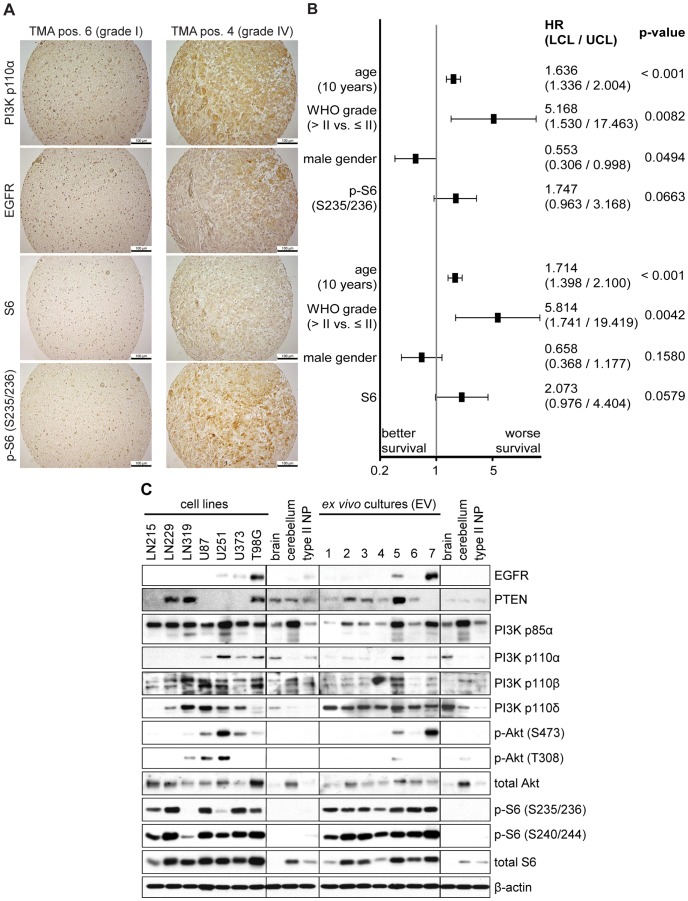
Figure 1. Expression analysis of proteins in the PI3K/Akt/mTOR signaling pathway in glioma and GBM samples.
(A) IHC staining of glioma tissue microarray demonstrating increased expression of all antigens shown in GBM (WHO grade IV) compared to pilocytic astrocytoma (WHO grade I). Bars represent 100 μm. (B) Multivariable Cox-regression of IHC factors in 74 glioma patients by individually adding the immunostaining status to the clinical factors age, gender, and WHO grade. Results for p-S6 (S235/236) and S6 are shown in the upper and lower panel, respectively. HR: hazard ratio, LCL/UCL: lower/upper boundary of 95% confidence interval for HR. (C) Western blot analysis of protein levels of EGFR, PTEN, class IA PI3K isoforms, and downstream signaling proteins Akt and S6 in human GBM cell lines and ex vivo cultures. Normal human brain and cerebellum tissue as well as non-transformed type II human pneumocytes were used as controls.
Figure 2
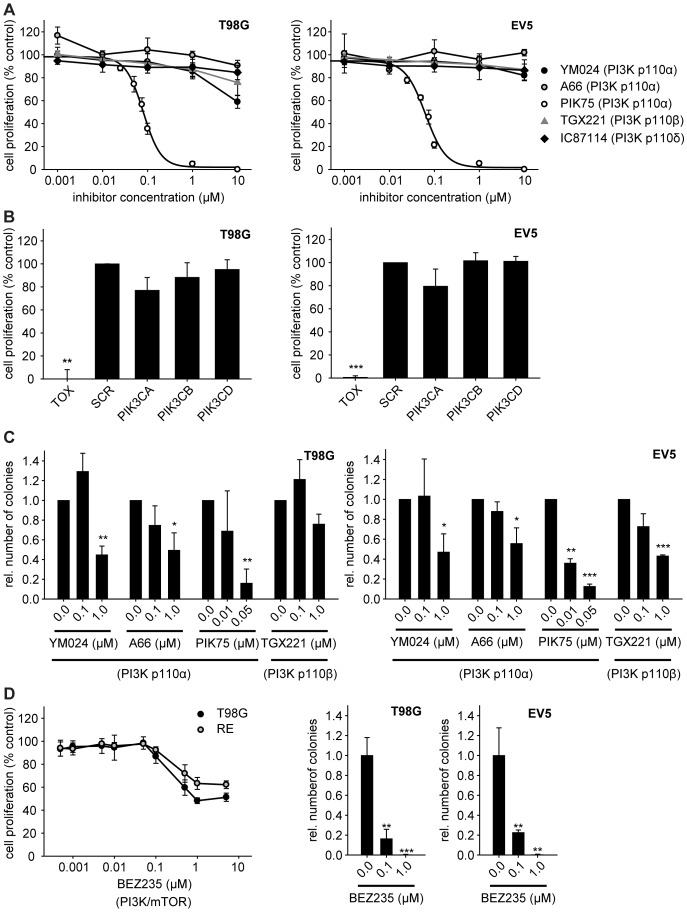
Figure 2. Inhibition of PI3K p110α impairs GBM cell proliferation and anchorage-independent growth.
(A) Cell proliferation of GBM cells in the presence of class IA PI3K isoform-specific inhibitors (72 h). (B) Cell proliferation of GBM cells transiently transfected with siRNA targeting class IA PI3K isoforms p110α (PIK3CA), p110β (PIK3CB), or p110δ (PIK3CD) 48 h post transfection. TOX and SCR siRNAs were used as positive and negative, non-targeting controls, respectively. (C) Anchorage-independent growth (colony formation in soft agar) of GBM cells treated with PI3K p110α-specific inhibitors YM024, A66, PIK75, or PI3K p110β-specific inhibitor TGX221 (28 d). (D) Cell proliferation and anchorage-independent growth of GBM cells in the presence of the dual PI3K/mTOR inhibitor BEZ235 (72 h and 28 d, respectively). Curves and bars represent the means of three individual experiments ± standard deviation; single experiment for soft agar assay with BEZ235; *: p≤0.05, **: p≤0.01, ***: p≤0.001 compared to 0.0 μM inhibitor or SCR non-targeting siRNA control as determined by two-sided, one-sample Student’s t-tests.
Figure 3
Figure 3. Inhibition of the PI3K isoform p110α with isoform-specific inhibitor PIK75 induces apoptosis.
(A) Western blot analysis of apoptosis markers of GBM cells following treatment with increasing concentrations of PI3K p110α-specific inhibitors YM024 or PIK75 (6 h). (B) Flow cytometry analysis of T98G cells after treatment with PI3K p110α-specific inhibitor PIK75 (8 h) stained with Annexin-V and PI. (C) Quantification of Annexin-V-positive/PI-negative T98G cells after treatment with PI3K p110α-specific inhibitors YM024, A66, PIK75, or PI3K p110β-specific inhibitor TGX221 (8 h). Bars represent the means of three or two individual experiments ± standard deviation for PI3K p110α- or PI3K p110β-specific inhibitors, respectively; ***: p≤0.001 compared to 0.0 μM inhibitor as determined by two-sided, one-sample Student’s t-tests.
Figure 4
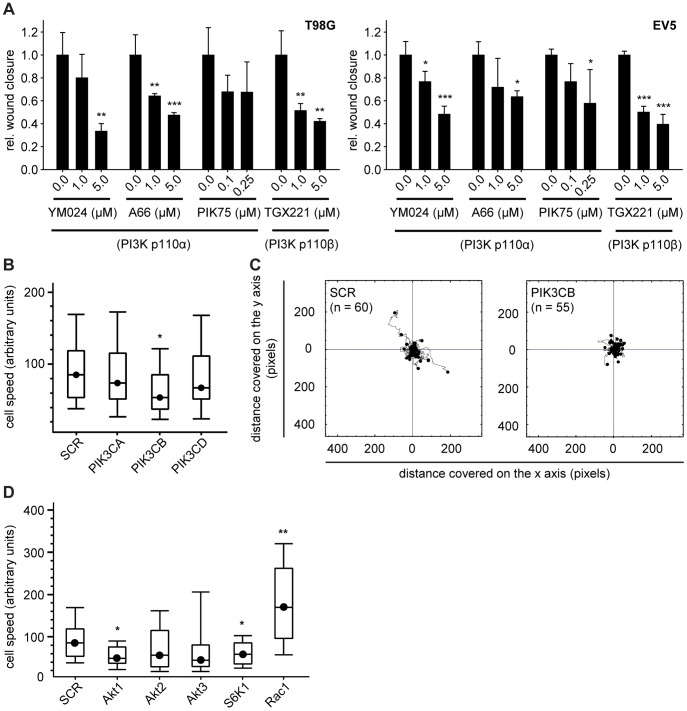
Figure 4. Class IA PI3K isoforms p110α and p110β play a role in GBM cell migration.
(A) Analysis of the migratory potential of GBM cells by means of wound healing assays in the presence of PI3K p110α or PI3K p110β-specific inhibitors (18 h). Bars represent the means of three individual experiments ± standard deviation; *: p≤0.05, **: p≤0.01, ***: p≤0.001 compared to 0.0 μM inhibitor as determined by two-sided, one-sample Student’s t-tests. (B) Migration speed of T98G cells in a random migration experiment following downregulation of class IA PI3K isoforms by siRNA. *: p≤0.05 compared to SCR non-targeting siRNA as determined by two-sided, one-sample Student’s t-test. (C) Distance of migration in a random migration experiment of T98G cells transfected with non-targeting control (SCR) or PI3K p110β-targeting siRNA (PIK3CB). (D) Migration speed of T98G cells in a random migration experiment following downregulation of PI3K/Akt signaling pathway molecules by siRNA. *: p≤0.05, **: p≤0.01 compared to SCR non-targeting siRNA as determined by two-sided, two-sample Student’s t-tests.
Figure 5
Figure 5. Pharmacological inhibition of PI3K p110α and PI3K p110β impairs downstream signaling.
(A) Western blot analysis of basal Akt/mTOR signaling activation by detection of phosphorylated downstream proteins Akt and S6 in GBM cells following treatment with increasing concentrations of PI3K p110α-specific inhibitors YM024, PIK75, or A66 (6 h). (B) Western blot analysis of phosphorylated downstream proteins Akt and S6 protein of GBM cells following treatment with increasing concentrations of the PI3K p110β-specific inhibitor TGX221 (6 h). (C) Growth factor-induced PI3K/Akt signaling activation after pretreatment of T98G and EV7 cells with PI3K p110α-specific inhibitor YM024. (D) Growth factor-induced PI3K/Akt signaling activation after pretreatment of T98G cells with PI3K p110β-specific inhibitor TGX221.
Figure 6
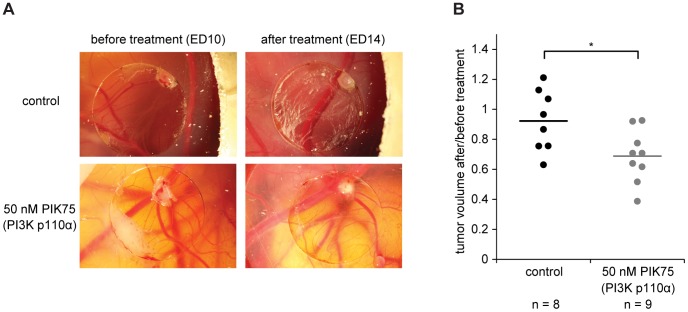
Figure 6. PI3K p110α-specific inhibition of T98G tumors formed on the chick chorioallantoic membrane impairs tumor growth.
(A) Representative pictures of T98G tumors formed on the CAM three days post cell application (10 × magnification). Tumors were treated with PIK75 as indicated for four consecutive days. (B) Quantification of changes in tumor volume before and after PIK75 or control treatment. Lines indicate the mean of each group. *: p = 0.02 compared to control treatment as determined by two-sided, two-sample Student’s t-test.

References

    1. Central Brain Tumor Registry of the United States CBTRUS statistical report: primary brain and central nervous system tumors diagnosed in the United States in 2004–22007.
    1. Wen PY, Kesari S (2008) Malignant gliomas in adults. N Engl J Med 359: 492–507. - PubMed
    1. DeAngelis LM (2001) Brain tumors. N Engl J Med 344: 114–123. - PubMed
    1. Lee JC, Vivanco I, Beroukhim R, Huang JH, Feng WL, et al. (2006) Epidermal growth factor receptor activation in glioblastoma through novel missense mutations in the extracellular domain. PLoS Med 3: e485. - PMC - PubMed
    1. Halatsch ME, Schmidt U, Behnke-Mursch J, Unterberg A, Wirtz CR (2006) Epidermal growth factor receptor inhibition for the treatment of glioblastoma multiforme and other malignant brain tumours. Cancer Treat Rev 32: 74–89. - PubMed

Publication types

MeSH terms