


Strategy for analysis of flow diverting devices based on multi-modality image-based modeling
- PMID: 24719392
- PMCID: PMC4188720
- DOI: 10.1002/cnm.2638
Strategy for analysis of flow diverting devices based on multi-modality image-based modeling
Abstract
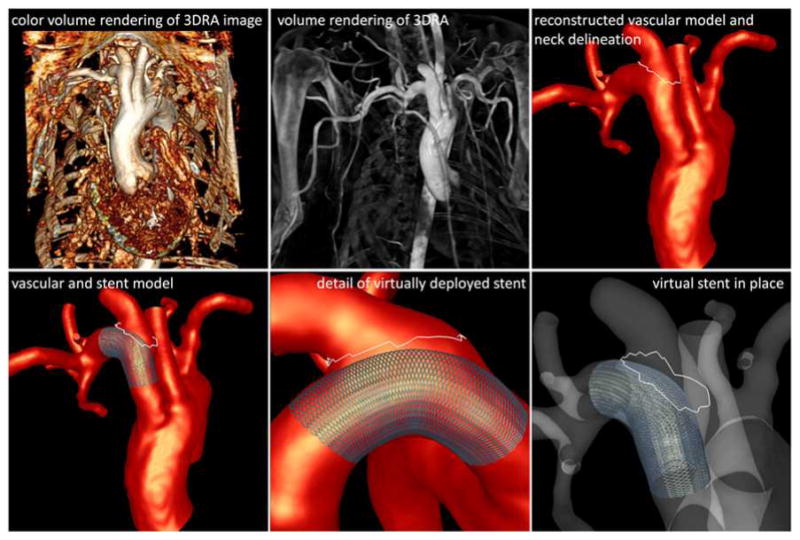
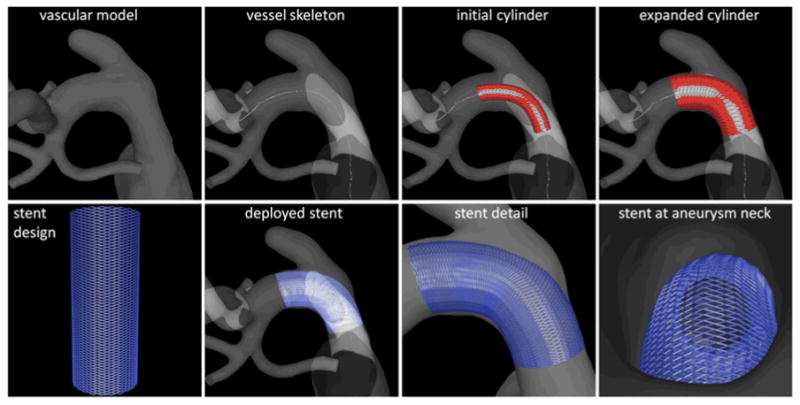
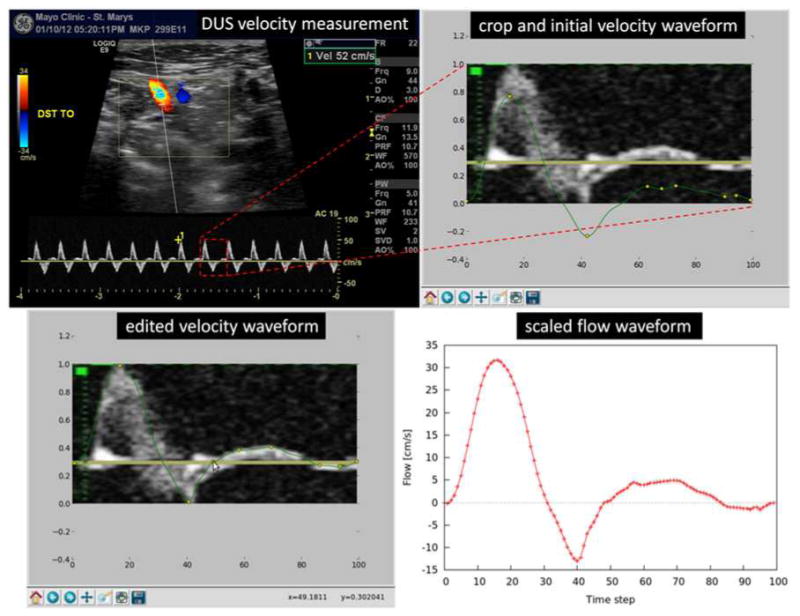
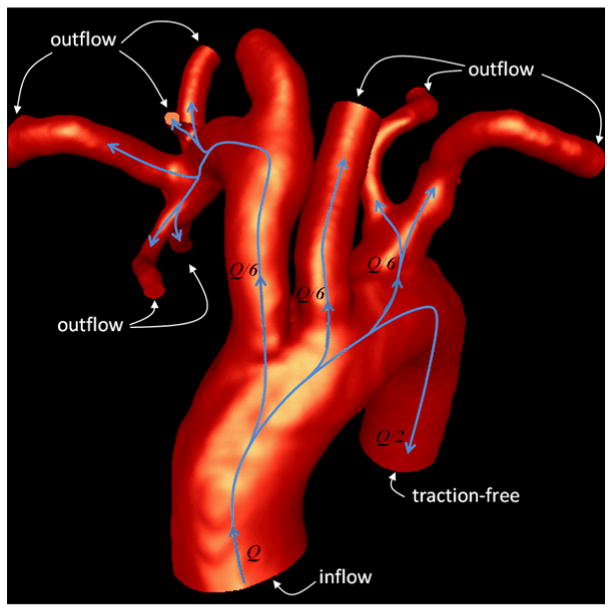
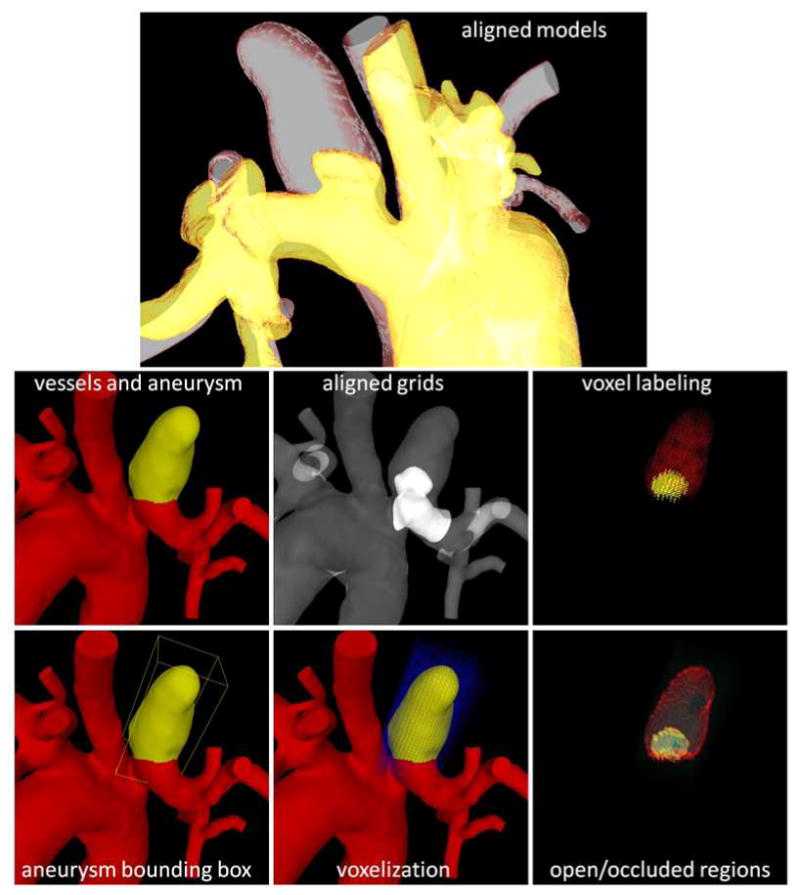
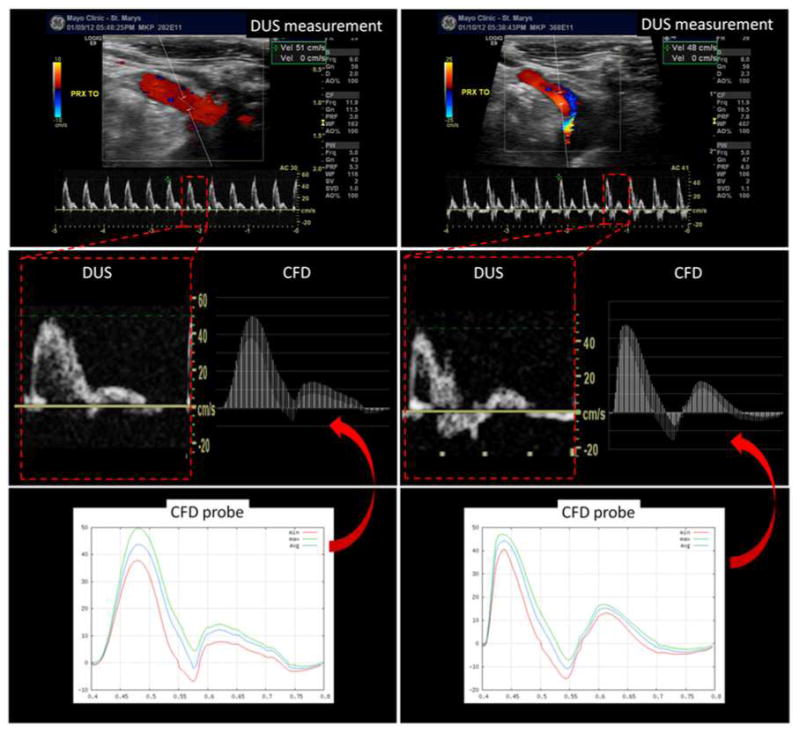
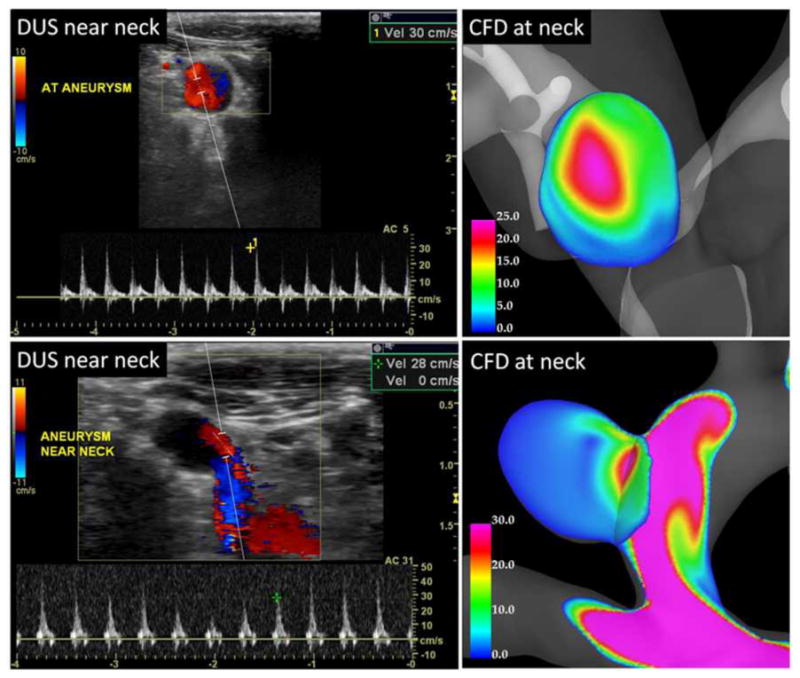
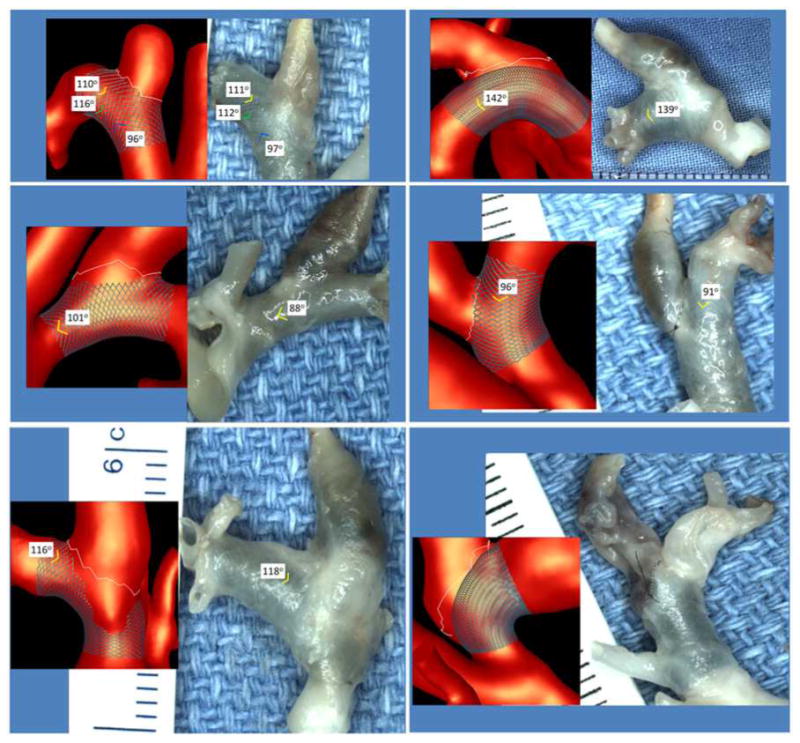
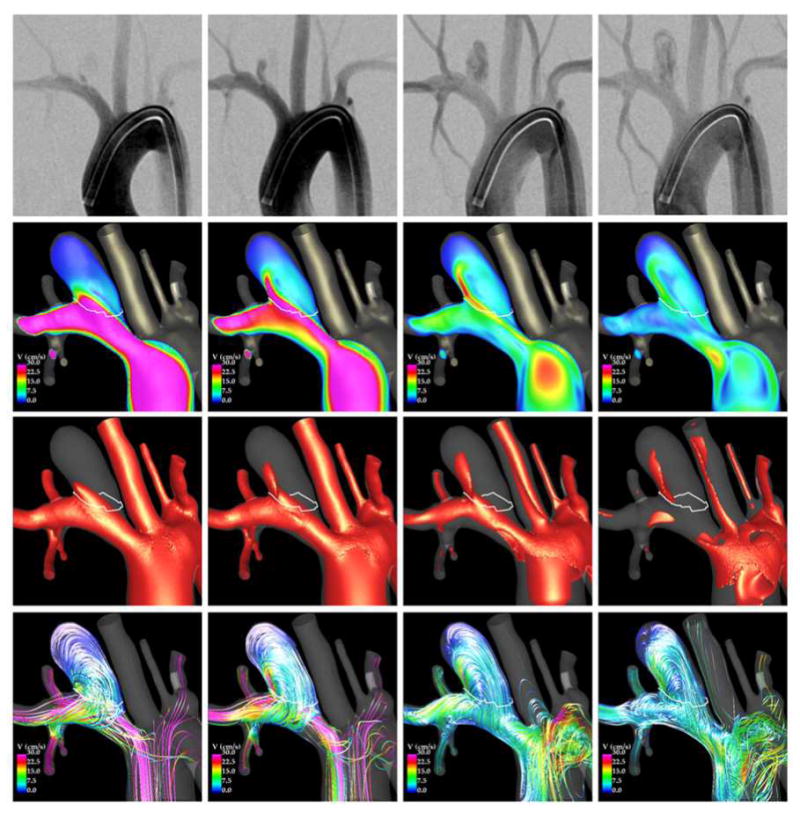
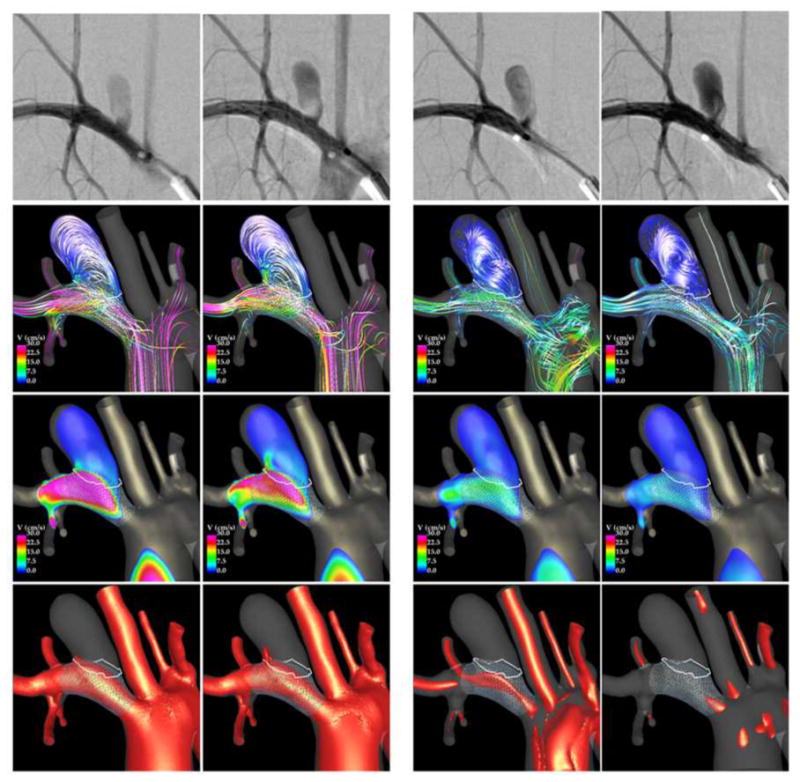
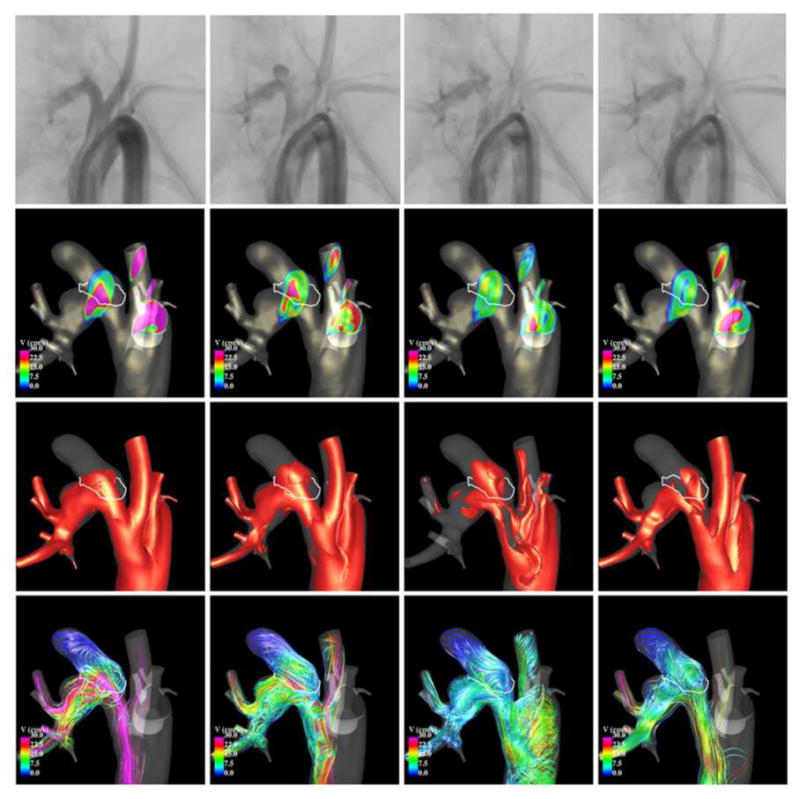
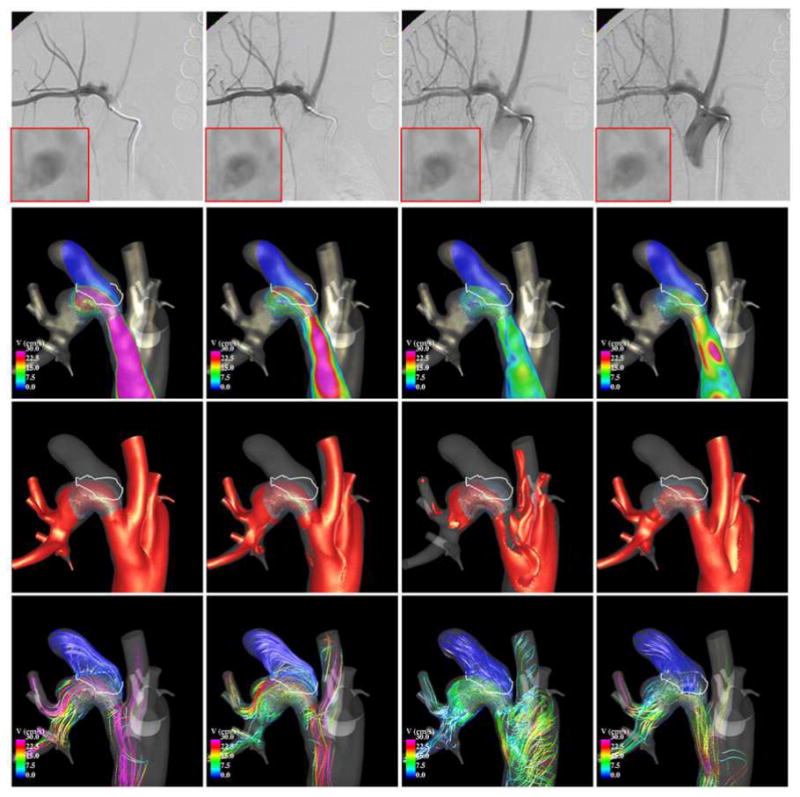
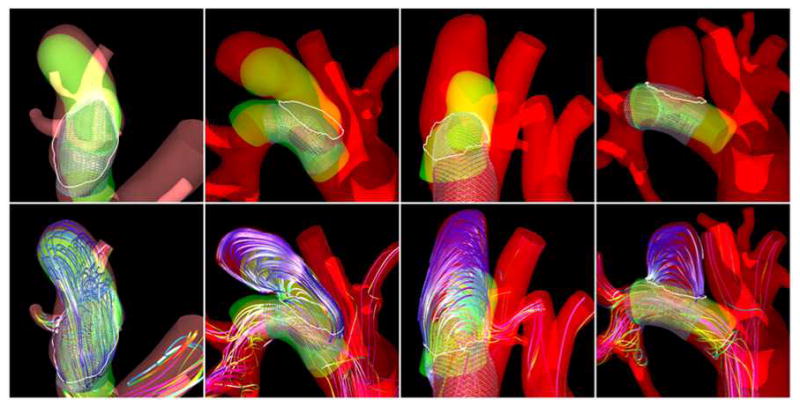
Quantification and characterization of the hemodynamic environment created after flow diversion treatment of cerebral aneurysms is important to understand the effects of flow diverters and their interactions with the biology of the aneurysm wall and the thrombosis process that takes place subsequently. This paper describes the construction of multi-modality image-based subject-specific CFD models of experimentally created aneurysms in rabbits and subsequently treated with flow diverters. Briefly, anatomical models were constructed from 3D rotational angiography images, flow conditions were derived from Doppler ultrasound measurements, stent models were created and virtually deployed, and the results were compared with in vivo digital subtraction angiography and Doppler ultrasound images. The models were capable of reproducing in vivo observations, including velocity waveforms measured in the parent artery, peak velocity values measured in the aneurysm, and flow structures observed with digital subtraction angiography before and after deployment of flow diverters. The results indicate that regions of aneurysm occlusion after flow diversion coincide with slow and smooth flow patterns, whereas regions still permeable at the time of animal sacrifice were observed in parts of the aneurysm exposed to larger flow activity, that is, higher velocities, more swirling, and more complex flow structures.
Keywords: CFD; cerebral aneurysm; flow diversion; hemodynamics; rabbit model.
Copyright © 2014 John Wiley & Sons, Ltd.
Figures
References
-
- Kallmes DF, et al. A new endoluminal, flow disrupting device for treatment of saccular aneurysms. Stroke. 2007;38(8):2346–2352. - PubMed
-
- Lylyk P, et al. Curative endovascular reconstruction of cerebral aneurysms with the pipeline embolization device: the Buenos Aires experience. Neurosurgery. 2009;64(4):632–642. - PubMed
Publication types
MeSH terms
Grants and funding
LinkOut - more resources
Full Text Sources
Other Literature Sources
Medical
Miscellaneous
