


Physiological responses and energy cost of walking on the Gait Trainer with and without body weight support in subacute stroke patients
- PMID: 24720844
- PMCID: PMC3991901
- DOI: 10.1186/1743-0003-11-54
Physiological responses and energy cost of walking on the Gait Trainer with and without body weight support in subacute stroke patients
Abstract
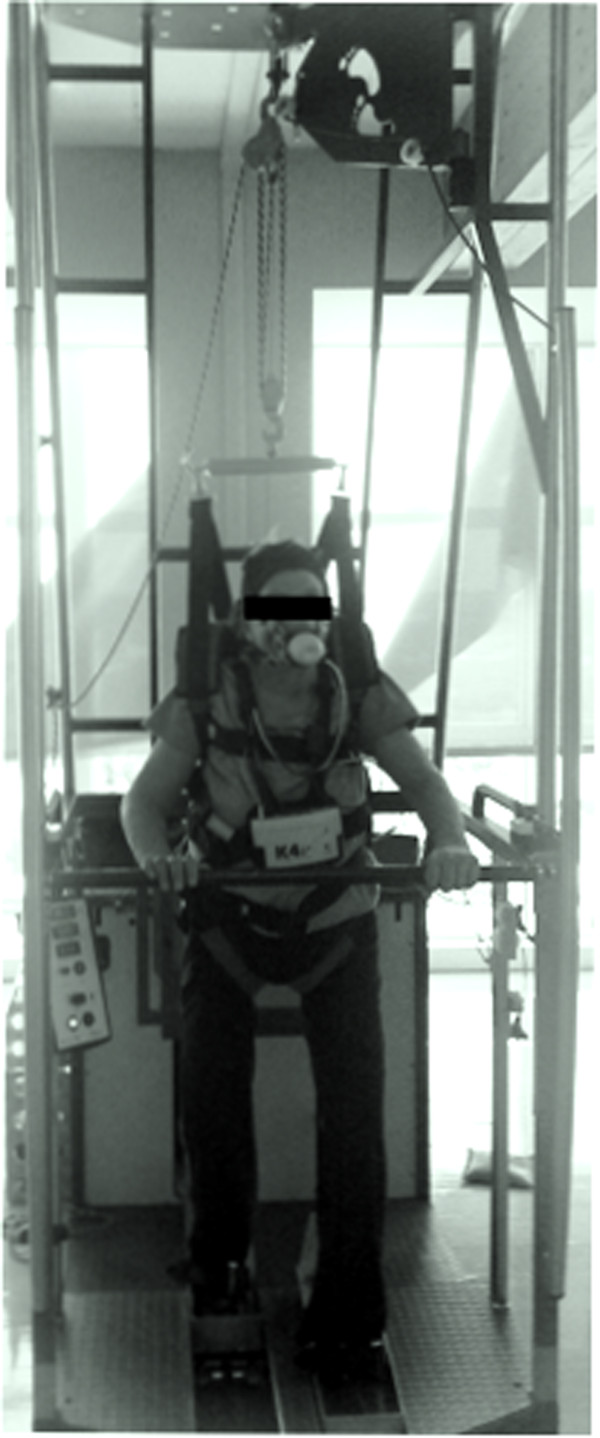
Background: Robotic-assisted walking after stroke provides intensive task-oriented training. But, despite the growing diffusion of robotic devices little information is available about cardiorespiratory and metabolic responses during electromechanically-assisted repetitive walking exercise. Aim of the study was to determine whether use of an end-effector gait training (GT) machine with body weight support (BWS) would affect physiological responses and energy cost of walking (ECW) in subacute post-stroke hemiplegic patients.
Participants: six patients (patient group: PG) with hemiplegia due to stroke (age: 66 ± 15y; time since stroke: 8 ± 3 weeks; four men) and 6 healthy subjects as control group (CG: age, 76 ± 7y; six men).
Interventions: overground walking test (OWT) and GT-assisted walking with 0%, 30% and 50% BWS (GT-BWS0%, 30% and 50%).
Main outcome measures: heart rate (HR), pulmonary ventilation, oxygen consumption, respiratory exchange ratio (RER) and ECW.
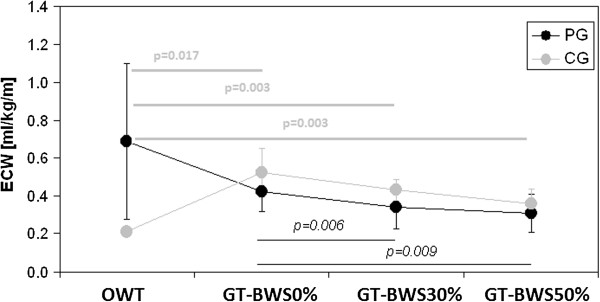
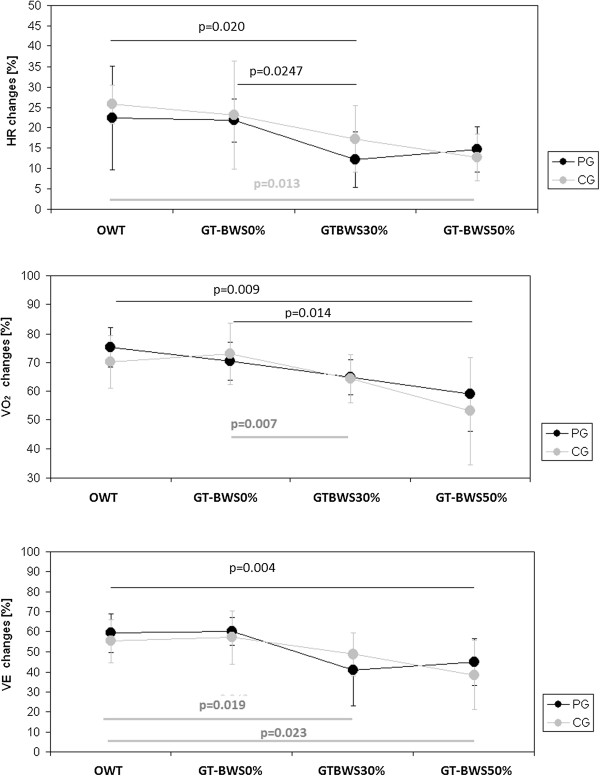
Results: Intervention conditions significantly affected parameter values in steady state (HR: p = 0.005, V'E: p = 0.001, V'O2: p < 0.001) and the interaction condition per group affected ECW (p = 0.002). For PG, the most energy (V'O2 and ECW) demanding conditions were OWT and GT-BWS0%. On the contrary, for CG the least demanding condition was OWT. On the GT, increasing BWS produced a decrease in energy and cardiac demand in both groups.
Conclusions: In PG, GT-BWS walking resulted in less cardiometabolic demand than overground walking. This suggests that GT-BWS walking training might be safer than overground walking training in subacute stroke patients.
Figures
References
Publication types
MeSH terms
LinkOut - more resources
Full Text Sources
Other Literature Sources
Medical
Miscellaneous
