


Return of widespread chloroquine-sensitive Plasmodium falciparum to Malawi
- PMID: 24723474
- PMCID: PMC6281358
- DOI: 10.1093/infdis/jiu216
Return of widespread chloroquine-sensitive Plasmodium falciparum to Malawi
Abstract
Background: The return of chloroquine-sensitive Plasmodium falciparum to the limited area of Blantyre, Malawi, has been well demonstrated in several studies.
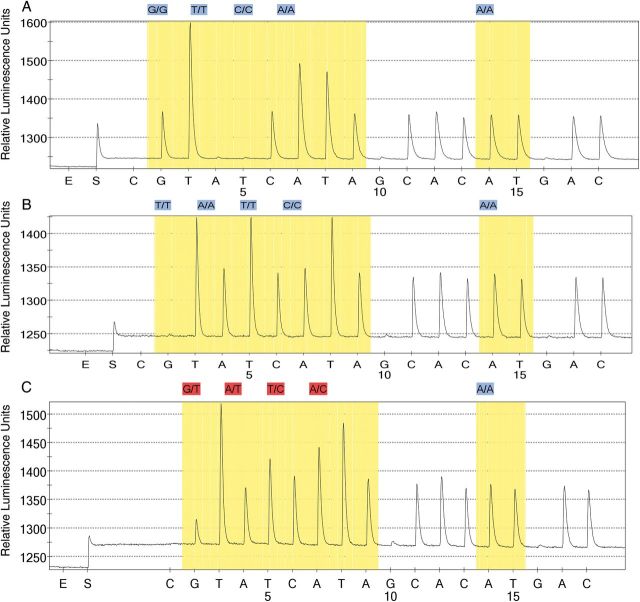
Methods: To characterize chloroquine susceptibility over a wide geographic area, infants and children aged 6-59 months were selected using 2-stage cluster sampling in 8 Malawian districts. Pyrosequencing of the pfcrt gene codon 76 region was performed for children with asexual parasitemia.
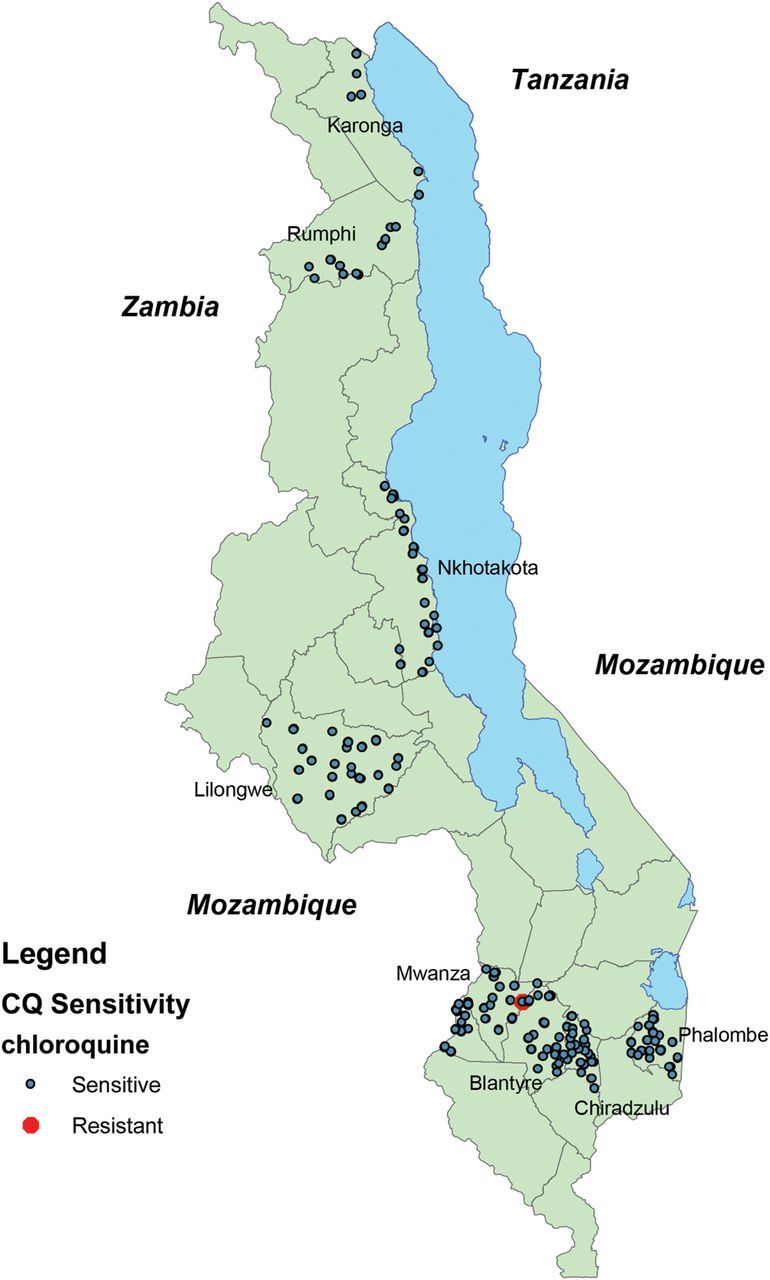
Results: Of 7145 children, 1150 had microscopic asexual parasitemia, and sequencing was performed in 685, of whom 1 had a chloroquine-resistant genotype.
Conclusions: Systematic countrywide sampling demonstrates that the chloroquine pfcrt genotype has reached near-fixation, raising the possibility of reintroducing chloroquine for malaria prevention and treatment.
Keywords: Africa; Malawi; PfCRT; Plasmodium falciparum; chloroquine; malaria; resistance.
© The Author 2014. Published by Oxford University Press on behalf of the Infectious Diseases Society of America. All rights reserved. For Permissions, please e-mail: journals.permissions@oup.com.
Figures
References
-
- Kublin JG, Cortese JF, Njunju EM, et al. Reemergence of chloroquine-sensitive Plasmodium falciparum malaria after cessation of chloroquine use in Malawi. J Infect Dis. 2003;187:1870–5. - PubMed
-
- Laufer MK, Thesing PC, Eddington ND, et al. Return of chloroquine antimalarial efficacy in Malawi. N Engl J Med. 2006;355:1959–66. - PubMed
-
- Djimde A, Doumbo OK, Cortese JF, et al. A molecular marker for chloroquine-resistant falciparum malaria. N Engl J Med. 2001;344:257–63. - PubMed
Publication types
MeSH terms
Substances
Grants and funding
LinkOut - more resources
Full Text Sources
Other Literature Sources
