


Role of RyR2 phosphorylation in heart failure and arrhythmias: Controversies around ryanodine receptor phosphorylation in cardiac disease
- PMID: 24723656
- PMCID: PMC4008932
- DOI: 10.1161/CIRCRESAHA.114.300568
Role of RyR2 phosphorylation in heart failure and arrhythmias: Controversies around ryanodine receptor phosphorylation in cardiac disease
Abstract
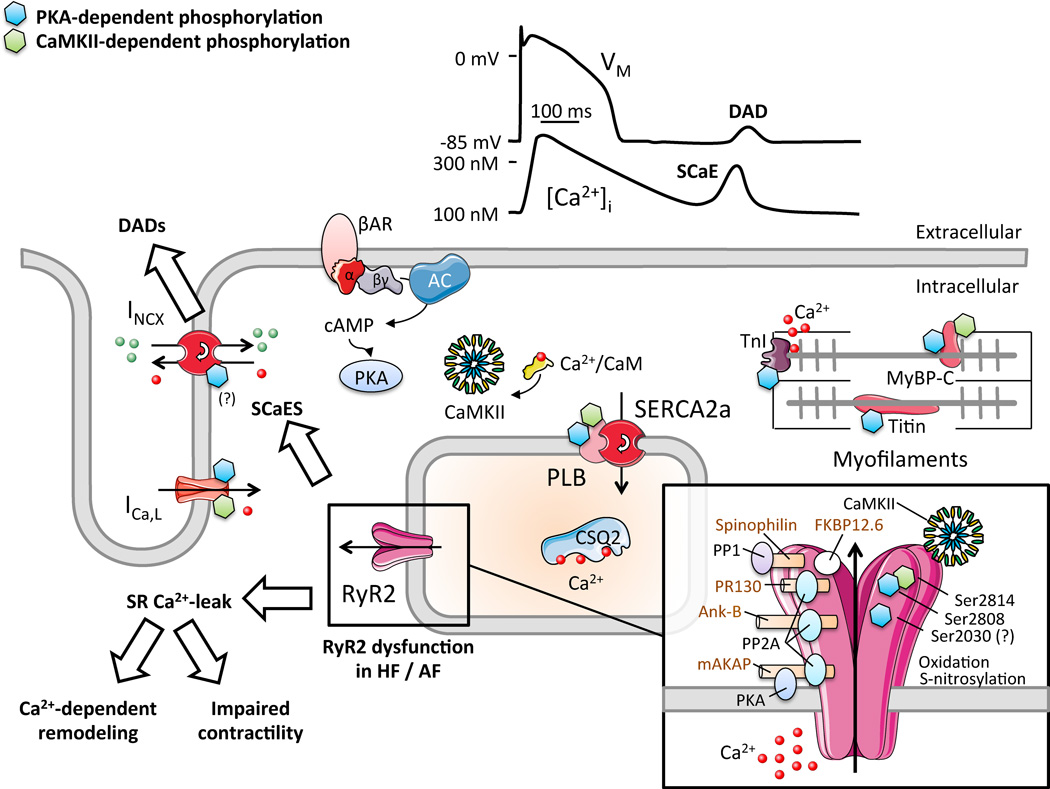
Cardiac ryanodine receptor type 2 plays a key role in excitation-contraction coupling. The ryanodine receptor type 2 channel protein is modulated by various post-translational modifications, including phosphorylation by protein kinase A and Ca(2+)/calmodulin protein kinase II. Despite extensive research in this area, the functional effects of ryanodine receptor type 2 phosphorylation remain disputed. In particular, the potential involvement of increased ryanodine receptor type 2 phosphorylation in the pathogenesis of heart failure and arrhythmias remains a controversial area, which is discussed in this review article.
Keywords: atrial fibrillation; heart failure; phosphorylation; ryanodine receptor type 2.
Figures
Comment on
-
Role of RyR2 phosphorylation in heart failure and arrhythmias: protein kinase A-mediated hyperphosphorylation of the ryanodine receptor at serine 2808 does not alter cardiac contractility or cause heart failure and arrhythmias.Circ Res. 2014 Apr 11;114(8):1320-7; discussion 1327. doi: 10.1161/CIRCRESAHA.114.300569. Circ Res. 2014. PMID: 24723657 Free PMC article. Review.
References
-
- Wehrens XH, Lehnart SE, Marks AR. Ryanodine receptor-targeted anti-arrhythmic therapy. Ann N Y Acad Sci. 2005;1047:366–375. - PubMed
-
- George CH. Sarcoplasmic reticulum Ca2+ leak in heart failure: mere observation or functional relevance? Cardiovasc Res. 2008;77:302–314. - PubMed
-
- Bers DM. Ryanodine receptor S2808 phosphorylation in heart failure: smoking gun or red herring. Circ Res. 2012;110:796–799. - PubMed
Publication types
MeSH terms
Substances
Grants and funding
LinkOut - more resources
Full Text Sources
Other Literature Sources
Medical
Miscellaneous
