


Functional consequences of splicing of the antisense transcript COOLAIR on FLC transcription
- PMID: 24725596
- PMCID: PMC3988885
- DOI: 10.1016/j.molcel.2014.03.026
Functional consequences of splicing of the antisense transcript COOLAIR on FLC transcription
Abstract
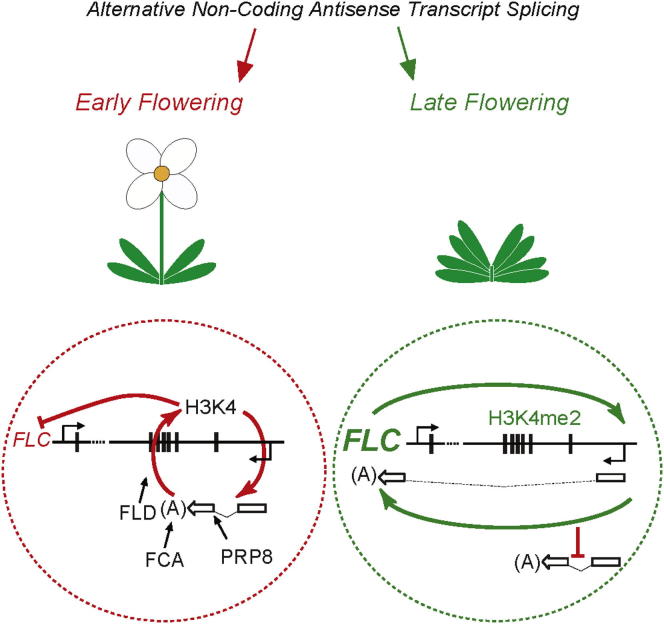
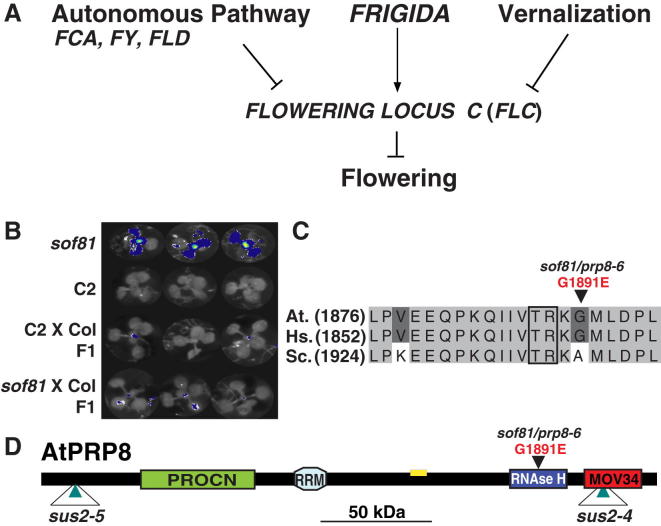
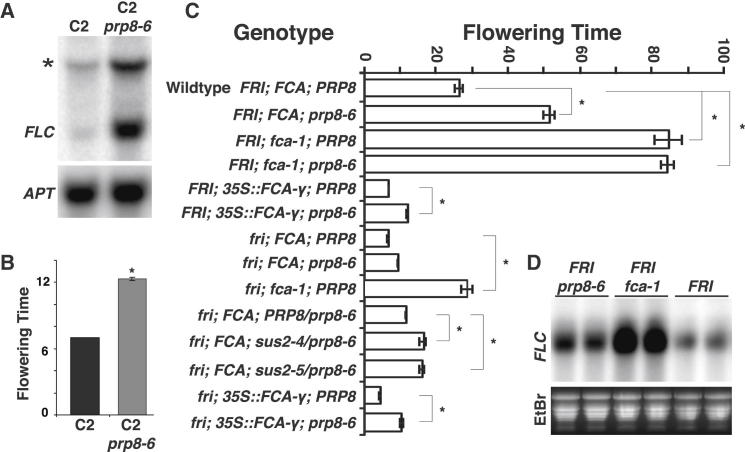
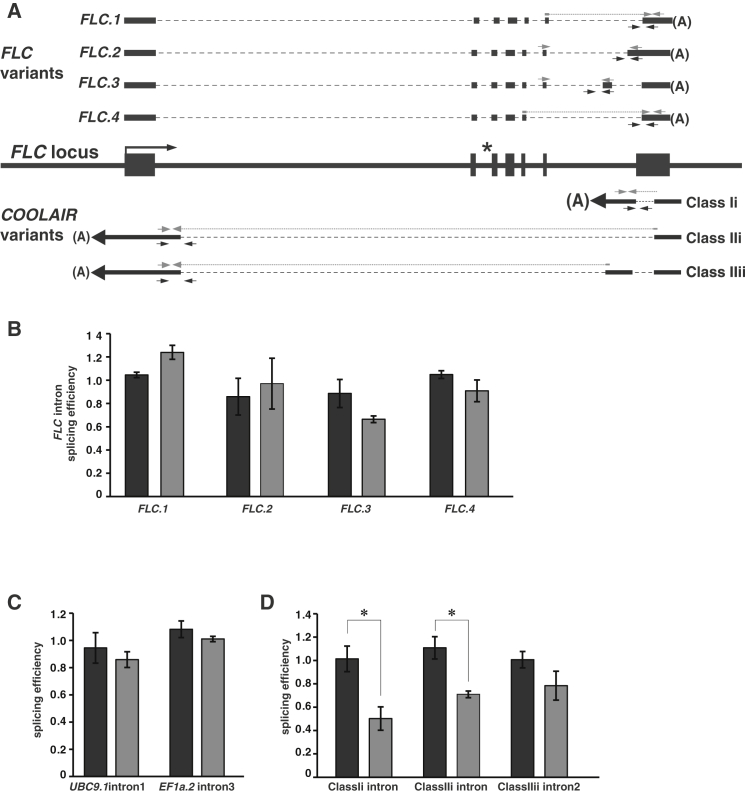
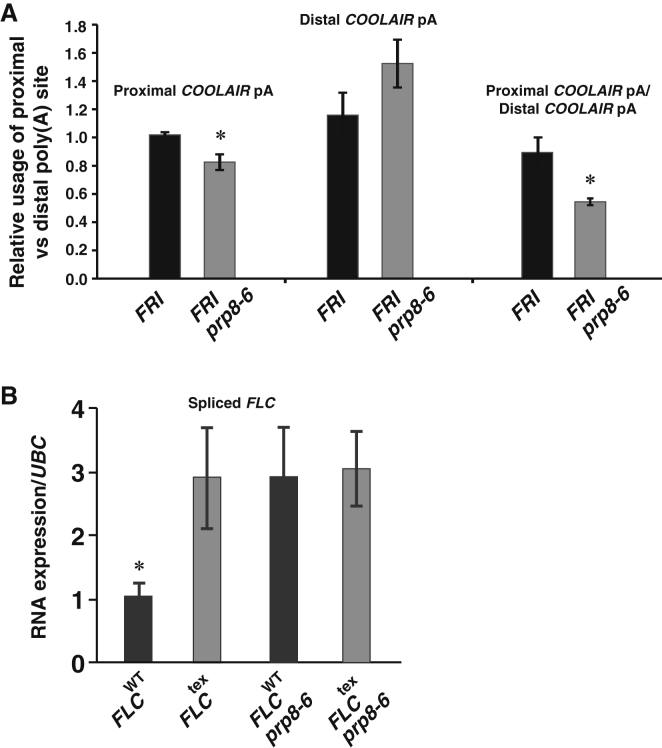
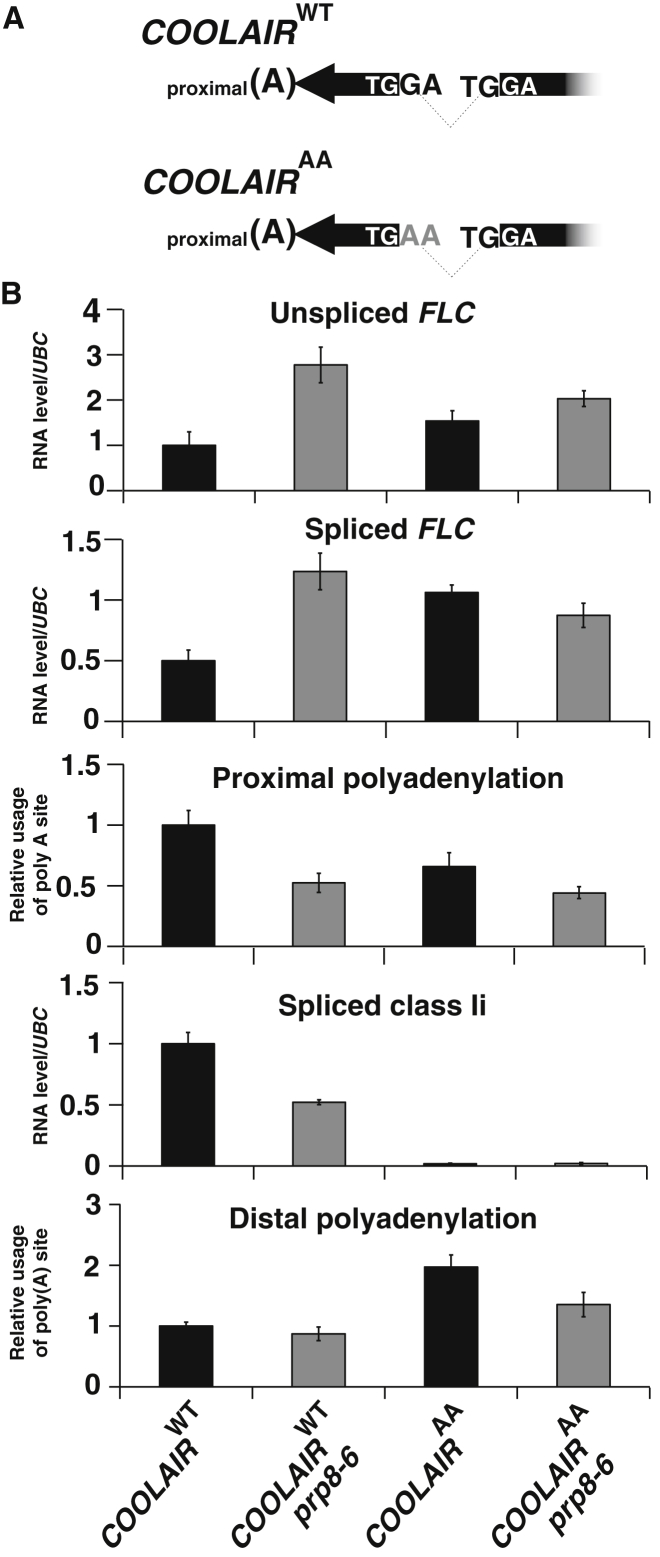
Antisense transcription is widespread in many genomes; however, how much is functional is hotly debated. We are investigating functionality of a set of long noncoding antisense transcripts, collectively called COOLAIR, produced at Arabidopsis FLOWERING LOCUS C (FLC). COOLAIR initiates just downstream of the major sense transcript poly(A) site and terminates either early or extends into the FLC promoter region. We now show that splicing of COOLAIR is functionally important. This was revealed through analysis of a hypomorphic mutation in the core spliceosome component PRP8. The prp8 mutation perturbs a cotranscriptional feedback mechanism linking COOLAIR processing to FLC gene body histone demethylation and reduced FLC transcription. The importance of COOLAIR splicing in this repression mechanism was confirmed by disrupting COOLAIR production and mutating the COOLAIR proximal splice acceptor site. Our findings suggest that altered splicing of a long noncoding transcript can quantitatively modulate gene expression through cotranscriptional coupling mechanisms.
Copyright © 2014 The Authors. Published by Elsevier Inc. All rights reserved.
Figures
References
-
- Alló M., Buggiano V., Fededa J.P., Petrillo E., Schor I., de la Mata M., Agirre E., Plass M., Eyras E., Elela S.A. Control of alternative splicing through siRNA-mediated transcriptional gene silencing. Nat. Struct. Mol. Biol. 2009;16:717–724. - PubMed
-
- Batsché E., Yaniv M., Muchardt C. The human SWI/SNF subunit Brm is a regulator of alternative splicing. Nat. Struct. Mol. Biol. 2006;13:22–29. - PubMed
-
- Blázquez M.A., Ahn J.H., Weigel D. A thermosensory pathway controlling flowering time in Arabidopsis thaliana. Nat. Genet. 2003;33:168–171. - PubMed
-
- Britten R.J., Davidson E.H. Gene regulation for higher cells: a theory. Science. 1969;165:349–357. - PubMed
Publication types
MeSH terms
Substances
Grants and funding
LinkOut - more resources
Full Text Sources
Other Literature Sources
Molecular Biology Databases
