


β2- and β3-adrenergic receptors drive COMT-dependent pain by increasing production of nitric oxide and cytokines
- PMID: 24727346
- PMCID: PMC4086872
- DOI: 10.1016/j.pain.2014.04.011
β2- and β3-adrenergic receptors drive COMT-dependent pain by increasing production of nitric oxide and cytokines
Abstract
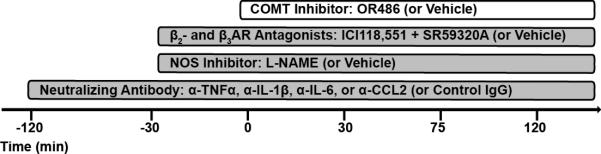
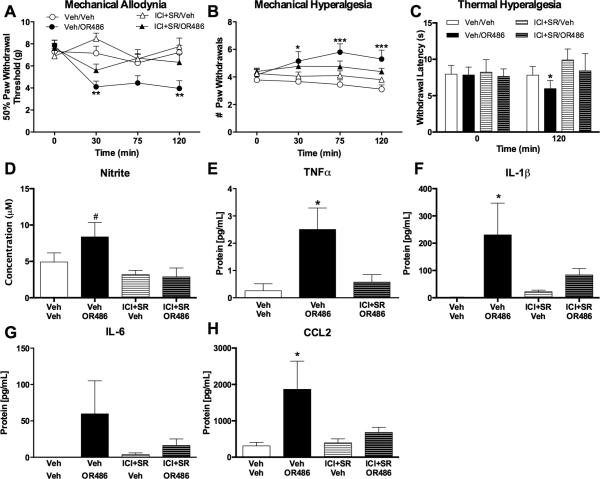
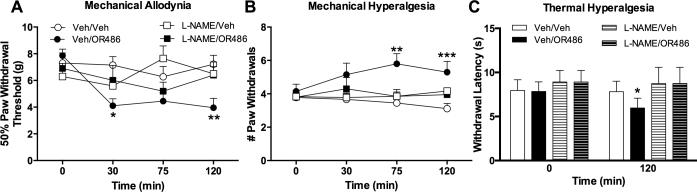
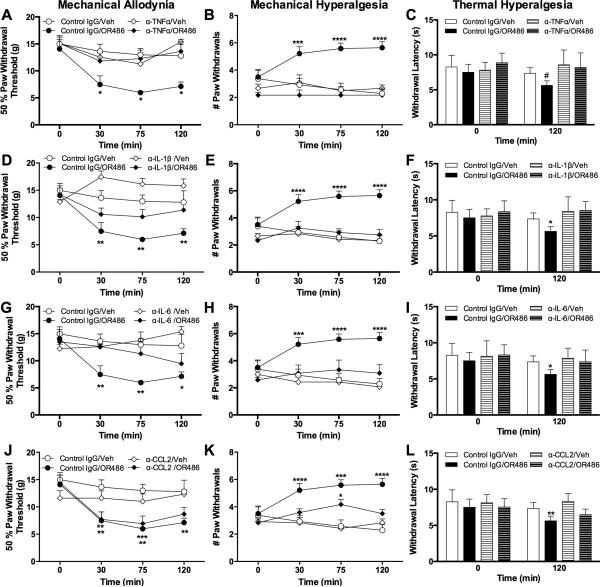
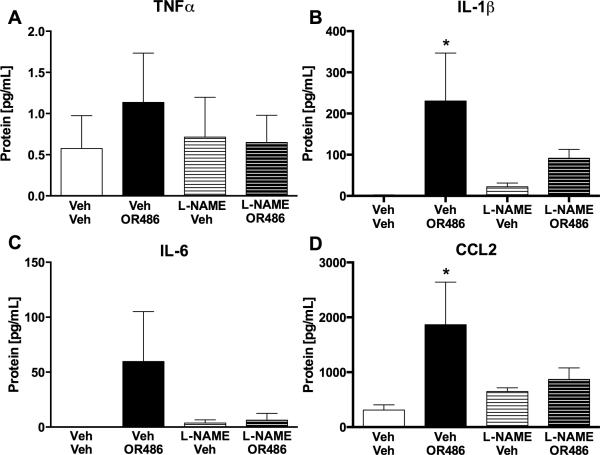
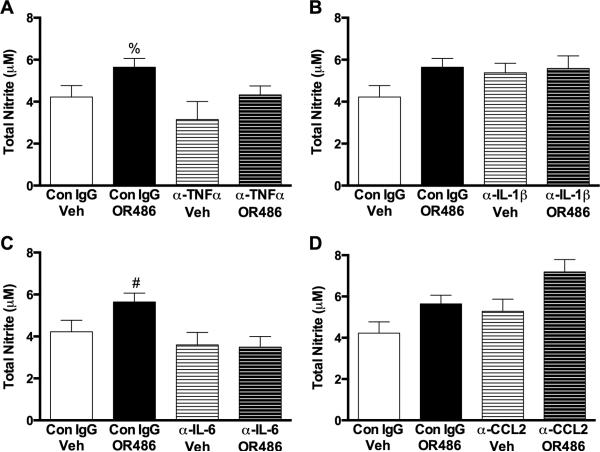
Decreased activity of catechol-O-methyltransferase (COMT), an enzyme that metabolizes catecholamines, contributes to pain in humans and animals. Previously, we demonstrated that development of COMT-dependent pain is mediated by both β2- and β3-adrenergic receptors (β2ARs and β3ARs). Here we investigated molecules downstream of β2- and β3ARs driving pain in animals with decreased COMT activity. Based on evidence linking their role in pain and synthesis downstream of β2- and β3AR stimulation, we hypothesized that nitric oxide (NO) and proinflammatory cytokines drive COMT-dependent pain. To test this, we measured plasma NO derivatives and cytokines in rats receiving the COMT inhibitor OR486 in the presence or absence of the β2AR antagonist ICI118,551+β3AR antagonist SR59320A. We also assessed whether the NO synthase inhibitor L-N(G)-nitroarginine methyl ester (L-NAME) and cytokine-neutralizing antibodies block the development of COMT-dependent pain. Results showed that animals receiving OR486 exhibited higher levels of NO derivatives, tumor necrosis factor α (TNFα), interleukin-1β (IL-1β), interleukin-6 (IL-6), and chemokine (C-C motif) ligand 2 (CCL2) in a β2- and β3AR-dependent manner. Additionally, inhibition of NO synthases and neutralization of the innate immunity cytokines TNFα, IL-1β, and IL-6 blocked the development of COMT-dependent pain. Finally, we found that NO influences TNFα, IL-1β, IL-6, and CCL2 levels, whereas TNFα and IL-6 influence NO levels. Altogether, these results demonstrate that β2- and β3ARs contribute to COMT-dependent pain, at least partly, by increasing NO and cytokines. Furthermore, they identify β2- and β3ARs, NO, and proinflammatory cytokines as potential therapeutic targets for pain patients with abnormalities in COMT physiology.
Keywords: Allodynia; Catecholamines; Chemokine (C-C motif) ligand 2 (CCL2); Epinephrine; Hyperalgesia; Inflammation; Interleukin 1 beta (IL-1β); Interleukin 6 (IL-6); Monocyte chemotactic protein 1 (MCP-1); Nitrate; Nitrite; Norepinephrine; Tumor necrosis factor alpha (TNFα).
Copyright © 2014 International Association for the Study of Pain. Published by Elsevier B.V. All rights reserved.
Figures
References
-
- Akimoto Y, Horinouchi T, Shibano M, Matsushita M, Yamashita Y, Okamoto T, Yamaki F, Tanaka Y, Koike K. Nitric oxide (NO) primarily accounts for endothelium dependent component of B-adrenoceptor-activated smooth muscle relaxation of mouse aorta in response to isoprenaline. J Smooth Muscle Res. 2002;38(4,5):87–99. - PubMed
-
- Boehning D, Snyder SH. Novel neural modulators. Annu Rev Neurosci. 2003;26:105–131. - PubMed
Publication types
MeSH terms
Substances
Grants and funding
LinkOut - more resources
Full Text Sources
Other Literature Sources
Medical
Research Materials
Miscellaneous
