


Impairments in goal-directed actions predict treatment response to cognitive-behavioral therapy in social anxiety disorder
- PMID: 24728288
- PMCID: PMC3984205
- DOI: 10.1371/journal.pone.0094778
Impairments in goal-directed actions predict treatment response to cognitive-behavioral therapy in social anxiety disorder
Abstract
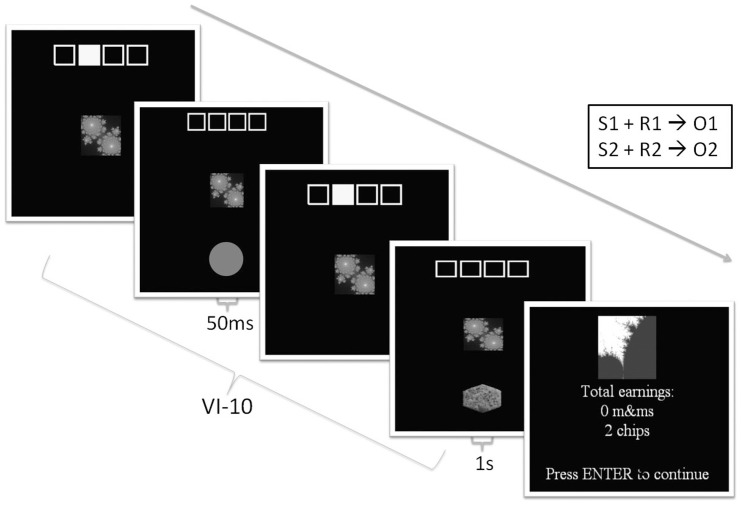
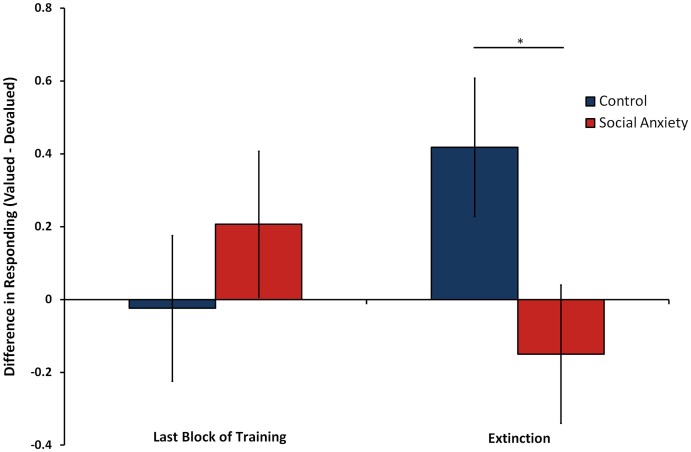
Social anxiety disorder is characterized by excessive fear and habitual avoidance of social situations. Decision-making models suggest that patients with anxiety disorders may fail to exhibit goal-directed control over actions. We therefore investigated whether such biases may also be associated with social anxiety and to examine the relationship between such behavior with outcomes from cognitive-behavioral therapy. Patients diagnosed with social anxiety and controls completed an instrumental learning task in which two actions were performed to earn food outcomes. After outcome devaluation, where one outcome was consumed to satiety, participants were re-tested in extinction. Results indicated that, as expected, controls were goal-directed, selectively reducing responding on the action that previously delivered the devalued outcome. Patients with social anxiety, however, exhibited no difference in responding on either action. This loss of a devaluation effect was associated with greater symptom severity and poorer response to therapy. These findings indicate that variations in goal-directed control in social anxiety may represent both a behavioral endophenotype and may be used to predict individuals who will respond to learning-based therapies.
Conflict of interest statement
Figures
References
-
- Rapee RM, Heimberg RG (1997) A cognitive-behavioral model of anxiety in social phobia Behaviour Research and Therapy. 35: 741–756. - PubMed
-
- Uren TH, Szabó M, Lovibond PF (2004) Probability and cost estimates for social and physical outcomes in social phobia and panic disorder. Journal of Anxiety Disorders 18: 481–498. - PubMed
-
- Nelson EA, Lickel JJ, Sy JT, Dixon LJ, Deacon BJ (2010) Probability and cost biases in social phobia: nature, specificity, and relationship to treatment outcome. Journal of Cognitive Psychotherapy 24: 213–228.
-
- Starcke K, Brand M (2012) Decision making under stress: A selective review. Neuroscience & Biobehavioral Reviews 36: 1228–1248. - PubMed
Publication types
MeSH terms
LinkOut - more resources
Full Text Sources
Other Literature Sources
Medical
