


Rates and risk factors for recurrent pneumonia in patients hospitalized with community-acquired pneumonia: population-based prospective cohort study with 5 years of follow-up
- PMID: 24729503
- PMCID: PMC4305150
- DOI: 10.1093/cid/ciu247
Rates and risk factors for recurrent pneumonia in patients hospitalized with community-acquired pneumonia: population-based prospective cohort study with 5 years of follow-up
Abstract
Background: The rates and risk factors for developing recurrent pneumonia following hospitalization with community-acquired pneumonia (CAP) are poorly understood.
Methods: We examined a population-based cohort of patients with CAP who survived hospital admission and who were free of pneumonia for at least 3 months. We collected clinical, functional, and medication-related information and pneumonia severity index (PSI). Using linked databases we followed patients for 5 years and captured any clinical episode of pneumonia 90 days or more post-discharge. We used Cox proportional hazards models (adjusted for age, sex, PSI, functional status, medications) to determine rates and independent correlates of recurrent pneumonia.
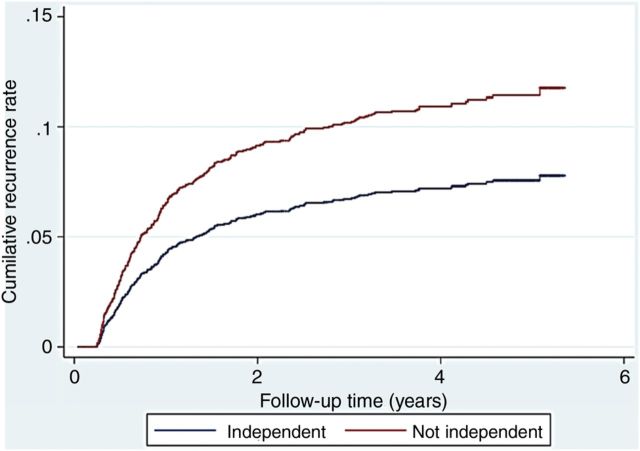
Results: The final cohort included 2709 inpatients; 43% were 75 years or older, 34% were not fully independent, and 56% had severe pneumonia. Over 5 years of follow-up, 245 (9%; 95% confidence interval [CI], 8%-10%) patients developed recurrent pneumonia, and 156 (64%) of these episodes required hospitalization. Rate of recurrence was 3.0/100 person-years and median time to recurrence was 317 days (interquartile range, 177-569); 32 (13%) patients had 2 or more recurrences. In multivariable analyses only age >75 years (adjusted P = .047) and less than fully independent functional status (12% recurrence rate with impaired functional status vs 7% for fully independent; adjusted hazard ratio, 1.7; 95% CI, 1.3-2.2; P < .001) were significantly associated with recurrent pneumonia.
Conclusions: One of 11 patients who survived CAP hospitalization had recurrent pneumonia over 5 years and those with impaired functional status were at particularly high risk. Recurrent pneumonia is common and more attention to preventive strategies at discharge and closer follow-up over the long-term seem warranted.
Keywords: community-acquired pneumonia; population-based cohort; recurrent pneumonia; risk factors.
© The Author 2014. Published by Oxford University Press on behalf of the Infectious Diseases Society of America. All rights reserved. For Permissions, please e-mail: journals.permissions@oup.com.
Figures
References
-
- Niederman MS, McCombs JS, Unger AN, Kumar A, Popovian R. The cost of treating community-acquired pneumonia. Clin Ther. 1998;20:820–37. - PubMed
-
- Thomas CP, Ryan M, Chapman JD, et al. Incidence and cost of pneumonia in Medicare beneficiaries. CHEST Journal. 2012;142:973–81. - PubMed
-
- Ekdahl K, Braconier JH, Rollof J. Recurrent pneumonia: a review of 90 adult patients. Scand J Infect Dis. 1992;24:71–6. - PubMed
-
- El Solh AA, Brewer T, Okada M, Bashir O, Gough M. Indicators of recurrent hospitalization for pneumonia in the elderly. J Am Geriatr Soc. 2004;52:2010–15. - PubMed
-
- Garcia-Vidal C, Carratala J, Fernandez-Sabe N, et al. Aetiology of, and risk factors for, recurrent community-acquired pneumonia. Clin Microbiol Infect. 2009;15:1033–8. - PubMed
Publication types
MeSH terms
Grants and funding
LinkOut - more resources
Full Text Sources
Other Literature Sources
Medical
Miscellaneous
